Bill · S. 63· Senate(119-S-63)
CBW Fentanyl Act
- Introduced
- 1/9/2025
- Last activity
- 1/9/2025 — Read twice and referred to the Committee on Foreign Relations.
- Sponsored by
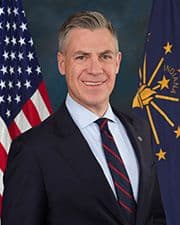
- Jim Banks
- Cosponsors
- - 2 - 0
- Introduced
- In Committee
What this bill would do
This bill, titled the "Countering Beijing's Weaponization of Fentanyl Act," amends the Chemical and Biological Weapons Control and Warfare Elimination Act of 1991. It focuses on imposing sanctions on foreign countries in response to chemical or biological programs that cause injury or damage to other nations. The legislation targets individuals who are officials, employees, or agents of foreign governmental entities. It mandates specific presidential determinations and reporting requirements when credible information regarding these acts arises. The bill establishes a tiered system of sanctions, including initial, intermediate, and final stages. These measures are designed to hold foreign entities accountable for programs involving substances like benzylfentanyl and norfentanyl precursors.
Yes· 3 of 4
Does this do more about addiction and overdose deaths?+5
The bill targets the production and distribution of fentanyl and its precursors to combat chemical threats.
Would people in cities be better off under this?+3
Reducing the influx of fentanyl precursors may mitigate drug-related harm in urban areas.
Does this give people more protection from unfair business practices?+2
The bill establishes accountability for foreign entities through trade and financial sanctions.
The opposite
No question was scored the opposite.
Who it would affect, and how
Potential Positive Impacts for People
-
Accountability for harmful programs: The bill requires the President to determine if an individual from a foreign government has committed a "covered act," which involves a program that results in injury or damage to another country (Section 2 and Section s 311(3)).
-
Targeted sanctions on specific substances: By defining "chemical or biological program" to include substances like benzylfentanyl, 4-anilinopiperidine, and norfentanyl precursors, the bill creates a mechanism to address specific chemical threats (Section 311(1)).
-
Restitution for victims: The bill allows for the termination of sanctions if the foreign country makes restitution to persons harmed by the covered act, including United States nationals (Section 310(d)(1)(B)).
-
Diplomatic pressure for compliance: The bill uses sanctions to encourage foreign governments to comply with covered treaties, such as the Biological Weapons Convention and the Chemical Weapons Convention (Section 311(4)).
Potential Negative Impacts for People
-
Economic impact through trade prohibitions: The bill authorizes the prohibition of exports, reexports, or in-country transfers of various items, including those under the Commerce Control List and the United States Munitions List (Section 310(a)(2) and Section 310(b)(2)(C)).
-
Reduction in foreign assistance: The bill allows for the termination of assistance provided under the Foreign Assistance Act of 1961, though it excludes urgent humanitarian assistance, food, or agricultural products (Section 310(b)(2)(A)).
-
Disruption of scientific and economic cooperation: Initial sanctions can include the suspension of all scientific cooperative programs and agreements between the United States and the targeted country (Section 310(a)(1)).
-
Financial restrictions: Final sanctions can include a prohibition on transactions involving a transfer of credit or payment to a financial institution that involves a financial interest of the country (Section 310(c)(2)).
Groups and Interests Ranking
Every group the model scored this bill for, from -10 to +10. Hover a score for the reason it gave.
- Healthcare
- Improves Opioid Crisis Response+5
- Demographic And Interest Groups
- Good For Urban Residents+3
- Economy And Finance
- Improves Consumer Protection+2
- National Security And Foreign Policy
- Improves International Alliances+2
- 1/9/2025
- Read twice and referred to the Committee on Foreign Relations.
- 2 Cosponsors added.
- Introduced in Senate
One bill Congress.gov lists as related to this one — companions in the other chamber, earlier versions, and bills this one absorbed or was folded into.
 Tom Cotton
Republican · Arkansas
 Bernie Moreno
Republican · Ohio