Bill · S. 620· Senate(119-S-620)
Veterinary Services to Improve Public Health in Rural Communities Act
- Introduced
- 2/18/2025
- Last activity
- 12/15/2025 — Held at the desk.
- Sponsored by
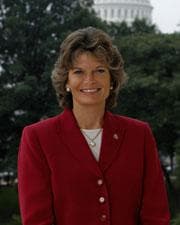
- Lisa Murkowski
- Cosponsors
- - 0 - 3
- Introduced
- Passed Senate
- Awaiting House
What this bill would do
This Act aims to provide public health veterinary services to Indian Tribes and Tribal organizations to help prevent and control zoonotic diseases. It amends the Indian Health Care Improvement Act to allow the Secretary, through the Indian Health Service, to fund various services like vaccinations, surveillance, and animal neutering. The bill also directs the Secretary of Agriculture to conduct a feasibility study regarding the delivery of oral rabies vaccines to wildlife in Arctic regions of the United States. Additionally, it updates the One Health framework by including the Director of the Indian Health Service.
Yes· 3 of 12
Would Native Americans be better off under this?+8
The bill directly funds public health veterinary services for Indian Tribes and Tribal organizations.
Does this make health care easier to get in general?+7
The bill enhances public health by funding veterinary services to prevent zoonotic diseases affecting human health in Tribal communities.
Does this narrow racial gaps in how people are treated?+6
The bill provides targeted public health resources specifically for Indian Tribes and Tribal organizations.
The opposite
No question was scored the opposite.
Who it would affect, and how
Potential Positive Impacts for People
-
Disease Prevention and Control: The bill allows for public health veterinary services such as vaccination, surveillance, and epidemiology to prevent and control zoonotic disease infection and transmission (Section 3(a)(1) and Section 3(b)).
-
Animal Population Management: The inclusion of spaying and neutering services for domestic animals can help manage animal populations (Section 3(a)(1)(A)).
-
Risk Reduction: The services provided are intended to reduce the risk of zoonotic disease transmission or antimicrobial resistance in humans, food, or animals (Section 3(a)(1)).
-
Targeted Arctic Protection: A feasibility study will evaluate the delivery and efficacy of oral rabies vaccines for wildlife species connected to rabies transmission in Arctic regions (Section 4).
Potential Negative Impacts for People
- No negative impacts or burdens are explicitly mentioned in the provided text.
Groups and Interests Ranking
Every group the model scored this bill for, from -10 to +10. Hover a score for the reason it gave.
- Healthcare
- Improves Healthcare Access+7Improves Pandemic Preparedness+5Increases Research Funding+4
- Demographic And Interest Groups
- Good For Native Americans+8Good For Rural Residents+5Good For Farmers+2
- Environment Energy And Infrastructure
- Improves Environmental Protections+5Improves Rural Development+4
- Social Issues And Justice
- Improves Racial Equity+6
- Governance And Ideology
- Improves Government Transparency+3Increases Federal Power+2
- Education And Technology
- Increases Scientific Research Funding+3
- 12/15/2025
- Message on Senate action sent to the House.
- Held at the desk.
- Received in the House.
- 12/11/2025
- Passed/agreed to in Senate: Passed Senate without amendment by Unanimous Consent.
- Passed Senate without amendment by Unanimous Consent. (consideration: CR S8687; text: CR S8687)
- 9/29/2025
- Committee on Indian Affairs. Reported by Senator Murkowski without amendment. With written report No. 119-69.
- Placed on Senate Legislative Calendar under General Orders. Calendar No. 174.
- 3/5/2025
- Committee on Indian Affairs. Ordered to be reported without amendment favorably.
- 2/18/2025
- Read twice and referred to the Committee on Indian Affairs.
- 3 Cosponsors added.
- Introduced in Senate
One bill Congress.gov lists as related to this one — companions in the other chamber, earlier versions, and bills this one absorbed or was folded into.
 Martin Heinrich
Democrat · New Mexico
 Gary Peters
Democrat · Michigan
 Brian Schatz
Democrat · Hawaii