Bill · S. 5382· Senate(119-S-5382)
China AI Power Report Act
- Introduced
- 8/7/2026
- Last activity
- 8/7/2026 — Read twice and referred to the Committee on Foreign Relations.
- Sponsored by
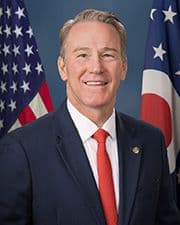
- Jon Husted
- Cosponsors
- - 0 - 1
- Introduced
- In Committee
What this bill would do
The China AI Power Report Act requires the Secretaries of Commerce and State to submit a report on the advanced artificial intelligence capabilities of the People's Republic of China. This report must be submitted within 180 days of enactment and annually for three years. The assessment covers various technical areas, including integrated circuits, semiconductor fabrication, and artificial intelligence models. It also looks into manufacturing equipment, research efforts, and the development of humanoid robots. Additionally, the bill examines the regulatory frameworks and global standards diplomacy utilized by the PRC.
Yes· 3 of 7
Does this better protect the country from computer attacks?+5
The act identifies potential cyber offensive capabilities and vulnerabilities in advanced AI models.
Does this make patent and copyright rules fairer?+5
The act explicitly looks into methods used by PRC entities to steal non-PRC intellectual property.
Does this give people more control over their personal data?+4
The report assesses how AI applications collect and use data, which is critical for protecting user privacy.
The opposite
No question was scored the opposite.
Who it would affect, and how
Potential Positive Impacts for People
-
Increased Transparency of National Security Risks: The bill requires a detailed assessment of advanced artificial intelligence models and their potential for cyber offensive capabilities or biological and virological applications (Section 2(b)(6)(D)). This could help protect the public by identifying risks to national security.
-
Identification of Supply Chain Vulnerabilities: The Act mandates a report on the efforts of the PRC regarding supply chains for advanced artificial intelligence systems (Section 2(a)). Understanding these supply chains can help the United States manage risks associated with critical technology.
-
Monitoring of Economic and Technological Trends: The report includes assessments of market shares, production volumes, and research funding within the PRC (Sections 2(b)(2), 2(b)(3), and 2(b)(8)). This information could provide insight into global economic shifts and technological advancements.
-
Strengthening Export Controls: The bill requires an assessment of the effectiveness of United States export controls and the identification of any loopholes (Section 2(b)(16)). This could lead to stronger protections for domestic technology and security.
Potential Negative Impacts for People
-
Increased Government Oversight and Intelligence Gathering: The bill directs federal agencies to conduct extensive, highly detailed assessments of various industries, including research, manufacturing, and software (Sections 2(b)(1)-(5)). This represents a significant scale of government intelligence and analysis activity.
-
Potential for Heightened Geopolitical Tensions: By focusing heavily on the technological and strategic capabilities of the People's Republic of China, the bill involves high-level scrutiny of their industry, research, and military affiliations (Section 2(b)(6)).
Groups and Interests Ranking
Every group the model scored this bill for, from -10 to +10. Hover a score for the reason it gave.
- National Security And Foreign Policy
- Improves Cybersecurity Defense+5Improves International Alliances+3Improves International Trade+2
- Education And Technology
- Improves Intellectual Property Fairness+5Improves Data Privacy+4
- Governance And Ideology
- Improves Government Transparency+3Increases Federal Power+3
- 8/7/2026
- Read twice and referred to the Committee on Foreign Relations.
- 1 Cosponsor added.
- Introduced in Senate
One bill Congress.gov lists as related to this one — companions in the other chamber, earlier versions, and bills this one absorbed or was folded into.
 Mark Warner
Democrat · Virginia