Bill · S. 5330· Senate(119-S-5330)
Critical Mineral and Extraction Tax Parity Act
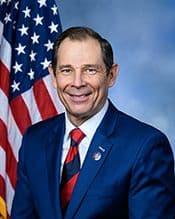
- Introduced
- 8/6/2026
- Last activity
- 8/6/2026 — Read twice and referred to the Committee on Finance.
- Sponsored by
- John Curtis
- Cosponsors
- - 1 - 0
- Introduced
- In Committee
What this bill would do
This bill, titled the "Critical Mineral and Extraction Tax Parity Act," aims to amend the Internal Revenue Code of 1986. It proposes to expand the advanced manufacturing production tax credit by adding several new minerals to the list. These additions include Boron, Copper, Lead, Potash, Rhenium, Silicon, Silver, and Uranium. The bill also includes specific provisions for certain types of Phosphate. Additionally, it allows for the inclusion of ore extraction costs for critical minerals under specific conditions. Finally, the act repeals a specific reduction in the credit amount for metallurgical coal.
Yes· 3 of 8
Would business owners be better off under this?+5
The expansion of tax credits directly benefits owners and operators in the mining and manufacturing sectors.
Is this likely to grow the economy?+4
By incentivizing the production of critical minerals, the bill supports industrial capacity and domestic supply chains.
Is this likely to create jobs?+3
The expansion of tax credits for critical mineral extraction and processing may incentivize increased domestic mining and manufacturing activity.
The opposite
No question was scored the opposite.
Who it would affect, and how
Potential Positive Impacts for People
-
Expansion of Tax Credit Coverage: By adding minerals like Boron, Copper, Lead, Potals, Rhenium, Silicon, Silver, and Uranium to the code, more minerals can qualify for the production tax credit (Section 2(a)(1)).
-
Benefits for Phosphate Production: The bill provides a path for phosphate to be included in the tax credit if it is converted into phosphoric acid, high-purity phosphorus, or specific types of purified phosphate rock (Section 2(a)(1)(B)).
-
Incentives for Ore Extraction: Taxpayers who extract ore that is later refined into a critical mineral may be able to treat extraction costs as eligible costs for the credit, provided certain certification and sale requirements are met (Section 2(b)(1)(A)).
-
Support for Domestic and Specific Foreign Extraction: The bill allows extraction costs to be considered if the ore was extracted in the United States or if certain foreign ore meets specific criteria regarding commercial availability and origin (Section 2(b)(1)(B)).
-
Increased Credit for Coal: The act removes a reduction in the credit amount that previously applied to metallurgical coal (Section 2(c)(1)).
Potential Negative Impacts for People
-
Regulatory Oversight Requirements: Taxpayers seeking to include extraction costs must submit certifications to the Secretary to prove the ore was refined and sold appropriately (Section 2(b)(1)(A)).
-
Restrictions on Foreign Ore: Extraction costs for ore mined outside the United States may not be eligible if the ore is of a type already extracted in the U.S. in commercial quantities or if it comes from a foreign country of concern (Section 2(b)(1)(B)).
-
Prevention of Double Benefits: The Secretary will issue regulations to ensure that extraction costs are not counted more than once, which may act as a restriction on how costs are reported (Section 2(b)(1)(C)).
Groups and Interests Ranking
Every group the model scored this bill for, from -10 to +10. Hover a score for the reason it gave.
- Demographic And Interest Groups
- Good For Business Owners+5Good For Rural Residents+2Good For Union Workers+2
- Economy And Finance
- Improves Economic Growth+4Increases Job Creation+3
- Environment Energy And Infrastructure
- Improves Rural Development+2Increases Renewable Energy Investment+2
- Governance And Ideology
- Increases Federal Power+1
- 8/6/2026
- Read twice and referred to the Committee on Finance.
- 1 Cosponsor added.
- Introduced in Senate
One bill Congress.gov lists as related to this one — companions in the other chamber, earlier versions, and bills this one absorbed or was folded into.
 Steve Daines
Republican · Montana