Bill · S. 5252· Senate(119-S-5252)
BLADE Act
- Introduced
- 8/5/2026
- Last activity
- 8/5/2026 — Read twice and referred to the Committee on Banking, Housing, and Urban Affairs.
- Sponsored by
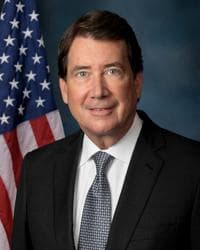
- Bill Hagerty
- Cosponsors
- - 2 - 3
- Introduced
- In Committee
What this bill would do
The BLADE Act aims to protect the national security and economic interests of the United States by preventing foreign adversaries from extracting key technical features of closed-source artificial intelligence models. The bill targets "model extraction attacks" where entities attempt to replicate or improve their own AI capabilities by circumventing the controls of U.S. owners. It directs the Secretary of Commerce to conduct assessments to identify persons of concern and fraudulent account network providers. To deter these actions, the Act requires adding identified entities to the Entity List and allows the President to block their transactions through sanctions. Additionally, the government will maintain a public "AI Model Extraction Attackers List."
Yes· 3 of 8
Does this make patent and copyright rules fairer?+7
The act provides robust protections for the proprietary technical characteristics of closed-source AI models.
Would business owners be better off under this?+7
The bill specifically protects the intellectual property and economic interests of U.S. technology owners.
Does this better protect the country from computer attacks?+6
The act helps protect sensitive AI model architectures from being extracted by adversaries.
The opposite
No question was scored the opposite.
Who it would affect, and how
Potential Positive Impacts for People
-
Protection of Economic Competitiveness: The bill seeks to protect the intellectual property rights and economic competitiveness of United States entities by preventing the unauthorized acquisition of model capabilities (Section 2).
-
National Security Safeguards: By targeting model extraction attacks, the bill aims to prevent foreign adversaries from using these attacks as a "short cut" to acquiring advanced artificial intelligence capabilities (Section 2).
-
Information Sharing for Owners: The Act establishes an information-sharing mechanism that allows owners of closed-source AI models to voluntarily and confidentially share information about attacks with the Department of Commerce (Section 4).
-
Defense Best Practices: The Secretary of Commerce is required to publish a report providing best practices to help owners detect, prevent, and respond to model extraction attacks (Section 4).
Potential Negative Impacts for People
-
Sanctions on Property: The President is authorized to block and prohibit all transactions involving the property and interests of identified persons of concern if that property is in the United States or under the control of a United States person (Section 5).
-
Restrictions via Entity List: Entities identified as conducting or facilitating model extraction attacks will be added to the Entity List maintained by the Bureau of Industry and Security (Section 5).
Groups and Interests Ranking
Every group the model scored this bill for, from -10 to +10. Hover a score for the reason it gave.
- Education And Technology
- Improves Intellectual Property Fairness+7Increases Big Tech Regulation+5
- National Security And Foreign Policy
- Improves Cybersecurity Defense+6Improves International Alliances+3
- Governance And Ideology
- Increases Federal Power+5Improves Government Transparency+3
- Demographic And Interest Groups
- Good For Business Owners+7
- Economy And Finance
- Improves Economic Growth+5
- 8/7/2026
- 2 Cosponsors added.
- 8/5/2026
- Read twice and referred to the Committee on Banking, Housing, and Urban Affairs.
- 3 Cosponsors added.
- Introduced in Senate
 Catherine Cortez Masto
Democrat · Nevada
 Andy Kim
Democrat · New Jersey
 David McCormick
Republican · Pennsylvania
 Jeanne Shaheen
Democrat · New Hampshire
 Tim Scott
Republican · South Carolina