
A Republican bill with 1 Republican cosponsor · See the cosponsor
Last activity — Read twice and referred to the Committee on Health, Education, Labor, and Pensions.
In committee
Introduced and handed to a committee in the chamber it started in.
The committee holds it, and most bills are never heard from again. A hearing or a committee vote would be news; silence is the usual outcome, and it kills the bill without anyone voting against it.
Its path through Congress
- Introduced
- In Committee
What this bill would do
This bill, known as the "Guaranteeing Religious Accommodation in Childhood Education Act" or the "GRACE Act," seeks to prohibit the award of Federal education funds to certain entities. It targets educational institutions and agencies that have vaccination requirements. Under this act, those institutions must allow individuals or their parents/guardians to claim an exemption based on a sincerely held religious belief. Furthermore, the institution cannot require any documentation or information to prove the validity of that religious assertion.
Yes
- Scored +8
Does this protect the freedom to practise a religion?
The bill mandates that educational institutions accommodate sincerely held religious beliefs regarding vaccinations.
- Scored +4
Does this leave more decisions to the states?
The bill impacts how state and local educational agencies manage their own enrollment requirements.
The opposite· 3 of 6
- Scored -5
Does this make the country readier for the next outbreak?
The bill creates barriers to vaccination requirements which may reduce population-level immunity during outbreaks.
- Scored -3
Does this put more money into public schools?
The bill risks reducing available federal funding for educational agencies that maintain vaccination requirements.
- Scored -2
Would children be better off under this?
The bill may lead to reduced funding for schools and potentially lower vaccination rates among children.
Who it would affect, and how
Potential Positive Impacts for People
-
Religious Accommodations: Educational institutions would be required to maintain a policy that allows for exemptions based on a sincerely held religious belief (Section 2(a)(1)). This provides a way for individuals or parents to opt out of vaccination requirements for religious reasons.
-
Ease of Exemption Process: The bill stipulates that no documentation or other information is required to be submitted to support the validity of a religious assertion (Section 2(a)(2)). This removes the burden of proof from the individual or parent.
Potential Negative Impacts for People
- Restrictions on Federal Funding: Federal education funds may be withheld from elementary schools, secondary schools, local educational agencies, or State educational agencies if they do not comply with these specific exemption rules (Section 2(a)). This could impact the available resources for these institutions.
Groups and Interests Ranking
Every group the model scored this bill for, from -10 to +10. Tap or hover a score for the reason it gave.
- Social Issues And Justice
- Does this protect the freedom to practise a religion? — The bill mandates that educational institutions accommodate sincerely held religious beliefs regarding vaccinations.
- Demographic And Interest Groups
- Would children be better off under this? — The bill may lead to reduced funding for schools and potentially lower vaccination rates among children. Would households on low incomes be better off under this? — The potential reduction in federal education funding could disproportionately affect underfunded local agencies. Would students be better off under this? — The bill could negatively impact student services if educational institutions face funding cuts.
- Healthcare
- Does this make the country readier for the next outbreak? — The bill creates barriers to vaccination requirements which may reduce population-level immunity during outbreaks.
- Governance And Ideology
- Does this leave more decisions to the states? — The bill impacts how state and local educational agencies manage their own enrollment requirements.
- Education And Technology
- Does this put more money into public schools? — The bill risks reducing available federal funding for educational agencies that maintain vaccination requirements.
- Economy And Finance
- Does this reduce what the federal government spends? — The bill threatens to withhold existing federal education funds from non-compliant institutions.
- 7/23/2026
- Read twice and referred to the Committee on Health, Education, Labor, and Pensions.
- 1 Cosponsor added.
- Introduced in Senate
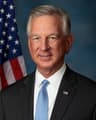 Tommy Tuberville
Republican · Alabama