Bill · S. 4966· Senate(119-S-4966)
High Court Gift Ban Act
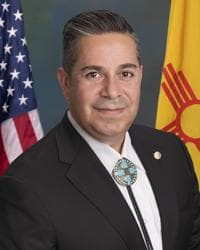
- Introduced
- 7/14/2026
- Last activity
- 7/14/2026 — Read twice and referred to the Committee on the Judiciary.
- Sponsored by
- Ben Luján
- Cosponsors
- - 2 - 0
- Introduced
- In Committee
What this bill would do
The High Court Gift Ban Act aims to prohibit Federal judges from receiving certain gifts. It defines a "gift" broadly to include things like favors, discounts, hospitality, and travel. Under this bill, judicial officers are generally prohibited from accepting gifts unless the value is under $50 and the total received from a single source stays under $100 for the year. The act establishes various exceptions, such as gifts from relatives or items purchased at fair market value. It also outlines enforcement measures, including civil and criminal penalties for violations.
Yes
Does this make what the government does easier for the public to see?+5
The bill increases transparency by prohibiting federal judges from accepting significant gifts from prohibited sources.
Does this protect the right to fair treatment by the courts?+3
The bill seeks to prevent conflicts of interest that could compromise the impartiality of judicial decisions.
Does this change how police departments operate?+1
By enforcing strict gift limits and penalties, the bill promotes greater integrity and accountability within the federal judiciary.
The opposite
No question was scored the opposite.
Who it would affect, and how
Potential Positive Impacts for People
-
Increased Accountability for Judicial Officers: The bill establishes strict limits on the value of gifts a judicial officer can accept from a single source, limiting it to an aggregate of $100 per year (Sec. 2(b)(1)).
-
Protection Against Conflicts of Interest: By defining a "prohibited source" as anyone whose interests are likely to come before a judicial officer, the bill limits potential influence (Sec. 2(b)(4)).
-
Clear Guidelines for Professional Development: The bill allows for the reimbursement of reasonable expenses for seminars or events related to the law or the legal system, provided certain conditions are met (Sec. 2(b)(2)(G)).
-
Clear Exceptions for Personal and Professional Contexts: Judges can still receive gifts from relatives, other judicial officers, or items for which they pay fair market value (Sec. 2(b)(2)(A-D)).
Potential Negative Impacts for People
-
Financial Penalties for Violations: Individuals who violate the act may face civil penalties of up to $50,000 through actions brought by the Attorney General (Sec. 2(c)(2)(A)).
-
Criminal Consequences for Willful Violations: Anyone who knowingly and willfully violates this section could face fines or imprisonment for up to one year (Sec. 2(c)(2)(B)).
-
Restrictions on Receiving Hospitality: The bill places specific limits and requirements on what can be considered "personal hospitality," which may affect how individuals host judicial officers (Sec. 2(b)(2)(H)).
Groups and Interests Ranking
Every group the model scored this bill for, from -10 to +10. Hover a score for the reason it gave.
- Governance And Ideology
- Improves Government Transparency+5Improves Due Process+3
- Social Issues And Justice
- Improves Policing Reform+1
- 7/14/2026
- Read twice and referred to the Committee on the Judiciary.
- 2 Cosponsors added.
- Introduced in Senate
2 bills Congress.gov lists as related to this one — companions in the other chamber, earlier versions, and bills this one absorbed or was folded into.
 Adam Schiff
Democrat · California
 Peter Welch
Democrat · Vermont