
Tammy Duckworth (D-IL)
Strategy for Crisis Management Act of 2026
A Democratic bill with 1 Republican cosponsor · See the cosponsor
Last activity — Read twice and referred to the Committee on Foreign Relations.
In committee
Introduced and handed to a committee in the chamber it started in.
The committee holds it, and most bills are never heard from again. A hearing or a committee vote would be news; silence is the usual outcome, and it kills the bill without anyone voting against it.
Its path through Congress
- Introduced
- In Committee
What this bill would do
The Strategy for Crisis Management Act of 2026 requires the Secretary of Defense to create a comprehensive strategy for handling crises in the South China Sea. This strategy must identify likely flashpoints and include specific "crisis playbooks" that outline response options and coordination plans with foreign partners. The plan is intended to deter provocation from the People's Republic of China while protecting American citizens, service members, and economic interests. Playbooks must involve coordination with various government agencies and include detailed risk and cost analyses. The Secretary of Defense is also tasked with reviewing these playbooks every six months. Finally, the Act mandates specific progress and summary reports to be submitted to Congress.
Yes· 3 of 6
- Scored +2
Does this strengthen ties with allied countries?
The act requires a plan for coordination with foreign partners and upholding treaty obligations.
- Scored +1
Would households on low incomes be better off under this?
The strategy aims to protect economic interests and trade routes which supports broader economic stability.
- Scored +1
Would veterans be better off under this, taking everything together?
The bill includes provisions to ensure the safety of members of the United States Armed Forces during regional crises.
The opposite
- Scored -1
Does this reduce what the federal government spends?
The bill mandates the creation of detailed crisis playbooks that require estimated financial cost analyses for various response options.
Who it would affect, and how
Potential Positive Impacts for People
-
Safety of Citizens and Residents: The strategy aims to ensure the safety of United States citizens and residents both in the South China Sea region and within the United States (Section 2(c)(2)).
-
Safety of Military Personnel: The plan is designed to ensure the safety of members of the United States Armed Forces in the region, specifically including protection from accidents (Section 2(c)(3)).
-
Protection of Economic Interests: The strategy seeks to preserve United States economic interests by protecting key trade and commerce routes (Section 2(c)(4)).
-
National Security and Alliances: The objectives include protecting United States national security interests by upholding treaty obligations and protecting allies and partners (Section 2(c)(5)).
-
Conflict Management: The strategy aims to manage possible escalation into combat operations by seeking opportunities for de-escalation and maintaining strategic stability (Section 2(c)(6)).
Potential Negative Impacts for People
-
Risk to Service Members: While the strategy aims for safety, the required crisis playbooks must specifically assess the "assessed risk to members of the United States Armed Forces" during various response options (Section 2(d)(2)(D)(ii)).
-
Financial Costs: The act requires that response options include an "estimated financial cost," implying that implementing these strategies will involve significant government spending (Section 2(d)(2)(D)(iii)).
-
Impact on Civilians: The required crisis playbooks must include a projection of the "humanitarian impact, including the impact on local civilians" resulting from the proposed options (Section 2(d)(2)(D)(iv)).
Groups and Interests Ranking
Every group the model scored this bill for, from -10 to +10. Tap or hover a score for the reason it gave.
- Demographic And Interest Groups
- Would households on low incomes be better off under this? — The strategy aims to protect economic interests and trade routes which supports broader economic stability. Would people in cities be better off under this? — Protecting global trade routes helps maintain the stability of the domestic economy which impacts urban commercial centers. Would veterans be better off under this, taking everything together? — The bill includes provisions to ensure the safety of members of the United States Armed Forces during regional crises.
- National Security And Foreign Policy
- Does this strengthen ties with allied countries? — The act requires a plan for coordination with foreign partners and upholding treaty obligations. Does this increase the pay, pensions or support veterans receive? — The strategy aims to ensure the safety of members of the United States Armed Forces in the region.
- Economy And Finance
- Does this give people more protection from unfair business practices? — The strategy aims to preserve United States economic interests by protecting key trade and commerce routes. Does this reduce what the federal government spends? — The bill mandates the creation of detailed crisis playbooks that require estimated financial cost analyses for various response options.
- 5/20/2026
- Read twice and referred to the Committee on Foreign Relations.
- 1 Cosponsor added.
- Introduced in Senate
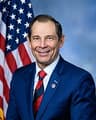 John Curtis
Republican · Utah