Bill · S. 4468· Senate(119-S-4468)
Supporting the Mental Health of Educators and Staff Act of 2026
- Introduced
- 4/30/2026
- Last activity
- 4/30/2026 — Read twice and referred to the Committee on Health, Education, Labor, and Pensions.
- Sponsored by
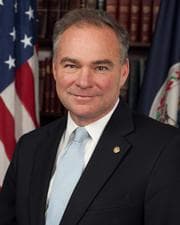
- Timothy Kaine
- Cosponsors
- - 2 - 0
- Introduced
- In Committee
What this bill would do
The "Supporting the Mental Health of Educators and Staff Act of 2026" aims to address the behavioral health and well-being of education professionals and school staff. The Secretary of Health and Human Services is tasked with disseminating best practices for suicide prevention and mental health resiliency. The bill establishes a national education and awareness initiative to encourage staff to seek help for mental health and substance use concerns while addressing associated stigma. It also authorizes grants to help state and local educational agencies implement programs like peer support and mental health care. Additionally, the act provides for training grants to include mental health strategies in educator preparation and professional development. Finally, the bill mandates reviews and reports to evaluate the effectiveness of these initiatives.
Yes· 3 of 5
Does this make mental health care easier to get?+6
The bill provides grants for mental health care, follow-up services, and telehealth for educators and school staff.
Does this put more money into public schools?+4
The bill authorizes new grant programs specifically for state and local educational agencies to support staff mental health.
Would households on low incomes be better off under this?+2
The bill prioritizes funding for schools in high-need areas that often serve low-income communities.
The opposite
No question was scored the opposite.
Who it would affect, and how
Potential Positive Impacts for People
-
Improved Mental Health Resources: The bill directs the Secretary to identify and share best practices for preventing suicide and improving resiliency among school staff (Section 2).
-
Reduced Stigma: An education and awareness initiative will be established to address the stigma associated with seeking mental health and substance use disorder services (Section 3, subsection a, clause 1 and 2).
-
Access to Specialized Care: Grant recipients may use funds to provide mental health care, follow-up services, or referrals by licensed professionals, including via telehealth (Section 4, subsection a, clause 3, subclause D).
-
Enhanced Training: The bill allows for training grants to include mental health and substance use disorder strategies in educator preparation and professional development programs (Section 4, subsection b).
-
Targeted Support for High-Need Areas: Priority for grants will be given to eligible entities in areas with a high percentage of schools receiving financial assistance under part A of title I of the Elementary and Secondary Education Act of 1965 (Section 4, subsection a, clause 4).
Potential Negative Impacts for People
- No specific negative impacts are explicitly stated in the provided text.
Groups and Interests Ranking
Every group the model scored this bill for, from -10 to +10. Hover a score for the reason it gave.
- Healthcare
- Improves Mental Health Access+6
- Education And Technology
- Increases Public School Funding+4
- Demographic And Interest Groups
- Good For Low Income Households+2Good For Urban Residents+1
- Social Issues And Justice
- Improves Poverty Reduction+1
- 4/30/2026
- Read twice and referred to the Committee on Health, Education, Labor, and Pensions.
- 3 Cosponsors added.
- Introduced in Senate
2 bills Congress.gov lists as related to this one — companions in the other chamber, earlier versions, and bills this one absorbed or was folded into.
 Angus King
Independent · Maine
 Jeff Merkley
Democrat · Oregon
 Ron Wyden
Democrat · Oregon