Bill · S. 4370· Senate(119-S-4370)
PCTEC Act
- Introduced
- 4/22/2026
- Last activity
- 4/22/2026 — Read twice and referred to the Committee on Health, Education, Labor, and Pensions.
- Sponsored by
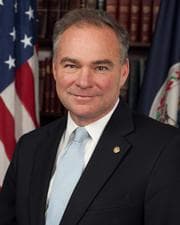
- Timothy Kaine
- Cosponsors
- None
- Introduced
- In Committee
What this bill would do
The PCTEC Act aims to establish and expand primary care team education centers to grow the next generation of health professionals. The bill authorizes the Secretary to award grants to eligible entities for up to five years, with annual amounts not exceeding $1,000,000. These funds are intended to build partnerships with higher education institutions to address shortages of clinical faculty and preceptors. The program also seeks to integrate various health professionals, such as school nurses and community health workers, into the primary care team. Additionally, the Act focuses on supporting student training through curricula and practical assistance like housing or transportation.
Yes· 3 of 9
Would students be better off under this?+5
The bill provides financial assistance for housing and transportation, as well as support for student mental health.
Does this make health care easier to get in general?+5
The bill aims to improve access to care by increasing the number of health professional students trained in multidisciplinary primary care settings.
Would people in their twenties and thirties be better off under this?+4
The bill provides direct financial and well-being support for students in higher education and clinical training.
The opposite
Does this reduce what the federal government spends?-1
The bill authorizes significant new federal spending through annual appropriations for grant awards.
Who it would affect, and how
Potential Positive Impacts for People
-
Improved Access to Care: By increasing the number of health professional students receiving clinical education in multidisciplinary primary care settings, the bill intends to improve access to care (Section 2).
-
Support for Health Professional Students: Grant funds can be used to provide support to students, including assistance for housing near clinical sites or transportation to and from clinical sites (Section 3(a)(c)(1)(B)(i)).
-
Enhanced Student Well-being: The bill allows for the implementation of curricula that include strategies to address the well-being and mental health of health professional students (Section 3(a)(c)(1)(B)(i)).
-
Career Advancement and Retention: The program aims to promote career advancement for health professionals employed by the education centers (Section 3(a)(c)(1)(2)) and utilizes innovative models to help recruit and retain clinical staff (Section 3(a)(c)(1)(A)(i)).
-
Increased Diversity in Health Professions: Priority is given to grant applications that aim to increase the number of health professionals with disadvantaged backgrounds working in those professions (Section 3(a)(d)(1)(B)).
Potential Negative Impacts for People
-
Funding Limitations for Certain Entities: Recipients of a grant under section 749A or 340H are not eligible to receive a grant under this Act (Section 3(a)(e)).
-
Restrictions on Grant Overlap: A recipient of a grant under this Act is not eligible to receive a grant under section 749A (Section 3(a)(b)(1)).
-
Restrictions on Payment Eligibility: A recipient of a grant under this Act is not eligible to receive a payment under section 340H (Section 3(a)(b)(2)).
Groups and Interests Ranking
Every group the model scored this bill for, from -10 to +10. Hover a score for the reason it gave.
- Demographic And Interest Groups
- Good For Students+5Good For Young Adults+4Good For African Americans+3Good For Low Income Households+3
- Healthcare
- Improves Healthcare Access+5Improves Mental Health Access+2
- Social Issues And Justice
- Improves Racial Equity+4
- Education And Technology
- Improves College Affordability+3
- Economy And Finance
- Increases Job Creation+3Reduces Government Spending-1
- 4/22/2026
- Read twice and referred to the Committee on Health, Education, Labor, and Pensions.
- Introduced in Senate