Bill · S. 4286· Senate(119-S-4286)
Senior Hunger Prevention Act of 2026
- Introduced
- 4/14/2026
- Last activity
- 4/14/2026 — Read twice and referred to the Committee on Agriculture, Nutrition, and Forestry.
- Sponsored by
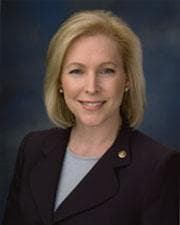
- Kirsten Gillibrand
- Cosponsors
- - 14 - 0
- Introduced
- In Committee
What this bill would do
The Senior Hunger Prevention Act of 2026 aims to amend the Food and Nutrition Act of 2008 to improve nutrition access for older adults and adults with disabilities. The bill seeks to streamline the Supplemental Nutrition Assistance Program (SNAP) through simplified application processes and extended certification periods. It introduces programs like the Elderly Simplified Application Program (ESAP) and the Combined Application Program (CAP) to reduce administrative hurdles. Additionally, the bill establishes a pilot program to increase outreach and enrollment among vulnerable populations. It also includes provisions for food delivery services and modernization of farmers' market nutrition programs. Finally, the legislation provides funding for infrastructure and local procurement to better serve these specific communities.
Yes· 3 of 9
Would people over 65 be better off under this?+7
The bill streamlines SNAP application processes for elderly adults and increases funding for senior nutrition programs.
Would people with disabilities be better off under this?+7
The bill expands the Commodity Supplemental Food Program to include low-income adults with disabilities and streamlines their SNAP access.
Would households on low incomes be better off under this?+6
The bill increases nutritional support and accessibility for low-income adults with disabilities and older adults.
The opposite
No question was scored the opposite.
Who it would affect, and how
Potential Positive Impacts for People
-
Streamlined Nutrition Access: The creation of the "elderly simplified application program" (ESAP) allows for a streamlined application and certification process for households where all adult members are elderly or disabled and have no earned income (Section 3(b)).
-
Reduced Administrative Burdens: Under the ESAP, State agencies would not be required to conduct interviews for household recertification unless requested by the household (Section 3(b)).
-
Simplified Application through CAP: The "combined application program" (CAP) aims to reduce the need for in-person interviews and increase participation by using increased automation and simplified benefit calculations (Section 3(c)).
-
Expanded Food Delivery Options: The bill authorizes food delivery for program participants, which can include free grocery delivery for older adults or adults with disabilities who are unable to shop for themselves or lack safe transportation (Section 5(b)(1)(C)).
-
Increased Outreach and Awareness: The "Enrollment and Outreach Pilot Program" is designed to raise awareness of program availability and assist vulnerable groups in enrolling (Section 4(b)).
-
Improved Farmers' Market Access: The bill provides for modernization grants to transition farmers' market nutrition programs from paper-based coupons to electronic transaction technology (Section 7(a)(2)) and provides financial assistance to improve or establish farmers' markets (Section 8(b)(2)).
-
Expanded Eligibility for Commodity Programs: The Commodity Supplemental Food Program would expand its reach to include low-income adults with disabilities (Section 6(a)(2)).
Potential Negative Impacts for People
-
Strict Standards for Increased Deductions: While State agencies may establish a greater standard medical expense deduction, they must satisfy specific cost-neutrality standards established by the Secretary (Section 2(b)(2)(ii)).
-
Requirement for Fraud Prevention: Under the ESAP, State agencies are required to establish accountability and fraud protection measures to ensure the integrity of the program (Section 3(c)(2)).
-
Potential for Lower Benefits in CAP: The bill notes that a State should refer a household to the standard SNAP program instead of the CAP if the standardized amount provided under CAP would be significantly less than what the household would otherwise receive (Section 3(c)(1)(B)(iii)).
-
Compliance Requirements for Retailers: To receive reimbursements for food delivery, retail food stores must adhere to several requirements, such as paying employees at specific minimum wage rates and not charging surge pricing (Section 5(b)(3)(B)).
Groups and Interests Ranking
Every group the model scored this bill for, from -10 to +10. Hover a score for the reason it gave.
- Demographic And Interest Groups
- Good For People With Disabilities+7Good For Seniors+7Good For Low Income Households+6Good For Veterans+3
- Social Issues And Justice
- Improves Poverty Reduction+5
- Healthcare
- Improves Healthcare Access+4
- Economy And Finance
- Improves Small Business Support+3
- Environment Energy And Infrastructure
- Improves Rural Development+3
- Governance And Ideology
- Improves Government Transparency+2
- 4/14/2026
- Read twice and referred to the Committee on Agriculture, Nutrition, and Forestry.
- 15 Cosponsors added.
- Introduced in Senate
2 bills Congress.gov lists as related to this one — companions in the other chamber, earlier versions, and bills this one absorbed or was folded into.
 Angela Alsobrooks
Democrat · Maryland
 Richard Blumenthal
Democrat · Connecticut
 Cory Booker
Democrat · New Jersey
 John Fetterman
Democrat · Pennsylvania
 Martin Heinrich
Democrat · New Mexico
 Andy Kim
Democrat · New Jersey
 Edward Markey
Democrat · Massachusetts
 Christopher Murphy
Democrat · Connecticut
 Jeff Merkley
Democrat · Oregon
 Bernie Sanders
Independent · Vermont
 Adam Schiff
Democrat · California
 Ron Wyden
Democrat · Oregon
 Peter Welch
Democrat · Vermont
 Sheldon Whitehouse
Democrat · Rhode Island
 Elizabeth Warren
Democrat · Massachusetts