
A Republican bill with 2 Democratic cosponsors · See all 4 cosponsors
Last activity — Read twice and referred to the Committee on Health, Education, Labor, and Pensions.
In committee
Introduced and handed to a committee in the chamber it started in.
The committee holds it, and most bills are never heard from again. A hearing or a committee vote would be news; silence is the usual outcome, and it kills the bill without anyone voting against it.
Its path through Congress
- Introduced
- In Committee
What this bill would do
The Rural America Health Corps Act establishes a demonstration program to help pay off eligible loans for specific individuals. The Secretary of Health and Human Services will manage these payments on the principal and interest of eligible loans. To participate, individuals must be eligible for the National Health Service Corps Loan Repayment Program but not currently participating in it. Participants must agree to five years of full-time employment in a rural health professional shortage area. The program provides annual payments for each year of service, with the remainder paid upon completion of the fifth year.
Yes· 3 of 8
- Scored +7
Does this reduce what student borrowers owe or repay?
The bill provides a mechanism for the repayment of principal and interest on eligible loans through service requirements.
- Scored +5
Would people in their twenties and thirties be better off under this?
The bill targets individuals with student loans, who are predominantly in the young adult demographic.
- Scored +5
Would people in rural areas be better off under this?
The bill increases the likelihood of healthcare providers serving in rural shortage areas.
The opposite
- Scored -1
Does this reduce what the federal government spends?
The bill authorizes $50,000,000 in annual appropriations for the demonstration program.
Who it would affect, and how
Potential Positive Impacts for People
-
Loan Relief for Health Professionals: The program provides payments on the principal and interest of eligible loans to help individuals manage their debt (Section 2(a)(1), Section 2(b)(1)(A)).
-
Financial Incentive for Rural Service: Individuals receive one-fifth of their outstanding loan principal and interest for each year of service, with the final remainder paid after the fifth year (Section 2(b)(2)(A)).
-
Predictable Service Terms: The act specifies that failing to complete the full service period does not constitute a breach of agreement as long as the individual completed the years for which they received payments in good faith (Section 2(b)(3)(B)).
Potential Negative Impacts for People
-
Service Obligations: To receive assistance, individuals must commit to a period of 5 years of full-time employment in a rural health professional shortage area (Section 2(b)(1)(B)).
-
Financial Risk of Breach: The Secretary has the authority to establish a liquidated damages formula that may be used if an individual breaches their agreement (Section 2(b)(3)(A)).
-
Payment Caps: The total amount of payments an individual can receive under this program is limited to $200,000 (Section 2(b)(2)(B)).
Groups and Interests Ranking
Every group the model scored this bill for, from -10 to +10. Tap or hover a score for the reason it gave.
- Demographic And Interest Groups
- Would people in rural areas be better off under this? — The bill increases the likelihood of healthcare providers serving in rural shortage areas. Would people in their twenties and thirties be better off under this? — The bill targets individuals with student loans, who are predominantly in the young adult demographic. Would households on low incomes be better off under this? — The loan repayment assistance provides significant financial relief to professionals managing debt.
- Education And Technology
- Does this reduce what student borrowers owe or repay? — The bill provides a mechanism for the repayment of principal and interest on eligible loans through service requirements.
- Healthcare
- Does this make health care easier to get in general? — The bill aims to increase healthcare access in rural areas by providing loan repayment incentives for providers to work there.
- Environment Energy And Infrastructure
- Does this invest in rural communities? — The bill invests in the human capital of rural areas by incentivizing medical professionals to live and work there.
- Social Issues And Justice
- Is this likely to lift people out of poverty? — The program provides direct financial relief for student loan debt up to $200,000.
- Economy And Finance
- Is this likely to create jobs? — The bill incentivizes health professionals to accept full-time employment in rural shortage areas. Does this reduce what the federal government spends? — The bill authorizes $50,000,000 in annual appropriations for the demonstration program.
- 3/25/2026
- Read twice and referred to the Committee on Health, Education, Labor, and Pensions.
- 4 Cosponsors added.
- Introduced in Senate
One bill Congress.gov lists as related to this one — companions in the other chamber, earlier versions, and bills this one absorbed or was folded into.
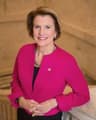 Shelley Capito
Republican · West Virginia
 Richard Durbin
Democrat · Illinois
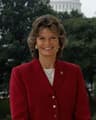 Lisa Murkowski
Republican · Alaska
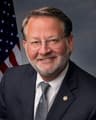 Gary Peters
Democrat · Michigan