Bill · S. 4155· Senate(119-S-4155)
A bill to require voters to provide photo identification as a condition of casting a ballot, and for other purposes.
- Introduced
- 3/19/2026
- Last activity
- 3/19/2026 — Read twice and referred to the Committee on Rules and Administration.
- Sponsored by
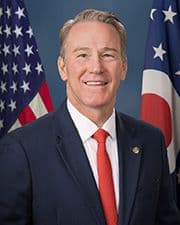
- Jon Husted
- Cosponsors
- None
- Introduced
- In Committee
What this bill would do
This bill seeks to require voters to provide photo identification as a condition for casting a ballot in Federal elections. For in-person voting, individuals must present a valid physical photo identification to an election official. Those voting other than in person must submit a copy of a valid photo identification with their ballot. The bill establishes specific categories of valid photo identification, such as driver's licenses, passports, and military IDs. It also outlines provisions for provisional ballots and access to digital imaging devices for making copies of identification.
Yes
Does this make elections run better?+2
The bill aims to standardize identification requirements for federal elections.
Would Native Americans be better off under this?+2
The bill explicitly accepts valid Tribal government identification as a form of valid photo identification.
Would veterans be better off under this, taking everything together?+2
The bill explicitly accepts military identification as a valid form of photo identification.
The opposite
Does this protect the right to vote?-4
The bill implements strict photo identification requirements that may create barriers to exercising the right to vote.
Does this make casting a ballot easier in practice?-3
While providing free access to digital imaging devices, the requirement to present physical photo ID or copies adds procedural hurdles to voting.
Would households on low incomes be better off under this?-3
The requirement to provide photo identification and potentially access digital imaging devices may pose a burden on low-income individuals.
Who it would affect, and how
Potential Positive Impacts for People
-
Access to copying services: To assist people in providing required documentation, State or local government officials must ensure public access to digital imaging devices like printers, copiers, or scanners at locations such as libraries, courts, and police stations at no cost to the individual (Section 1(a)(2)(B)).
-
Options for those unable to provide photo ID via mail: For individuals voting other than in person, the bill allows for the submission of the last four digits of a Social Security number along with an affidavit stating that the individual made reasonable efforts to obtain a photo ID but was unable to do so (Section s 1(a)(1)(2)(A)(ii)).
-
Provisions for religious objections: Individuals voting in person who lack required identification may use an affidavit stating they do not possess it due to a religious objection to being photographed (Section 1(a)(1)(B)(i)(II)).
-
Exemptions for specific groups: The photo identification requirements for voting other than in person do not apply to absent uniformed services voters or individuals granted the right to vote otherwise than in person under specific accessibility acts (Section 1(a)(1)(2)(B)).
Potential Negative Impacts for People
-
Strict requirements for in-person voters: Election officials are prohibited from providing a ballot for a Federal office to an individual voting in person unless they present a valid physical photo identification (Section 1(a)(1)(A)).
-
Time constraints on provisional ballots: For individuals attempting to vote in person without the required identification, they must present the ID or a specific religious objection affidavit within 3 days after casting their provisional ballot for it to be determined eligible (Section 1(a)(1)(B)(i)).
-
Additional requirements for non-in-person voting: Individuals voting by mail or other methods must submit a copy of a valid photo identification with their ballot (Section 1(a)(1)(2)(A)(i)).
-
Limited definitions of valid ID: The bill limits "valid photo identification" to specific items: a State-issued motor vehicle driver's license, a State-issued ID card from a motor vehicle authority, a U.S. passport, military identification, or a Tribal government identification including a photo and expiration date (Section 1(a)(1)(c)).
Groups and Interests Ranking
Every group the model scored this bill for, from -10 to +10. Hover a score for the reason it gave.
- Social Issues And Justice
- Improves Voting Rights-4Improves Voting Access-3
- Governance And Ideology
- Improves Electoral Process+2
- Demographic And Interest Groups
- Good For Native Americans+2Good For Veterans+2Good For Low Income Households-3
- 3/19/2026
- Read twice and referred to the Committee on Rules and Administration.
- Introduced in Senate
6 bills Congress.gov lists as related to this one — companions in the other chamber, earlier versions, and bills this one absorbed or was folded into.
- 119-HR-7300: Make Elections Great Again Act
- 119-HR-8206: Homeland Security and Further Additional Continuing Appropriations Act, 2026
- 119-HR-8595: Making appropriations for national security, Department of State, and related programs for the fiscal year ending September 30, 2027, and for other purposes.
- 119-HR-9368: Voter ID Act
- 119-S-1383: Veterans Accessibility Advisory Committee Act of 2025
- 119-S-5271: A bill to amend the Help America Vote Act of 2002 to require voters to provide photo identification.