Bill · S. 3989· Senate(119-S-3989)
Community Training, Education, and Access for Medical Students Act of 2026
A bill to amend the Public Health Service Act to provide community-based training opportunities for medical students in rural areas and medically underserved communities, and for other purposes.
- Introduced
- 3/4/2026
- Last activity
- 3/4/2026 — Read twice and referred to the Committee on Health, Education, Labor, and Pensions.
- Sponsored by
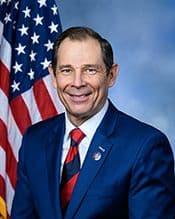
- John Curtis
- Cosponsors
- - 1 - 2
- Introduced
- In Committee
What this bill would do
This bill is known as the Community Training, Education, and Access for Medical Students Act of 2026 or the Community TEAMS Act of 2026. It amends the Public Health Service Act to provide grants for community-based training opportunities for medical students. These grants focus specifically on rural areas and medically underserved communities. Eligible entities for these grants include a consortium of medical schools and rural health clinics, federally qualified health centers, or health care facilities in medically underserved communities. The grants last from 1 to 5 years and are authorized for the years 2026 through 2030.
Yes· 3 of 5
Would people in rural areas be better off under this?+5
The bill aims to increase healthcare access and physician presence in rural areas.
Does this make health care easier to get in general?+5
The bill expands healthcare access by funding community-based clinical rotations in rural and underserved areas.
Would students be better off under this?+4
The bill provides medical students with community-based training and clinical rotation opportunities.
The opposite
No question was scored the opposite.
Who it would affect, and how
Potential Positive Impacts for People
-
Section 2(a): This section allows the Director to award grants to expand community-based training for medical students in rural and medically underserved areas, including clinical rotations and outpatient settings. This could benefit people by helping facilitate long-term, sustainable physician practice in high-need communities.
-
Section 2(a): Under the application requirements, entities must describe how the populations in the rural area or medically underserved community will experience increased access to quality health care services. This could benefit individuals by improving their access to health care across the continuum of care.
Potential Negative Impacts for People
- The provided text does not contain any explicit mentions of potential negative consequences, burdens, or negative impacts for individuals or groups of people in the United States.
Groups and Interests Ranking
Every group the model scored this bill for, from -10 to +10. Hover a score for the reason it gave.
- Demographic And Interest Groups
- Good For Rural Residents+5Good For Students+4Good For Low Income Households+3
- Healthcare
- Improves Healthcare Access+5
- Environment Energy And Infrastructure
- Improves Rural Development+3
- 9/28/2026
- 1 Cosponsor added.
- 9/24/2026
- 1 Cosponsor added.
- 5/13/2026
- 1 Cosponsor added.
- 3/4/2026
- Read twice and referred to the Committee on Health, Education, Labor, and Pensions.
- 1 Cosponsor added.
- Introduced in Senate
 Cory Booker
Democrat · New Jersey
 Steve Daines
Republican · Montana
 Angus King
Independent · Maine
 Jeanne Shaheen
Democrat · New Hampshire