Bill · S. 3846· Senate(119-S-3846)
Employer-Directed Skills Act
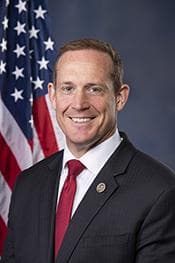
- Introduced
- 2/11/2026
- Last activity
- 2/11/2026 — Read twice and referred to the Committee on Health, Education, Labor, and Pensions.
- Sponsored by
- Ted Budd
- Cosponsors
- - 2 - 0
- Introduced
- In Committee
What this bill would do
This bill, known as the "Employer-Directed Skills Act," seeks to amend the Workforce Innovation and Opportunity Act. It introduces a new category of training called "employer-directed skills development." These programs are designed to meet the specific needs of an employer or group of employers. Under this act, employers must enter into a contract that includes a commitment to hire the individual after they finish the program. Additionally, the bill requires employers to pay a specific portion of the program costs based on the number of employees they have. Finally, the bill updates performance indicators and streamlines the referral process for these training programs.
Yes
Would households on low incomes be better off under this?+5
The bill facilitates access to job-specific training that includes a guaranteed employment commitment.
Is this likely to create jobs?+4
The bill encourages job creation by requiring employers to commit to hiring individuals who successfully complete the training programs.
The opposite
Would business owners be better off under this?-4
The bill mandates that employers pay between 10 and 50 percent of the training program costs.
Does this make it easier to run a small business?-2
The bill imposes mandatory training cost-sharing requirements on businesses based on their size.
Would union members be better off under this?-2
The bill allows employers to bypass standard interviews and assessments through direct referrals.
Who it would affect, and how
Potential Positive Impacts for People
-
Job Security and Employment Commitment: The bill requires an employer-directed skills development contract to include a commitment by the employer to employ an individual upon successful completion of the program (Section 2(a)(1)(B)). This provides participants with a clear path to a job after training.
-
Streamlined Entry into Training: One-stop operators or partners will not be required to conduct an interview, evaluation, or assessment if an individual is referred by an employer and certified by that employer as having the necessary skills and qualifications (Section 2(f)(1)(A)(i)(I)). This can make the process of starting a training program faster for the worker.
-
Targeted Skill Acquisition: Programs are designed to meet the specific skill demands of an employer or group of employers (Section 2(a)(1)(A)), ensuring that the training received is relevant to the job the participant is intended to hold.
Potential Negative Impacts for People
-
Financial Burden on Employers: Depending on the size of the company, employers are required to pay a significant portion of the program costs (Section 2(a)(1)(C)). Large employers with 100 or more employees must pay at least 50 percent of the cost.
-
Potential Reduction in Assessment: Because one-stop operators are not required to conduct interviews, evaluations, or assessments for employer-referred individuals (Section 2(f)(1)(A)(i)(I)), the standard process for screening participants may be bypassed.
Groups and Interests Ranking
Every group the model scored this bill for, from -10 to +10. Hover a score for the reason it gave.
- Economy And Finance
- Increases Job Creation+4Improves Small Business Support-2
- Demographic And Interest Groups
- Good For Low Income Households+5Good For Business Owners-4Good For Union Workers-2
- 2/11/2026
- Read twice and referred to the Committee on Health, Education, Labor, and Pensions.
- 2 Cosponsors added.
- Introduced in Senate
 Bill Cassidy
Republican · Louisiana
 Jon Husted
Republican · Ohio