Bill · S. 3732· Senate(119-S-3732)
Water Security and Drought Resilience Act
- Introduced
- 1/29/2026
- Last activity
- 9/17/2026 — Placed on Senate Legislative Calendar under General Orders. Calendar No. 650.
- Sponsored by
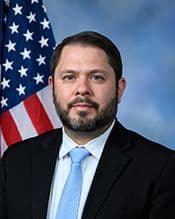
- Ruben Gallego
- Cosponsors
- - 2 - 0
- Introduced
- On Calendar
What this bill would do
This bill is known as the Water Security and Drought Resilience Act. It amends previous laws to let the Secretary of the Interior provide financial help for water storage projects across multiple Reclamation States. The bill also reauthorizes and updates rules for the small storage program, extending its timeline. Additionally, it creates a new grant program for natural water retention and release projects handled by eligible entities like States, Tribes, and water districts. Federal funding for these natural projects is nonreimbursable. Finally, the legislation ensures that nothing in the small storage section affects existing state water laws, federal water laws, or water rights.
Yes· 3 of 21
Would farmers be better off under this?+9
Critically improves water storage and groundwater stability essential for farming.
Would people in rural areas be better off under this?+8
Directly addresses water scarcity and infrastructure in rural Reclamation States.
Does this invest in rural communities?+7
Provides significant financial assistance for water storage and resilience in rural Reclamation States.
The opposite
Does this reduce what the federal government spends?-2
The bill increases government spending by authorizing appropriations through 2033.
Does this reduce what the federal government owes?-1
The bill authorizes new federal spending for grants and projects.
Who it would affect, and how
Potential Positive Impacts for People
-
Section 2 authorizes the Secretary of the Interior to provide financial assistance for water storage projects and feasibility studies in Reclamation States, which can help communities improve their water supplies.
-
Section 3 updates the small storage program to help fund projects that increase surface water or groundwater storage, or stabilize groundwater levels, while explicitly protecting existing state and federal water rights under subsection (f).
-
Section 4 allows eligible entities—including States, Indian Tribes, municipalities, and water districts—to receive grants for natural water retention and release projects that use natural materials to improve water availability in watersheds.
-
Section 4(e) states that any federal funds provided for natural water retention and release project grants are considered nonreimbursable to the United States, meaning local communities do not have to pay that money back.
Potential Negative Impacts for People
- Section 4(d) sets the Federal share of the cost for a natural water retention and release project grant at a maximum of 50 percent, which means local entities or states must find ways to pay for at least half of the project's total cost themselves.
Groups and Interests Ranking
Every group the model scored this bill for, from -10 to +10. Hover a score for the reason it gave.
- Demographic And Interest Groups
- Good For Farmers+9Good For Rural Residents+8Good For Native Americans+6Good For Business Owners+5Good For Hispanic Americans+2Good For Low Income Households+2Good For Middle Class Households+2Good For Union Workers+2Good For Urban Residents+2Good For White Americans+2Good For High Income Households+1
- Environment Energy And Infrastructure
- Improves Rural Development+7Improves Public Land Management+5Improves Environmental Protections+4Improves Disaster Relief And F E M A+3
- Governance And Ideology
- Increase States Rights+3Increases Federal Power+2
- Economy And Finance
- Improves Economic Growth+3Improves Small Business Support+2Increases Job Creation+2Reduces Government Spending-2Reduces National Debt-1
- Social Issues And Justice
- Improves Poverty Reduction+1
- 9/17/2026
- Committee on Energy and Natural Resources. Reported by Senator Lee with an amendment in the nature of a substitute. Without written report.
- Placed on Senate Legislative Calendar under General Orders. Calendar No. 650.
- 7/29/2026
- Committee on Energy and Natural Resources. Ordered to be reported with an amendment in the nature of a substitute favorably.
- 3/17/2026
- Committee on Energy and Natural Resources Subcommittee on Water and Power. Hearings held.
- 1/29/2026
- Read twice and referred to the Committee on Energy and Natural Resources.
- 2 Cosponsors added.
- Introduced in Senate
 Mark Kelly
Democrat · Arizona
 Alex Padilla
Democrat · California