Bill · S. 3529· Senate(119-S-3529)
Public Health Air Quality Act of 2025
- Introduced
- 12/17/2025
- Last activity
- 12/17/2025 — Read twice and referred to the Committee on Environment and Public Works.
- Sponsored by
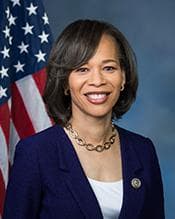
- Lisa Blunt Rochester
- Cosponsors
- - 6 - 0
- Introduced
- In Committee
What this bill would do
S. 3529, known as the Public Health Air Quality Act of 2025, requires the Environmental Protection Agency to expand air monitoring networks across the United States. The bill directs the agency to set up fenceline and ambient air monitoring for stationary sources that emit hazardous air pollutants and are linked to local health threats. It mandates the public reporting of emissions data, updates test methods, and deploys additional air quality systems and multipollutant monitoring stations. The legislation also establishes corrective action levels when pollution thresholds are exceeded at facility boundaries. Finally, it authorizes appropriations for fiscal years 2026 and 2027 to carry out these monitoring and reporting programs.
Yes· 3 of 10
Does this better protect air, water and wildlife?+8
The bill significantly enhances oversight of stationary industrial sources and hazardous air pollutant reporting.
Does this make what the government does easier for the public to see?+7
Mandates public reporting of emissions data, fenceline monitoring results, and restores mapping tools like EJSCREEN.
Would children be better off under this?+6
Children living near industrial facilities benefit from reduced exposure to hazardous air pollutants and improved health tracking.
The opposite
Would business owners be better off under this?-4
Industrial facility owners face increased compliance costs and mandatory corrective actions.
Does this reduce how much oil, gas and coal is produced?-3
Stricter fenceline monitoring and compliance requirements may increase operational burdens on energy and chemical producers.
Does this reduce what the federal government spends?-2
The bill authorizes significant appropriations for new monitoring programs and infrastructure.
Who it would affect, and how
Potential Positive Impacts for People
-
Expanded Fenceline Monitoring: Section 3 requires the Administrator to design and launch a program for emissions measurement and fenceline monitoring of stationary sources of hazardous air pollutants. This ensures that communities living near industrial facilities receive better health protection through direct tracking of local air pollution.
-
Public Access to Data: Section 3(b) requires the Administrator to publish all fenceline monitoring results on the Environmental Protection Agency website in a highly accessible format and a centralized database. This gives people direct, transparent access to local air quality data within days of collection.
-
Correction Violations and Corrective Actions: Section 4(a) mandates that regulations establish corrective action levels for the top hazardous air pollutants driving health risks. If these levels are exceeded, facilities must perform root cause analyses, take remedial action, and implement technological improvements to protect vulnerable individuals.
-
Community Air Quality Systems: Section 6 directs the deployment of at least 1,000 low-cost air quality systems in clusters across selected census tracts or counties. This provisions helps monitor pollution in communities disproportionately impacted by air pollution and gives the public accessible data platforms.
-
Restoration of Mapping Tools: Section 8 requires the Administrator to restore public access to the EJSCREEN mapping tool or create a similar nationwide geospatial screening tool. This helps individuals and groups evaluate nationwide environmental data and view information collected through the new programs.
Potential Negative Impacts for People
- Potential Burdens and Costs: While the bill aims to protect public health, the strict monitoring, reporting, and corrective action requirements placed on major and area sources under Sections 3, 4, and 7 could lead to increased operational and compliance costs for industrial facilities. These increased costs might potentially be passed on to consumers or workers in the form of higher prices or economic burdens within affected local communities.
Groups and Interests Ranking
Every group the model scored this bill for, from -10 to +10. Hover a score for the reason it gave.
- Demographic And Interest Groups
- Good For Children+6Good For Low Income Households+6Good For African Americans+5Good For Hispanic Americans+5Good For Urban Residents+5Good For Business Owners-4
- Environment Energy And Infrastructure
- Improves Environmental Protections+8Reduces Carbon Emissions+6Reduces Fossil Fuel Production-3
- Governance And Ideology
- Improves Government Transparency+7Increases Federal Power+4
- Social Issues And Justice
- Improves Racial Equity+5
- Economy And Finance
- Reduces Government Spending-2
- 12/17/2025
- Read twice and referred to the Committee on Environment and Public Works.
- 6 Cosponsors added.
- Introduced in Senate
One bill Congress.gov lists as related to this one — companions in the other chamber, earlier versions, and bills this one absorbed or was folded into.
 Richard Durbin
Democrat · Illinois
 Tammy Duckworth
Democrat · Illinois
 Edward Markey
Democrat · Massachusetts
 Jeff Merkley
Democrat · Oregon
 Alex Padilla
Democrat · California
 Chris Van Hollen
Democrat · Maryland