Bill · S. 3486· Senate(119-S-3486)
Expand the Behavioral Health Workforce Now Act
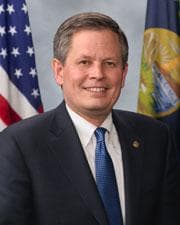
- Introduced
- 12/16/2025
- Last activity
- 12/16/2025 — Read twice and referred to the Committee on Finance.
- Sponsored by
- Steve Daines
- Cosponsors
- - 0 - 1
- Introduced
- In Committee
What this bill would do
This bill is known as the Expand the Behavioral Health Workforce Now Act. It requires the Secretary of Health and Human Services to issue guidance to states within 12 months. This guidance will focus on strategies under Medicaid and the Children's Health Insurance Program. The goal is to increase the education, training, recruitment, and retention of mental health and substance use disorder care providers. The guidance will specifically focus on improving workforce capacity in rural and underserved areas. States will receive information on how to utilize specific waivers and authorities for these purposes.
Yes· 3 of 15
Does this make mental health care easier to get?+6
The bill directly focuses on expanding the mental health and substance use disorder care workforce.
Would people in rural areas be better off under this?+5
The legislation explicitly targets workforce capacity improvements in rural and underserved areas.
Does this make health care easier to get in general?+5
Guidance to states specifically emphasizes improving healthcare workforce capacity in rural and underserved areas.
The opposite
No question was scored the opposite.
Who it would affect, and how
Potential Positive Impacts for People
-
Section 2: This section requires guidance on increasing mental health and substance use disorder care provider education, training, recruitment, and retention. This is positive because it aims to grow the workforce that helps people struggling with mental health and substance use.
-
Section 2: The guidance will have a specific focus on improving workforce capacity in rural and underserved areas. This is positive because it helps people in those specific regions get better access to necessary care.
-
Section 2: States will receive information on how to use section 1115 waivers and other program authorities. This is positive because it gives states practical tools to support these healthcare providers under Medicaid and the Children's Health Insurance Program.
Potential Negative Impacts for People
- Section 2: The text explicitly states that the guidance issued to states by the Secretary of Health and Human Services is non-mandatory. This could be viewed as a negative because states are not required to follow the strategies, meaning the bill might not actually result in any real-world improvements for people.
Groups and Interests Ranking
Every group the model scored this bill for, from -10 to +10. Hover a score for the reason it gave.
- Demographic And Interest Groups
- Good For Rural Residents+5Good For Children+4Good For Low Income Households+4Good For Middle Aged+3Good For Native Americans+3Good For Young Adults+3Good For Middle Class Households+2
- Healthcare
- Improves Mental Health Access+6Improves Healthcare Access+5Improves Opioid Crisis Response+5Increases Medicaid Funding+3
- Economy And Finance
- Increases Job Creation+4
- Environment Energy And Infrastructure
- Improves Rural Development+4
- Governance And Ideology
- Increase States Rights+1Increases Federal Power+1
- 12/16/2025
- Read twice and referred to the Committee on Finance.
- 1 Cosponsor added.
- Introduced in Senate
One bill Congress.gov lists as related to this one — companions in the other chamber, earlier versions, and bills this one absorbed or was folded into.
 Gary Peters
Democrat · Michigan