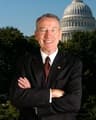
Chuck Grassley (R-IA)
Fraud Risk Assessment of Obamacare Subsidies Accountability Act
A Republican bill with no cosponsors
Last activity — Read twice and referred to the Committee on Health, Education, Labor, and Pensions.
In committee
Introduced and handed to a committee in the chamber it started in.
The committee holds it, and most bills are never heard from again. A hearing or a committee vote would be news; silence is the usual outcome, and it kills the bill without anyone voting against it.
Its path through Congress
- Introduced
- In Committee
What this bill would do
This bill, titled the ``Fraud Risk Assessment of Obamacare Subsidies Accountability Act'', directs the Secretary of Health and Human Services to take action regarding premium tax credits. The Secretary must prepare a fraud risk assessment of advance determinations for these credits. This assessment must be done in coordination with the Secretary of the Treasury. The requirement must be met by December 31, 2025, and every year after that. Finally, the assessment must include a list of controls used to prevent fraud.
Yes· 3 of 5
- Scored +2
Does this make what the government does easier for the public to see?
The bill increases transparency by requiring the publication of fraud prevention controls and risk assessments.
- Scored +2
Does this make the government pay for what it commits to?
The bill improves fiscal responsibility by mandating fraud risk assessments for premium tax credits.
- Scored +1
Would households on low incomes be better off under this?
The bill aims to protect the integrity of tax credits used by low-income households for health insurance.
The opposite
- Scored -1
Does this cut taxes for middle-income families?
The bill focuses on fraud oversight of tax credits rather than direct tax cuts for middle-income families.
Who it would affect, and how
Potential Positive Impacts for People
-
Increased Oversight of Tax Credits: The Secretary of Health and Human Services must prepare a fraud risk assessment of advance determinations of premium tax credits (Section 2(a)). This could help ensure that the system is monitored for potential fraud.
-
Transparency of Fraud Prevention: The bill requires a complete list of any controls used by the Secretary of Health and Human Services to prevent fraud regarding these tax credit claims (Section 2(a)). This provides a clear view of how the government is attempting to stop fraudulent claims.
-
Standardized Risk Management: The assessments must follow specific principles from a Comptroller General report titled ``A Framework for Managing Fraud Risks in Federal Programs'' (Section 2(b)). Using a set framework ensures the risk assessments are conducted according to established principles.
Potential Negative Impacts for People
- No specific negative impacts are explicitly stated in the provided text.
Groups and Interests Ranking
Every group the model scored this bill for, from -10 to +10. Tap or hover a score for the reason it gave.
- Demographic And Interest Groups
- Would households on low incomes be better off under this? — The bill aims to protect the integrity of tax credits used by low-income households for health insurance. Would middle-income households be better off under this? — Ensuring the integrity of tax credit programs can help maintain the stability of the healthcare subsidy system.
- Governance And Ideology
- Does this make what the government does easier for the public to see? — The bill increases transparency by requiring the publication of fraud prevention controls and risk assessments.
- Economy And Finance
- Does this make the government pay for what it commits to? — The bill improves fiscal responsibility by mandating fraud risk assessments for premium tax credits. Does this cut taxes for middle-income families? — The bill focuses on fraud oversight of tax credits rather than direct tax cuts for middle-income families.
- Healthcare
- Does this strengthen the Affordable Care Act? — The bill provides oversight of the premium tax credits that support the Affordable Care Act.
- 12/8/2025
- Read twice and referred to the Committee on Health, Education, Labor, and Pensions.
- Introduced in Senate