A Democratic bill with 2 Democratic cosponsors · See all 2 cosponsors
Last activity — Read twice and referred to the Committee on Health, Education, Labor, and Pensions.
In committee
Introduced and handed to a committee in the chamber it started in.
The committee holds it, and most bills are never heard from again. A hearing or a committee vote would be news; silence is the usual outcome, and it kills the bill without anyone voting against it.
Its path through Congress
- Introduced
- In Committee
What this bill would do
The Strategic Plan for Aging Act seeks to amend the Older Americans Act of 1965. It directs the Assistant Secretary for Aging to award competitive grants to States, Indian tribes, and tribal organizations. These funds are intended to help these entities create or implement "Multisector Plans for Aging and Aging with a Disability." These multi-year plans aim to address the diverse needs of older individuals and those with disabilities through cross-sector collaboration. The bill establishes specific requirements for plan creation, implementation, and evaluation.
Yes· 3 of 16
- Scored +6
Would people over 65 be better off under this?
The bill provides resources specifically to improve the health, well-being, and quality of life of older individuals.
- Scored +5
Would Native Americans be better off under this?
The bill mandates that at least 10 of the 65 potential grants be awarded to Indian tribes or tribal organizations.
- Scored +5
Would people with disabilities be better off under this?
The bill focuses on multisector plans that specifically address aging with a disability.
The opposite
No question was scored the opposite.
Who it would affect, and how
Potential Positive Impacts for People
-
Improved Quality of Life: The purpose of the plan is to provide resources to improve the health, well-being, and quality of life for older individuals and those with disabilities (Section 2(b)).
-
Comprehensive Support Services: The bill allows for plans to include a wide range of vital services such as nutrition and food security, housing assistance, and economic security (Section 2(c)(3)(B)).
-
Disaster Preparedness: Plans can include services to assist individuals with preparedness and during major disasters or emergencies (Section 2(c)(3)(C)).
-
Targeted Assistance: The bill allows for the creation of plans that address the needs of "targeted subgroups," including those with specific social or economic needs (Section 2(a)(8)).
-
Resource Allocation for Tribes: The bill mandates that at least 10 of the 65 potential grants be awarded to Indian tribes or tribal organizations (Section 2(e)(2)).
Potential Negative Impacts for People
-
Limited Funding Amount: Individual grants to eligible entities are capped at a maximum of $500,000 (Section 2(e)(4)).
-
Strict Implementation Timelines: Entities receiving a grant to create a plan must have that plan created and implementation begun within 2 years of receiving the grant (Section 2(f)).
Groups and Interests Ranking
Every group the model scored this bill for, from -10 to +10. Tap or hover a score for the reason it gave.
- Demographic And Interest Groups
- Would people over 65 be better off under this? — The bill provides resources specifically to improve the health, well-being, and quality of life of older individuals. Would Native Americans be better off under this? — The bill mandates that at least 10 of the 65 potential grants be awarded to Indian tribes or tribal organizations. Would people with disabilities be better off under this? — The bill focuses on multisector plans that specifically address aging with a disability. Would households on low incomes be better off under this? — The bill focuses on providing economic security, nutrition, and food security for those with greatest need. Would people in rural areas be better off under this? — The bill requires consideration of the varying needs of populations across different geographies, including rural areas.
- Healthcare
- Does this make the country readier for the next outbreak? — The bill directs plans to promote pandemic preparedness for older individuals. Does this make health care easier to get in general? — The bill aims to expand access to disease prevention, health promotion, and long-term care services. Does this make mental health care easier to get? — The bill specifically includes mental health services as a potential component of the multisector plans.
- Social Issues And Justice
- Does this make housing cost less? — The bill includes housing support, such as home modifications and repairs, as a key aging issue. Is this likely to lift people out of poverty? — The bill directs plans to address economic security and reduce poverty for older individuals.
- Economy And Finance
- Is this likely to create jobs? — The bill funds job training and placement as part of multisector plans for aging. Is this likely to grow the economy? — The bill supports economic security and job training for older individuals.
- Education And Technology
- Does this get reliable internet to more people? — The bill includes broadband access as a key service to be addressed in the aging plans. Does this make college cost less? — The bill promotes education, including digital and financial literacy, for older individuals.
- Environment Energy And Infrastructure
- Does this improve help for people hit by a disaster? — The bill includes assisting covered individuals with disaster preparedness and during major disasters.
- Governance And Ideology
- Does this make what the government does easier for the public to see? — The bill requires implementation assessments that include benchmarks and data dashboards accessible to the public.
- 12/3/2025
- Read twice and referred to the Committee on Health, Education, Labor, and Pensions.
- 2 Cosponsors added.
- Introduced in Senate
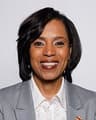 Angela Alsobrooks
Democrat · Maryland
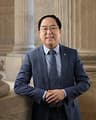 Andy Kim
Democrat · New Jersey