Bill · S. 3190· Senate(119-S-3190)
Fire Innovation Unit Act of 2025
- Introduced
- 11/18/2025
- Last activity
- 11/18/2025 — Read twice and referred to the Committee on Homeland Security and Governmental Affairs.
- Sponsored by
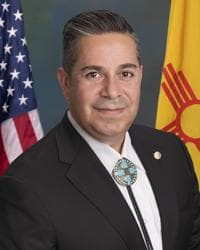
- Ben Luján
- Cosponsors
- - 0 - 1
- Introduced
- In Committee
What this bill would do
The Fire Innovation Unit Act of 2025 directs the establishment of a public-private pilot program focused on wildfire technology. The Secretaries of Agriculture and the Interior will lead this program to test and demonstrate new tools for wildfire prevention, detection, communication, response, and mitigation. This partnership connects private entities, nonprofits, and higher education institutions with various federal and local agencies. The program aims to advance priority areas such as hazardous fuels reduction, remote sensing, and community resilience. Officials are required to provide annual reports to Congress regarding the technologies tested and their costs. The program is scheduled to terminate seven years after the Act is enacted.
Yes· 3 of 10
Would people in rural areas be better off under this?+6
Improved wildfire prevention and grid resilience technologies directly benefit people living in fire-prone rural areas.
Does this better protect air, water and wildlife?+6
The program focuses on advancing technologies for wildfire prevention, detection, and mitigation to protect natural resources.
Would business owners be better off under this?+5
The bill creates opportunities for private entities to demonstrate and scale their wildfire-related technologies through federal partnerships.
The opposite
No question was scored the opposite.
Who it would affect, and how
Potential Positive Impacts for People
-
Advancement of wildfire safety technologies: The program seeks to demonstrate and deploy new technologies for prevention, detection, communication, and mitigation, which could improve wildfire response (Section 2(b)).
-
Improved community protection: The initiative includes priority areas such as community resilience, home hardening, and grid resilience (Section 2(c)(2)).
-
Enhanced fire fighting tools: The program identifies several areas for technological advancement, including autonomous suppression systems, safety equipment, and remote sensing/detection (Section 2(c)(2)).
-
Better communication and planning: The bill prioritizes advancements in dispatch communications, spatial planning for human-caused ignitions, and wildfire modeling (Section 2(c)(2)).
-
Efficient technology deployment: The Secretaries are tasked with ensuring efficient deployment of technologies through public-private partnerships and multiagency contracting (Section 2(c)(5)).
Potential Negative Impacts for People
- No specific negative impacts are explicitly mentioned in the provided text.
Groups and Interests Ranking
Every group the model scored this bill for, from -10 to +10. Hover a score for the reason it gave.
- Demographic And Interest Groups
- Good For Rural Residents+6Good For Business Owners+5Good For Native Americans+4
- Environment Energy And Infrastructure
- Improves Environmental Protections+6Improves Rural Development+5
- Education And Technology
- Increases Scientific Research Funding+5
- Economy And Finance
- Improves Small Business Support+4
- Governance And Ideology
- Improves Government Transparency+3
- Social Issues And Justice
- Improves Affordable Housing+3
- National Security And Foreign Policy
- Improves Veterans Benefits+1
- 11/18/2025
- Read twice and referred to the Committee on Homeland Security and Governmental Affairs.
- 1 Cosponsor added.
- Introduced in Senate
One bill Congress.gov lists as related to this one — companions in the other chamber, earlier versions, and bills this one absorbed or was folded into.
 John Curtis
Republican · Utah