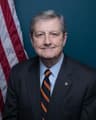
John Kennedy (R-LA)
Ideologically Motivated Violence Accountability Act
A Republican bill with no cosponsors
Last activity — Read twice and referred to the Committee on the Judiciary.
In committee
Introduced and handed to a committee in the chamber it started in.
The committee holds it, and most bills are never heard from again. A hearing or a committee vote would be news; silence is the usual outcome, and it kills the bill without anyone voting against it.
Its path through Congress
- Introduced
- In Committee
What this bill would do
The "Ideologically Motivated Violence Accountability Act" aims to make certain crimes eligible for the death penalty. It targets crimes committed with the intent to target victims based on their political or religious beliefs, affiliations, expressions, or activities. It also covers crimes intended to make public statements or retaliate regarding political or religious ideologies and figures. The bill requires the United States Sentencing Commission to update its guidelines to match these changes.
Yes· 3 of 4
- Scored +5
Does this protect the individual right to speak freely?
The bill aims to protect the right to free political and religious expression by deterring violence against it.
- Scored +5
Does this protect the freedom to practise a religion?
The bill seeks to protect individuals from being targeted for their religious beliefs through severe deterrence.
- Scored +5
Does this protect what people are allowed to say in public life?
The bill aims to protect individuals from being silenced or targeted due to their political expressions.
The opposite
- Scored -5
Does this shorten or soften prison sentences?
The bill expands the eligibility for the death penalty, which is generally seen as a move away from sentencing reform.
- Scored -2
Does this protect the right to fair treatment by the courts?
Expansion of the death penalty can be seen as a risk to the balance of due process and proportionality in sentencing.
Who it would affect, and how
Potential Positive Impacts for People
-
Protection of Democratic Society: The bill finds that targeting people for their beliefs poses a great threat to democratic society, and the government has a compelling interest in ensuring people are not silenced (Section 2(a)).
-
Safeguarding Constitutional Rights: The act addresses attacks that function as ideological intimidation, which can deter free political and religious expression (Section 2(a)).
-
Supporting Public Safety: By addressing violence used to silence dissent or punish opponents, the bill seeks to protect public safety, civil liberties, and the rule of law (Section 2(a)).
Potential Negative Impacts for People
- Expansion of the Death Penalty: The bill amends section 3592(c) of title 18, United States Code, to add "Ideological motive" as a reason for the death penalty (Section 2(b)).
Groups and Interests Ranking
Every group the model scored this bill for, from -10 to +10. Tap or hover a score for the reason it gave.
- Governance And Ideology
- Does this protect the individual right to speak freely? — The bill aims to protect the right to free political and religious expression by deterring violence against it. Does this give the federal government more power? — The bill expands federal sentencing authority by adding new criteria for the federal death penalty. Does this protect the right to fair treatment by the courts? — Expansion of the death penalty can be seen as a risk to the balance of due process and proportionality in sentencing.
- Social Issues And Justice
- Does this protect what people are allowed to say in public life? — The bill aims to protect individuals from being silenced or targeted due to their political expressions. Does this protect the freedom to practise a religion? — The bill seeks to protect individuals from being targeted for their religious beliefs through severe deterrence. Does this shorten or soften prison sentences? — The bill expands the eligibility for the death penalty, which is generally seen as a move away from sentencing reform.
- 11/5/2025
- Read twice and referred to the Committee on the Judiciary.
- Introduced in Senate