Bill · S. 3093· Senate(119-S-3093)
Detection Equipment and Technology Evaluation to Counter the Threat of Nitazenes Act of 2025
A bill to require the Science and Technology Directorate in the Department of Homeland Security to work with the Drug Enforcement Agency to develop greater capacity to detect, identify, and disrupt illicit substances, such as nitazenes, in very low concentrations.
- Introduced
- 11/3/2025
- Last activity
- 11/3/2025 — Read twice and referred to the Committee on Homeland Security and Governmental Affairs.
- Sponsored by
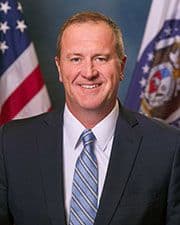
- Eric Schmitt
- Cosponsors
- - 3 - 3
- Introduced
- In Committee
What this bill would do
This bill, known as the "DETECT Nitazenes Act of 2025," aims to increase the ability to find and stop illegal drugs. It requires the Science and Technology Directorate within the Department of Homeland Security to collaborate with the Drug Enforcement Agency. The goal of this partnership is to develop better ways to detect, identify, and disrupt substances like nitazenes even when they are in very low concentrations. This involves amending the Homeland Security Act of 2002 to include nitazenes alongside fentanyl and xylazine.
Yes· 3 of 8
Does this do more about addiction and overdose deaths?+7
Directly targets the detection and disruption of synthetic opioids like nitazenes.
Does this tighten control of the border?+6
Enhances the ability of DHS to detect and disrupt illicit substances entering the country.
Does this put more money into medical research?+5
Requires DHS and DEA to develop greater capacity to detect and identify potent illicit substances.
The opposite
No question was scored the opposite.
Who it would affect, and how
Potential Positive Impacts for People
-
Improved Detection Capabilities: The bill calls for developing a greater capacity to detect, identify, and disrupt illicit substances like nitazenes in very low concentrations (Section 2). This could benefit the public by improving the ability to intercept dangerous drugs.
-
Enhanced Inter-Agency Cooperation: By requiring the Science and Technology Directorate in the Department of Homeland Security to work with the Drug Enforcement Agency, the bill seeks to combine expertise to tackle the threat of substances such as nitazenes (Section 2).
Potential Negative Impacts for People
- No negative impacts are explicitly stated in the provided text.
Groups and Interests Ranking
Every group the model scored this bill for, from -10 to +10. Hover a score for the reason it gave.
- Healthcare
- Improves Opioid Crisis Response+7Increases Research Funding+5
- Demographic And Interest Groups
- Good For Low Income Households+3Good For Middle Aged+3Good For Young Adults+3
- Social Issues And Justice
- Improves Border Security+6
- Education And Technology
- Increases Scientific Research Funding+4
- Governance And Ideology
- Increases Federal Power+2
- 9/16/2026
- 1 Cosponsor added.
- 12/2/2025
- 1 Cosponsor added.
- 11/3/2025
- Read twice and referred to the Committee on Homeland Security and Governmental Affairs.
- 4 Cosponsors added.
- Introduced in Senate
One bill Congress.gov lists as related to this one — companions in the other chamber, earlier versions, and bills this one absorbed or was folded into.
 Ruben Gallego
Democrat · Arizona
 Cindy Hyde-Smith
Republican · Mississippi
 David McCormick
Republican · Pennsylvania
 Pete Ricketts
Republican · Nebraska
 Jeanne Shaheen
Democrat · New Hampshire
 Elissa Slotkin
Democrat · Michigan