Bill · S. 3067· Senate(119-S-3067)
Innovation Fund Act
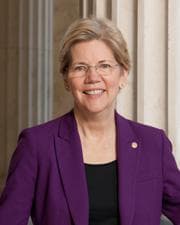
- Introduced
- 10/28/2025
- Last activity
- 10/28/2025 — Read twice and referred to the Committee on Banking, Housing, and Urban Affairs.
- Sponsored by
- Elizabeth Warren
- Cosponsors
- - 1 - 0
- Introduced
- In Committee
What this bill would do
S. 3067, known as the Innovation Fund Act, establishes a grant program at the Department of Housing and Urban Development to increase the local housing supply. The Secretary of Housing and Urban Development will award competitive grants to eligible cities, counties, local governments, and Indian tribes that have demonstrated objective improvements in housing growth. Eligible entities can use these grant funds for community development activities, local and regional transportation projects, clean water or drinking water matching funds, and initiatives that expand the supply of attainable housing. The bill authorizes $200,000,000 to be appropriated for each of fiscal years 2027 through 2031, adjusted for inflation. Furthermore, the legislation ensures that the Secretary is not authorized to mandate, supersede, or preempt any local zoning or land use policy.
Yes· 3 of 36
Does this make housing cost less?+7
The bill explicitly provides grants and incentivizes local policy changes to increase the supply of attainable housing.
Would households on low incomes be better off under this?+6
Focuses on attainable housing serving households at or below area median income levels.
Would people in their twenties and thirties be better off under this?+5
Increases the availability of attainable housing, helping first-time home buyers and renters.
The opposite
Does this reduce what the federal government spends?-3
Authorizes new federal appropriations for competitive grants over multiple fiscal years.
Does this reduce what the federal government owes?-2
The bill authorizes $200 million annually plus inflation adjustments, increasing federal spending.
Does this make the government pay for what it commits to?-1
Adds new discretionary grant funding obligations without offsetting savings.
Who it would affect, and how
Potential Positive Impacts for People
-
Section 2(b)(3)(D) and Section 2(b)(4)(B): This provision allows grant funds to be used for initiatives that expand the supply of attainable housing, such as revising parking requirements, reducing minimum lot sizes, and eliminating restrictions against accessory dwelling units. These actions could make it easier and cheaper to build more homes, helping everyday people find more affordable places to live.
-
Section 2(b)(5)(A) and Section 2(b)(5)(B): The bill requires the Secretary to make at least 25 grants annually, ranging from $250,000 to $10,000,000, with strong consideration given to a relatively even spread of rural, suburban, and urban communities. This ensures that federal support is distributed broadly across the country rather than concentrated in just a few areas.
-
Section 2(c)(1): This rule of construction clarifies that nothing in the section authorizes the Secretary to mandate, supersede, or preempt any local zoning or land use policy. This protects local communities by ensuring that unelected federal officials cannot override local control over neighborhood planning.
Potential Negative Impacts for People
- Section 2(d)(1): The bill authorizes $200,000,000 to be appropriated for each fiscal year from 2027 through 2031, which is further adjusted for inflation under Section 2(d)(2). Taxpayers will ultimately bear the burden of funding these federal grants, adding to government spending.
Groups and Interests Ranking
Every group the model scored this bill for, from -10 to +10. Hover a score for the reason it gave.
- Demographic And Interest Groups
- Good For Low Income Households+6Good For Middle Class Households+5Good For Young Adults+5Good For Rural Residents+4Good For Urban Residents+4Good For Business Owners+3Good For Middle Aged+3Good For Native Americans+3Good For Retirees+3Good For Seniors+3Good For Students+3Good For Union Workers+3Good For African Americans+2Good For Children+2Good For Farmers+2Good For Hispanic Americans+2Good For Immigrants+2Good For Men+2Good For People With Disabilities+2Good For Veterans+2Good For Women+2Good For Asian Americans+1Good For L G B T Q Community+1Good For White Americans+1
- Social Issues And Justice
- Improves Affordable Housing+7Improves Poverty Reduction+3Reduces Homelessness+3Improves Racial Equity+1
- Environment Energy And Infrastructure
- Improves Rural Development+4Improves Public Transit+2Improves Roads And Bridges+2
- Governance And Ideology
- Increase States Rights+3Improves Government Transparency+2
- Economy And Finance
- Improves Small Business Support+3Increases Job Creation+3Improves Economic Growth+2Reduces Government Spending-3Reduces National Debt-2Improves Fiscal Responsibility-1
- 10/28/2025
- Read twice and referred to the Committee on Banking, Housing, and Urban Affairs.
- 1 Cosponsor added.
- Introduced in Senate
3 bills Congress.gov lists as related to this one — companions in the other chamber, earlier versions, and bills this one absorbed or was folded into.
 Raphael Warnock
Democrat · Georgia