Bill · S. 304· Senate(119-S-304)
Birthright Citizenship Act of 2025
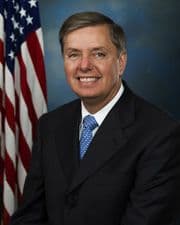
- Introduced
- 1/29/2025
- Last activity
- 1/29/2025 — Read twice and referred to the Committee on the Judiciary.
- Sponsored by
- Lindsey Graham
- Cosponsors
- - 11 - 0
- Introduced
- In Committee
What this bill would do
This bill, titled the Birthright Citizenship Act of 2025'', seeks to amend section 301 of the Immigration and Nationality Act. It aims to clarify which individuals born in the United States are considered nationals and citizens at birth. The amendment would redefine being subject to the jurisdiction'' of the United States for those born to specific types of parents. Specifically, it targets those born to U.S. citizens or nationals, lawful permanent residents, or aliens in lawful status performing active military service. This change would not apply to any person born before the Act is enacted.
Yes
Does this give the federal government more power?+2
The bill uses federal statute to clarify and restrict the definition of who is subject to the jurisdiction of the United States.
Does this increase the pay, pensions or support veterans receive?+2
The bill explicitly includes children of aliens in lawful status performing active service in the armed forces as eligible for birthright citizenship.
The opposite· 3 of 6
Would immigrants be better off under this?-7
The bill reduces the ease of obtaining citizenship for those born in the U.S. to parents without permanent residence or citizenship.
Does this make it easier for immigrants already here to become citizens?-7
The bill restricts birthright citizenship to children of specific parent categories, making it harder for others to obtain citizenship.
Would Hispanic Americans be better off under this?-6
The restriction on birthright citizenship likely impacts large segments of the Hispanic population born to non-citizen parents.
Who it would affect, and how
Potential Positive Impacts for People
- Clarification for specific groups: The bill provides a clear definition of who is considered ``subject to the jurisdiction'' of the United States based on parental status (Section 2(a)(3)). This establishes specific criteria for those born to U.S. citizens, nationals, lawful permanent residents, or those in active military service.
Potential Negative Impacts for People
- Limitation of birthright citizenship: By redefining who is ``subject to the jurisdiction'' of the United States, the bill limits the criteria for birthright citizenship to specific classes of parents (Section 2(a)(3)). This means individuals born in the United States to parents who do not meet these specific categories may not be considered citizens or nationals at birth.
Groups and Interests Ranking
Every group the model scored this bill for, from -10 to +10. Hover a score for the reason it gave.
- Demographic And Interest Groups
- Good For Immigrants-7Good For Hispanic Americans-6Good For Children-5Good For Low Income Households-4
- Social Issues And Justice
- Improves Pathway To Citizenship-7Improves Poverty Reduction-3
- Governance And Ideology
- Increases Federal Power+2
- National Security And Foreign Policy
- Improves Veterans Benefits+2
- 8/6/2026
- 1 Cosponsor added.
- 7/23/2026
- 1 Cosponsor added.
- 7/14/2026
- 1 Cosponsor added.
- 12/16/2025
- 1 Cosponsor added.
- 9/2/2025
- 1 Cosponsor added.
- 5/19/2025
- 1 Cosponsor added.
- 5/12/2025
- 1 Cosponsor added.
- 5/6/2025
- 2 Cosponsors added.
- 1/29/2025
- Read twice and referred to the Committee on the Judiciary.
- 2 Cosponsors added.
- Introduced in Senate
2 bills Congress.gov lists as related to this one — companions in the other chamber, earlier versions, and bills this one absorbed or was folded into.
 Marsha Blackburn
Republican · Tennessee
 Jim Banks
Republican · Indiana
 Ted Budd
Republican · North Carolina
 Katie Britt
Republican · Alabama
 Ted Cruz
Republican · Texas
- Darline Graham
Republican · South Carolina
 Mike Lee
Republican · Utah
 Bernie Moreno
Republican · Ohio
 Pete Ricketts
Republican · Nebraska
 Tim Sheehy
Republican · Montana
 Tommy Tuberville
Republican · Alabama