Bill · S. 2835· Senate(119-S-2835)
Energizing Our Communities Act
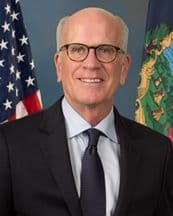
- Introduced
- 9/17/2025
- Last activity
- 9/17/2025 — Read twice and referred to the Committee on Energy and Natural Resources.
- Sponsored by
- Peter Welch
- Cosponsors
- - 1 - 0
- Introduced
- In Committee
What this bill would do
S. 2835 is known as the Energizing Our Communities Act. The bill sets up a new fund called the Community Economic Development Transmission Fund managed by the Secretary of Energy. This fund is paid for by taking a portion of the interest collected from certain government-issued transmission line loans. Local governments and Indian Tribes that host these eligible transmission projects can receive payments from this fund. Host communities must use these funds for specific local public services and conservation efforts. The Secretary of Energy is also required to submit regular reports to Congress on how the fund is operating.
Yes· 3 of 37
Would people in rural areas be better off under this?+6
Directly benefits rural municipalities and counties hosting large transmission infrastructure projects.
Does this put more money into wind, solar and other renewable power?+6
Directly supports areas hosting major transmission projects and renewable energy workforce training.
Would Native Americans be better off under this?+5
Explicitly includes Indian Tribes as host communities eligible for direct funding and project oversight.
The opposite
No question was scored the opposite.
Who it would affect, and how
Potential Positive Impacts for People
-
Under Section 2(e)(1), host communities can use up to 80 percent of their funds to improve essential public services and infrastructure. This includes upgrading public schools, public libraries, public hospitals, roads, bridges, public transportation, firefighting or search and rescue services, and law enforcement. This is a positive benefit because it directly helps local towns pay for crucial everyday services that people rely on.
-
Under Section 2(e)(1)(A)(ii), communities can use funds to expand access to broadband telecommunications services at local community anchor institutions and improve technology for students using digital learning tools. This is a positive outcome because it helps connect families and students to the internet and modern educational tools.
-
Under Section 2(e)(2), host communities must use at least 20 percent of their payments for conservation, stewardship, or recreation purposes. This includes restoring fish and wildlife habitats, improving recreational access to public lands, and supporting wildfire resilience and natural disaster resilience. This is a positive outcome for citizens who enjoy the outdoors and want to protect local natural environments.
Potential Negative Impacts for People
-
Under Section 2(c), a portion of the interest charged and collected on specific Department of Energy loans is redirected into the new Community Economic Development Transmission Fund. Because this interest is diverted to local host communities, it means that money is explicitly routed away from its original financial destination, which could be viewed as a negative burden on broader federal loan accounting and management.
-
Under Section 2(d)(3)(A), host communities only remain eligible for funding if they submit a formal request to the Secretary of Energy within one year of receiving official notice. If a local government misses this strict one-year deadline due to administrative delays or oversight, the community completely loses out on its financial payment, creating a negative outcome for local taxpayers who miss the support.
Groups and Interests Ranking
Every group the model scored this bill for, from -10 to +10. Hover a score for the reason it gave.
- Demographic And Interest Groups
- Good For Rural Residents+6Good For Native Americans+5Good For Children+4Good For Farmers+4Good For Students+4Good For Low Income Households+3Good For Middle Class Households+3Good For Young Adults+3Good For Business Owners+2Good For Middle Aged+2Good For People With Disabilities+2Good For Retirees+2Good For Seniors+2Good For Union Workers+2Good For African Americans+1Good For Asian Americans+1Good For Hispanic Americans+1Good For Urban Residents+1
- Environment Energy And Infrastructure
- Increases Renewable Energy Investment+6Improves Environmental Protections+5Improves Rural Development+5Reduces Carbon Emissions+5Improves Public Land Management+4Improves Roads And Bridges+4Improves Public Transit+3
- Economy And Finance
- Increases Job Creation+4Improves Economic Growth+3Improves Small Business Support+2
- Governance And Ideology
- Improves Government Transparency+3Improves Interstate Commerce+3Increase States Rights+2Increases Federal Power+1
- Education And Technology
- Improves Internet Access+4Increases Public School Funding+4
- Social Issues And Justice
- Improves Disability Rights+3Improves Poverty Reduction+2
- Healthcare
- Improves Healthcare Access+3
- 9/17/2025
- Read twice and referred to the Committee on Energy and Natural Resources.
- 1 Cosponsor added.
- Introduced in Senate
One bill Congress.gov lists as related to this one — companions in the other chamber, earlier versions, and bills this one absorbed or was folded into.
 John Hickenlooper
Democrat · Colorado