Bill · H.R. 5424· House(119-HR-5424)
Energizing Our Communities Act
- Introduced
- 9/17/2025
- Last activity
- 9/17/2025 — Referred to the House Committee on Energy and Commerce.
- Sponsored by
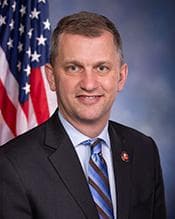
- Sean Casten
- Cosponsors
- None
- Introduced
- In Committee
What this bill would do
The Energizing Our Communities Act establishes the Community Economic Development Transmission Fund within the U.S. Treasury. This fund is financed by a portion of interest collected from specific Department of Energy covered loans related to electric power transmission lines. The money is intended for payments to host communities, which include local governments and Indian Tribes, that have projects on their land. These payments are made after construction begins on eligible projects. Host communities can use the funds for various community support services, such as infrastructure or workforce training. Additionally, at least 20 percent of the funds must be dedicated to conservation, stewardship, or recreation.
Yes· 3 of 18
Would Native Americans be better off under this?+6
The bill explicitly includes Indian Tribes as eligible host communities for receiving payments.
Does this better protect air, water and wildlife?+6
The bill mandates that at least 20 percent of funds be used for conservation, stewardship, or natural climate solutions.
Would people in rural areas be better off under this?+5
The bill targets host communities which often include rural areas via the Western Area Power Administration.
The opposite
No question was scored the opposite.
Who it would affect, and how
Potential Positive Impacts for People
-
Support for Infrastructure and Public Services: Host communities can use up to 80 percent of their payments to improve essential services like public schools, libraries, hospitals, roads, and law enforcement (Section 2(e)(1)).
-
Access to Technology and Agriculture: The bill allows for expanding access to broadband telecommunications and supporting local agricultural processing or distribution infrastructure (Section 2(e)(1)(A)(ii)).
-
Workforce Development: Funds can be used to support training programs for technical skills and business opportunities in the renewable energy sector (Section 2(e)(1)(A)(iv)).
-
Environmental and Recreational Benefits: At least 20 percent of payments must be used for conservation, stewardship, or recreation, which includes protecting wildlife habitats or developing outdoor recreation facilities (Section 2(e)(2)).
-
Climate Resilience: The bill allows funds to support natural climate solutions, such as wildfire resilience and disaster resilience (Section 2(e)(2)(G)).
Potential Negative Impacts for People
-
Financial Limitations on Use: There are restrictions on how a host community can spend the money, as they can use no more than 80 percent for community support services (Section 2(e)(1)).
-
Mandatory Spending Requirements: Host communities are required to use at least 20 percent of their received funds specifically for conservation, stewardship, or recreation purposes (Section 2(e)(2)).
-
Payment Restrictions: The Secretary may make no more than one single payment to a host community for any one eligible project (Section 2(d)(2)(B)).
Groups and Interests Ranking
Every group the model scored this bill for, from -10 to +10. Hover a score for the reason it gave.
- Demographic And Interest Groups
- Good For Native Americans+6Good For Rural Residents+5Good For Students+4Good For Business Owners+3Good For Children+3Good For Low Income Households+3Good For Veterans+2
- Environment Energy And Infrastructure
- Improves Environmental Protections+6Increases Renewable Energy Investment+5Improves Public Transit+4Improves Roads And Bridges+4
- Education And Technology
- Improves Internet Access+5Increases Public School Funding+4
- Economy And Finance
- Increases Job Creation+5Improves Small Business Support+3
- Social Issues And Justice
- Improves Poverty Reduction+3Improves Affordable Housing+2
- Healthcare
- Improves Healthcare Access+3
- 9/17/2025
- Referred to the House Committee on Energy and Commerce.
- Introduced in House
One bill Congress.gov lists as related to this one — companions in the other chamber, earlier versions, and bills this one absorbed or was folded into.