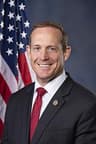
A Republican bill with 1 Republican cosponsor · See the cosponsor
Last activity — Read twice and referred to the Committee on Homeland Security and Governmental Affairs.
In committee
Introduced and handed to a committee in the chamber it started in.
The committee holds it, and most bills are never heard from again. A hearing or a committee vote would be news; silence is the usual outcome, and it kills the bill without anyone voting against it.
Its path through Congress
- Introduced
- In Committee
What this bill would do
The "Restoring Access to Mountain Homes Act" aims to provide reimbursement for certain private roads and bridges. This applies to State, Indian Tribal, and local governments in North Carolina that were covered under major disaster declaration FEMA-4827-DR-NC due to Tropical Storm Helene. Eligible projects include repairs, replacements, or restorations that serve as the sole access to primary residences or essential community services. The bill overrides certain existing regulations under the Robert T. Stafford Disaster Relief and Emergency Assistance Act to allow for this. It also sets specific conditions for reimbursement, such as inspections and documentation requirements.
Yes· 3 of 8
- Scored +9
Does this improve help for people hit by a disaster?
The bill expands FEMA reimbursement eligibility to cover private infrastructure essential for residential and community access following Tropical Storm Helene.
- Scored +8
Does this repair or build roads and bridges?
The bill specifically funds the repair, replacement, or restoration of damaged private roads and bridges in North Carolina.
- Scored +7
Would people in rural areas be better off under this?
The bill targets mountain community access which is vital for residents in rural, storm-impacted areas of North Carolina.
The opposite
- Scored -1
Does this reduce what the federal government spends?
The bill increases federal spending by providing new reimbursement eligibility for disaster recovery costs.
Who it would affect, and how
Potential Positive Impacts for People
-
Access to essential services and homes: State, Indian Tribal, and local governments can receive reimbursement for private roads and bridges that are the only way to reach primary residences or essential community services, provided they were significantly damaged by Tropical Storm Helene (Section 2(a)).
-
Flexibility in repair standards: Reimbursement is available regardless of the pre-existing condition of the roads or bridges (Section 2(a)).
-
Support for previous aid recipients: Individuals or households who already received assistance for these repairs under section 408 of the Robert T. Stafford Disaster Relief and Emergency Assistance Act can proceed with repairs or return the assistance to become eligible under this new act (Section 2(c)(1)).
-
Protection of previous assistance amounts: For those proceeding with repairs using previous assistance, that assistance will not count against the maximum amount of assistance available to the individual or household under section 408 (Section 2(c)(2)).
-
Cost predictability: Once cost estimates are certified by a professionally licensed engineer and accepted by the Administrator, they are presumed to be reasonable and eligible costs, provided there is no evidence of fraud (Section 2(d)(2)).
Potential Negative Impacts for People
-
Administrative requirements for local governments: State, Indian Tribal, or local governments must ensure they obtain authority or permission to perform the work, document all costs according to FEMA policy, and ensure work complies with all applicable State and Federal regulations (Section 2(b)).
-
Maintenance of access during construction: Local governments must ensure that the private roads or bridges being worked on remain open for disaster recovery activities throughout the entire repair, replacement, or restoration process (Section 2(b)(2)).
-
Requirement for professional inspections: Before receiving reimbursement, private roads or bridges must be inspected by appropriate officials to verify the scope, need, and cost-effectiveness of mitigation measures (Section 2(b)(1)).
Groups and Interests Ranking
Every group the model scored this bill for, from -10 to +10. Tap or hover a score for the reason it gave.
- Demographic And Interest Groups
- Would people in rural areas be better off under this? — The bill targets mountain community access which is vital for residents in rural, storm-impacted areas of North Carolina. Would Native Americans be better off under this? — The bill explicitly includes Indian Tribal governments in the eligibility for road and bridge reimbursement. Would households on low incomes be better off under this? — Ensuring access to essential community services and primary residences provides critical stability for vulnerable households. Would middle-income households be better off under this? — The bill helps restore access to primary residences which protects household assets and mobility.
- Environment Energy And Infrastructure
- Does this improve help for people hit by a disaster? — The bill expands FEMA reimbursement eligibility to cover private infrastructure essential for residential and community access following Tropical Storm Helene. Does this repair or build roads and bridges? — The bill specifically funds the repair, replacement, or restoration of damaged private roads and bridges in North Carolina.
- Social Issues And Justice
- Is this likely to lift people out of poverty? — Providing access to essential services and primary residences helps stabilize the living conditions of residents in affected areas.
- Economy And Finance
- Does this reduce what the federal government spends? — The bill increases federal spending by providing new reimbursement eligibility for disaster recovery costs.
- Governance And Ideology
- Does this give the federal government more power? — The bill utilizes federal-state coordination and FEMA oversight to manage local infrastructure repairs.
- 1/28/2025
- Read twice and referred to the Committee on Homeland Security and Governmental Affairs.
- 1 Cosponsor added.
- Introduced in Senate
One bill Congress.gov lists as related to this one — companions in the other chamber, earlier versions, and bills this one absorbed or was folded into.
 Thomas Tillis
Republican · North Carolina