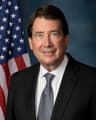
A Republican bill with 8 Republican cosponsors · See all 8 cosponsors
Last activity — Read twice and referred to the Committee on the Judiciary.
In committee
Introduced and handed to a committee in the chamber it started in.
The committee holds it, and most bills are never heard from again. A hearing or a committee vote would be news; silence is the usual outcome, and it kills the bill without anyone voting against it.
Its path through Congress
- Introduced
- In Committee
What this bill would do
This bill, known as the "Protect Our Communities from DUIs Act," aims to change the Immigration and Nationality Act. It seeks to classify certain aliens as inadmissible and deportable. This classification applies to those who have been convicted of, or have admitted to, driving while intoxicated or impaired. The provision covers offenses involving alcohol or drugs. These rules apply regardless of whether the offense is a misdemeanor or a felony under various laws.
Yes
- Scored +2
Does this tighten control of the border?
The bill strengthens border control by establishing new grounds for inadmissibility based on driving offenses.
The opposite· 3 of 4
- Scored -7
Would immigrants be better off under this?
The bill negatively impacts immigrants by making them subject to deportation for misdemeanor or felony driving offenses.
- Scored -5
Does this make it easier for immigrants already here to become citizens?
The bill creates new barriers to legal status by making certain driving offenses grounds for deportation.
- Scored -4
Would Hispanic Americans be better off under this?
The bill increases deportation risks for non-citizens, a demographic that includes many Hispanic residents.
Who it would affect, and how
Potential Positive Impacts for People
-
Inadmissibility for driving offenses: Under Section 2, subsection (a), any alien who has been convicted of, or admits to, the essential elements of driving while intoxicated or impaired becomes inadmissible. This includes offenses involving alcohol or drugs, regardless of whether they are classified as a misdemeanor or felony.
-
Deportability for driving offenses: Under Section 2, subsection (b), any alien convicted of driving while intoxicated or impaired is considered deportable. This applies regardless of whether the conviction is a misdemeanor or a felony under Federal, State, tribal, or local law.
Potential Negative Impacts for People
-
Inadmissibility based on admission: According to Section 2, subsection (a), an alien can be deemed inadmissible not just by a conviction, but also by admitting to having committed or committing acts that constitute the essential elements of a driving while intoxicated or impaired offense.
-
Deportability regardless of crime classification: Under Section 2, subsection (b), an alien can be deported for a driving while intoxicated or impaired conviction regardless of whether that conviction is classified as a misdemeanor or a felony under Federal, State, tribal, or local law.
Groups and Interests Ranking
Every group the model scored this bill for, from -10 to +10. Tap or hover a score for the reason it gave.
- Demographic And Interest Groups
- Would immigrants be better off under this? — The bill negatively impacts immigrants by making them subject to deportation for misdemeanor or felony driving offenses. Would Hispanic Americans be better off under this? — The bill increases deportation risks for non-citizens, a demographic that includes many Hispanic residents. Would households on low incomes be better off under this? — The expansion of deportability may disproportionately impact low-income immigrant populations.
- Social Issues And Justice
- Does this tighten control of the border? — The bill strengthens border control by establishing new grounds for inadmissibility based on driving offenses. Does this make it easier for immigrants already here to become citizens? — The bill creates new barriers to legal status by making certain driving offenses grounds for deportation.
- 11/7/2025
- 1 Cosponsor added.
- 7/30/2025
- Read twice and referred to the Committee on the Judiciary.
- 7 Cosponsors added.
- Introduced in Senate
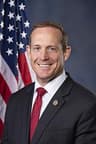 Ted Budd
Republican · North Carolina
 Katie Britt
Republican · Alabama
 Shelley Capito
Republican · West Virginia
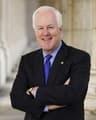 John Cornyn
Republican · Texas
 Tom Cotton
Republican · Arkansas
 Deb Fischer
Republican · Nebraska
 James Lankford
Republican · Oklahoma
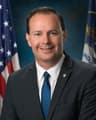 Mike Lee
Republican · Utah