
Jeff Merkley (D-OR)
Preventing the Forced Return of Uyghurs Act of 2025
A Democratic bill with 2 Republican cosponsors · See all 2 cosponsors
Last activity — Read twice and referred to the Committee on the Judiciary.
In committee
Introduced and handed to a committee in the chamber it started in.
The committee holds it, and most bills are never heard from again. A hearing or a committee vote would be news; silence is the usual outcome, and it kills the bill without anyone voting against it.
Its path through Congress
- Introduced
- In Committee
What this bill would do
This bill is known as the Preventing the Forced Return of Uyghurs Act of 2025. It stops certain current or former government officials from entering the United States or getting immigration benefits. This applies to officials who were involved in forcing Uyghurs or other designated aliens to return to the People's Republic of China. The bill also sends these cases to the Office of Foreign Assets Control to check for financial sanctions. The Secretary of State is allowed to grant waivers if it is in the national interest or if circumstances change. Finally, the Secretary of State must submit regular reports to Congress, and the main rules of the bill end five years after it becomes law.
Yes· 3 of 8
- Scored +5
Does this protect the freedom to practise a religion?
The bill defends religious minority groups who face persecution and forced repatriation.
- Scored +5
Would Asian Americans be better off under this?
The legislation directly protects vulnerable Asian ethnic and religious minority populations from forced repatriation.
- Scored +4
Does this narrow racial gaps in how people are treated?
The bill protects persecuted minority groups such as Uyghurs from forced repatriation.
The opposite
No question was scored the opposite.
Who it would affect, and how
Potential Positive Impacts for People
-
Section 2(a)(1) denies entry and immigration benefits to current or former government officials who forced Uyghurs or certain ethnic and religious minority aliens to return to the People's Republic of China where they face persecution, holding wrongdoers accountable.
-
Section 2(a)(2) refers these officials to the Office of Foreign Assets Control to determine if property and financial transactions in the United States should be blocked, which penalizes those responsible for forced returns.
-
Section 2(c) requires the Secretary of State to report to Congress on officials denied admission and list any waivers granted with their justifications, which keeps our elected officials accountable to the public.
Potential Negative Impacts for People
- Section 2(b) allows the Secretary of State to waive the denial of entry and immigration benefits if it is determined to be in the national interest or if circumstances have changed, which could let officials who engaged in forced repatriation enter the United States despite the general ban.
Groups and Interests Ranking
Every group the model scored this bill for, from -10 to +10. Tap or hover a score for the reason it gave.
- Social Issues And Justice
- Does this protect the freedom to practise a religion? — The bill defends religious minority groups who face persecution and forced repatriation. Does this narrow racial gaps in how people are treated? — The bill protects persecuted minority groups such as Uyghurs from forced repatriation. Does this tighten control of the border? — The legislation restricts immigration entry for human rights violators.
- Demographic And Interest Groups
- Would Asian Americans be better off under this? — The legislation directly protects vulnerable Asian ethnic and religious minority populations from forced repatriation. Would immigrants be better off under this? — The bill protects persecuted minority immigrants and refugees from being forced back to persecution.
- Governance And Ideology
- Does this make what the government does easier for the public to see? — The bill requires regular reports to Congress regarding denied visas and waivers. Does this give the federal government more power? — The bill grants federal authorities and the Secretary of State enforcement power regarding visa restrictions.
- National Security And Foreign Policy
- Does this strengthen ties with allied countries? — The legislation supports international human rights norms and accountability.
- 10/20/2025
- 1 Cosponsor added.
- 7/29/2025
- Read twice and referred to the Committee on the Judiciary.
- 1 Cosponsor added.
- Introduced in Senate
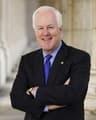 John Cornyn
Republican · Texas
 Rick Scott
Republican · Florida