
A Democratic bill with 5 Democratic cosponsors · See all 6 cosponsors
Last activity — Read twice and referred to the Committee on Finance.
In committee
Introduced and handed to a committee in the chamber it started in.
The committee holds it, and most bills are never heard from again. A hearing or a committee vote would be news; silence is the usual outcome, and it kills the bill without anyone voting against it.
Its path through Congress
- Introduced
- In Committee
What this bill would do
The Polluters Pay Climate Fund Act of 2025 imposes a tax on specific fossil fuel companies based on their carbon dioxide emissions. This tax is designed to fund the newly established Polluters Pay Climate Fund. The fund will be used for a Federal response to climate change, including disaster recovery, infrastructure resilience, and environmental justice. A significant portion of the money is directed toward environmental justice communities and agencies like FEMA. This legislation does not prevent further legal actions against polluters.
Yes· 3 of 16
- Scored +9
Does this improve help for people hit by a disaster?
The bill directs at least $15 billion to FEMA for climate-related disaster response and resilience.
- Scored +8
Does this raise the taxes companies pay?
The bill imposes a significant assessment on large fossil fuel companies based on their carbon dioxide emissions.
- Scored +7
Would Native Americans be better off under this?
The bill specifically targets investments toward Tribal and Indigenous communities.
The opposite
- Scored -5
Would business owners be better off under this?
Large fossil fuel companies face a new significant tax assessment.
Who it would affect, and how
Potential Positive Impacts for People
-
Climate Resilience and Disaster Response: The fund provides money for climate-related disaster recovery, mitigation, and adaptation, such as improving infrastructure, food systems, and water systems (Section 4(b)(2)(A)).
-
Support for Vulnerable Communities: The act mandates that 40 percent of the fund's annual appropriations must be used for investments that benefit environmental justice communities (Section 4(b)(2)(C)).
-
Emergency Management Funding: At least $15,000,000,000 is directed to FEMA for response and resilience programs to address disasters like hurricanes, flooding, and wildfires (Section 4(b)(2)(B)(i)).
-
Clean Air Initiatives: At least $6,000,000,000 is designated for grants and technical assistance under the Clean Air Act (Section 4(b)(2)(B)(i)).
-
Protection of Legal Rights: The bill ensures that the tax does not restrict the rights of people, states, or tribal governments to pursue legal remedies for damages or deception related to climate change (Section 5(b)).
Potential Negative Impacts for People
-
Tax Burden on Fossil Fuel Companies: The bill imposes a tax on "assessable persons" engaged in extracting or refining fossil fuels who are responsible for more than 1,000,000,000 metric tons of covered carbon dioxide emissions (Section 3(c)(2)).
-
No Tax Deductions: The legislation explicitly prevents companies from taking deductions for the taxes imposed under this act (Section 3(b)).
Groups and Interests Ranking
Every group the model scored this bill for, from -10 to +10. Tap or hover a score for the reason it gave.
- Demographic And Interest Groups
- Would Native Americans be better off under this? — The bill specifically targets investments toward Tribal and Indigenous communities. Would Black Americans be better off under this? — The bill prioritizes investments in environmental justice communities which include communities of color. Would households on low incomes be better off under this? — The bill allocates significant resources to environmental justice communities, which include low-income communities. Would farmers be better off under this? — The fund supports climate-resilient farming practices. Would Hispanic Americans be better off under this? — The bill supports environmental justice communities that may include Hispanic populations. Would people in cities be better off under this? — The fund addresses urban-relevant issues like extreme heat and stormwater infrastructure. Would people in rural areas be better off under this? — The fund supports ecosystems and wildfire management which benefit rural areas. Would business owners be better off under this? — Large fossil fuel companies face a new significant tax assessment.
- Environment Energy And Infrastructure
- Does this improve help for people hit by a disaster? — The bill directs at least $15 billion to FEMA for climate-related disaster response and resilience. Does this better protect air, water and wildlife? — The fund supports conservation, restoration, and wildfire management activities. Does this better protect public land such as parks and forests? — The bill funds ecosystem resilience through conservation and wildfire management. Does this repair or build roads and bridges? — The fund provides for climate-resilient infrastructure improvements. Does this cut the pollution that drives climate change? — The bill imposes a tax on fossil fuel emissions to fund climate resilience and adaptation. Does this put more money into wind, solar and other renewable power? — The fund supports climate-resilient infrastructure and energy efficiency initiatives.
- Economy And Finance
- Does this raise the taxes companies pay? — The bill imposes a significant assessment on large fossil fuel companies based on their carbon dioxide emissions.
- Social Issues And Justice
- Does this narrow racial gaps in how people are treated? — The bill mandates that 40 percent of the fund be used for investments benefiting environmental justice communities, which include communities of color.
- Education And Technology
- Does this put more money into scientific research? — The fund supports improved extreme weather prediction capabilities.
- 1/22/2025
- 2 Cosponsors added.
- 1/7/2025
- Read twice and referred to the Committee on Finance.
- 4 Cosponsors added.
- Introduced in Senate
One bill Congress.gov lists as related to this one — companions in the other chamber, earlier versions, and bills this one absorbed or was folded into.
 Angela Alsobrooks
Democrat · Maryland
 Edward Markey
Democrat · Massachusetts
 Jeff Merkley
Democrat · Oregon
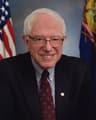 Bernie Sanders
Independent · Vermont
 Peter Welch
Democrat · Vermont
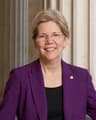 Elizabeth Warren
Democrat · Massachusetts