Bill · S. 2495· Senate(119-S-2495)
Keep Call Centers in America Act of 2025
- Introduced
- 7/29/2025
- Last activity
- 7/29/2025 — Read twice and referred to the Committee on Commerce, Science, and Transportation.
- Sponsored by
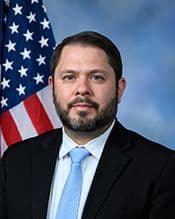
- Ruben Gallego
- Cosponsors
- - 0 - 1
- Introduced
- In Committee
What this bill would do
The Keep Call Centers in America Act of 2025 targets companies that move call center operations overseas. It requires the Secretary of Labor to maintain a public list of employers who relocate or contract call center work outside the United States. Companies on this list become ineligible for certain Federal grants or guaranteed loans for a five-year period. The bill also mandates that any call center work under a Federal contract must be performed within the United States. Additionally, it requires business entities to disclose the physical location of their customer service agents. Finally, it mandates disclosures when artificial intelligence is used during customer service communications.
Yes· 3 of 9
Does this give people more protection from unfair business practices?+6
The bill enhances consumer transparency by requiring disclosures of agent locations and the use of artificial intelligence.
Is this likely to create jobs?+5
The bill incentivizes companies to keep call center operations within the United States through financial penalties for offshoring.
Does this make what the government does easier for the public to see?+5
The bill requires a public list of employers who relocate call centers and mandates disclosures for consumer interactions.
The opposite
No question was scored the opposite.
Who it would affect, and how
Potential Positive Impacts for People
-
Protection of Domestic Jobs: Employers who relocate call centers must notify the Secretary of Labor at least 120 days in advance, and the bill provides a way for companies to be removed from the penalty list if they bring jobs back to the United States (Section 101).
-
Preferential Treatment for U.S. Employers: Federal agencies are directed to give preference to United States employers that are not on the relocation list when awarding civilian or defense-related contracts (Section 101(c)).
-
Mandatory U.S. Operations for Federal Contracts: To ensure stability, the bill requires that any call center work performed in connection with a Federal contract must be done inside the United States (Section 104).
-
Increased Consumer Transparency: Consumers will be informed of the physical location of the agent they are speaking with, and they have the right to request a transfer to a human agent located in the United States (Section 201).
-
AI Disclosure: People interacting with automated systems will be notified that they are speaking with artificial intelligence rather than a human (Section 201(b)).
Potential Negative Impacts for People
-
Financial Penalties for Companies: Employers that relocate work may face a civil penalty of up to $10,000 for each day they fail to provide required notice (Section 101(a)(1)(A)).
-
Loss of Federal Funding: Companies on the relocation list may be ineligible to apply for or receive direct or indirect Federal grants or guaranteed loans for five years (Section 101(b)(1)(A)).
-
Financial Burdens on Existing Grant Recipients: Companies that receive a grant or loan and are subsequently added to the relocation list must pay a monthly penalty of 8.3 percent of the total amount disbursed (Section 101(b)(1)(B)).
-
Potential for Grant Cancellation: If a company remains on the relocation list for one year after its first required penalty payment, its grant or loan may be canceled (Section 101(b)(1)(B)(ii)).
Groups and Interests Ranking
Every group the model scored this bill for, from -10 to +10. Hover a score for the reason it gave.
- Economy And Finance
- Improves Consumer Protection+6Increases Job Creation+5Improves Economic Growth+3
- Demographic And Interest Groups
- Good For Union Workers+4Good For Low Income Households+2Good For Middle Class Households+2
- Governance And Ideology
- Improves Government Transparency+5Improves Privacy Rights+3
- Education And Technology
- Increases Big Tech Regulation+4
- 7/29/2025
- Read twice and referred to the Committee on Commerce, Science, and Transportation.
- 1 Cosponsor added.
- Introduced in Senate
One bill Congress.gov lists as related to this one — companions in the other chamber, earlier versions, and bills this one absorbed or was folded into.
 James Justice
Republican · West Virginia