Bill · H.R. 4954· House(119-HR-4954)
Keep Call Centers in America Act of 2025
- Introduced
- 8/12/2025
- Last activity
- 8/12/2025 — Referred to the Committee on Energy and Commerce, and in addition to the Committees on Education and Workforce, Oversight and Government Reform, and Armed Services, for a period to be subsequently determined by the Speaker, in each case for consideration of such provisions as fall within the jurisdiction of the committee concerned.
- Sponsored by
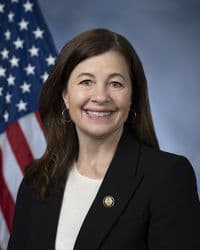
- Kristen McDonald Rivet
- Cosponsors
- - 13 - 3
- Introduced
- In Committee
What this bill would do
The "Keep Call Centers in America Act of 2025" aims to penalize employers who move call center operations overseas. It requires the Secretary of Labor to maintain a public list of such companies and makes them ineligible for certain Federal grants or guaranteed loans for five years. The bill also mandates that call center work performed under Federal contracts must stay within the United States. Additionally, it requires business entities to disclose the physical location of their customer service agents and the use of artificial intelligence. Consumers would have the right to request a transfer to a human agent located in the United States.
Yes· 3 of 10
Does this give people more protection from unfair business practices?+6
The bill increases consumer protection by requiring disclosures of agent location and AI usage, and providing transfer rights.
Does this put more rules on large technology companies?+5
The bill imposes new transparency and disclosure requirements on businesses using artificial intelligence for customer service.
Is this likely to create jobs?+4
By penalizing offshoring, the bill incentivizes companies to keep call center jobs within the United States.
The opposite
No question was scored the opposite.
Who it would affect, and how
Potential Positive Impacts for People
-
Transparency for Employers Moving Jobs: Employers must notify the Secretary of Labor at least 120 days before relocating or contracting call center work overseas, providing advance notice of these changes. (Section 101(a)(1)(A))
-
Consumer Information and Control: During customer service communications, agents must disclose their physical location, and if they are outside the U.S., consumers have the right to request a transfer to an agent located within the United States. (Section 201(a))
-
Artificial Intelligence Transparency: Businesses using artificial intelligence for customer service must disclose that a nonhuman machine is being used and allow consumers to request a transfer to a human operator in the United States. (Section 201(b))
-
Preference for Domestic Employers: When awarding civilian or defense-related Federal contracts, agencies must give preference to United States employers that are not on the relocation list. (Section 101(c))
-
Protection of Federal Contract Work: Any call center work performed in connection with a Federal contract must be conducted inside the United States. (Section 104)
Potential Negative Impacts for People
-
Financial Penalties for Employers: Employers who fail to provide the required 120-day notice regarding relocation or overseas contracting face a civil penalty of up to $10,000 for each day of the violation. (Section 101(a)(1)(A))
-
Loss of Federal Funding: Companies that relocate call center work overseas are placed on a list that makes them ineligible to apply for or receive direct or indirect Federal grants or guaranteed loans for five years. (Section 101(b)(1)(A)(i))
-
Financial Burdens on Existing Grants: Employers who have already received a grant or loan but are subsequently added to the relocation list must pay a monthly penalty of 8.3 percent of the total amount disbursed and may face the cancellation of their award. (Section 101(b)(1)(B))
-
Compliance Burdens for Businesses: Business entities are required to certify to the Federal Trade Commission every year that they have complied with the required customer service disclosures. (Section 201(d))
Groups and Interests Ranking
Every group the model scored this bill for, from -10 to +10. Hover a score for the reason it gave.
- Economy And Finance
- Improves Consumer Protection+6Increases Job Creation+4Improves Economic Growth+2
- Demographic And Interest Groups
- Good For Union Workers+4Good For Low Income Households+2Good For Middle Class Households+2Good For Urban Residents+1
- Governance And Ideology
- Improves Government Transparency+4Improves Privacy Rights+3
- Education And Technology
- Increases Big Tech Regulation+5
- 8/3/2026
- 2 Cosponsors added.
- 7/13/2026
- 2 Cosponsors added.
- 7/2/2026
- 2 Cosponsors added.
- 6/9/2026
- 2 Cosponsors added.
- 2/9/2026
- 1 Cosponsor added.
- 2/4/2026
- 1 Cosponsor added.
- 2/2/2026
- 2 Cosponsors added.
- 1/30/2026
- 1 Cosponsor added.
- 11/10/2025
- 1 Cosponsor added.
- 10/8/2025
- 1 Cosponsor added.
- 8/12/2025
- Referred to the Committee on Energy and Commerce, and in addition to the Committees on Education and Workforce, Oversight and Government Reform, and Armed Services, for a period to be subsequently determined by the Speaker, in each case for consideration of such provisions as fall within the jurisdiction of the committee concerned.
- 1 Cosponsor added.
- Introduced in House
One bill Congress.gov lists as related to this one — companions in the other chamber, earlier versions, and bills this one absorbed or was folded into.
 Julia Brownley
Democrat · California
 Don Bacon
Republican · Nebraska
 Kathy Castor
Democrat · Florida
 Christopher Deluzio
Democrat · Pennsylvania
 Debbie Dingell
Democrat · Michigan
 Brian Fitzpatrick
Republican · Pennsylvania
 Maxwell Frost
Democrat · Florida
 Laura Friedman
Democrat · California
 Daniel Goldman
Democrat · New York
 Nick LaLota
Republican · New York
 Jared Moskowitz
Democrat · Florida
 Darren Soto
Democrat · Florida
 Haley Stevens
Democrat · Michigan
 Rashida Tlaib
Democrat · Michigan
 Shri Thanedar
Democrat · Michigan
 Debbie Wasserman Schultz
Democrat · Florida