 Bill · S. 2481· Senate(119-S-2481)
Pay Teachers Act
- Introduced
- 7/28/2025
- Last activity
- 7/28/2025 — Read twice and referred to the Committee on Health, Education, Labor, and Pensions.
- Sponsored by
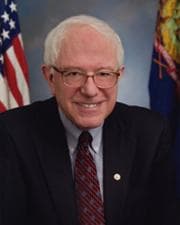
- Bernie Sanders
- Cosponsors
- - 0 - 10
- Introduced
- In Committee
What this bill would do
The Pay Teachers Act aims to ensure public elementary and secondary school teachers receive livable and competitive salaries throughout their careers. It mandates a minimum annual base salary of $60,000 for starting teachers, with requirements for regular increases as they gain experience. The bill also establishes a minimum living wage for paraprofessionals and education support staff. Additionally, it increases federal investments in public schools, rural education, and the Bureau of Indian Education. The legislation seeks to modernize the teaching profession through career ladders and expanded educator preparation programs. Finally, the bill mandates appropriations for the Teacher and School Leader Incentive program, providing $200,000,000 for fiscal year 2026 with annual increases in subsequent years.
Yes· 3 of 18
Would Native Americans be better off under this?+8
The bill provides significant mandatory appropriations for the Bureau of Indian Education.
Would people with disabilities be better off under this?+8
The bill provides $300,000,000 specifically for personnel development to improve services for children with disabilities.
Does this put more money into public schools?+8
The bill provides significant new mandatory appropriations for teacher quality partnerships, educator development, and disability services in schools.
The opposite
No question was scored the opposite.
Who it would affect, and how
Potential Positive Impacts for People
-
Improved Teacher Compensation: The bill requires a starting annual base salary of at least $60,000 for full-time teachers (Sec. 2) and ensures salaries increase throughout a teacher's career (Sec. 203). This is intended to help teachers earn a livable and competitive wage.
-
Increased Wages for Support Staff: Paraprofessionals and education support staff would be guaranteed a living wage of at least $45,000 per year for full-time work or $30.00 an hour for part-time work (Sec. 2).
-
Enhanced Student Learning and Access: By raising salaries, the bill aims to attract youth into teaching, improve teacher retention, and bolster student academic outcomes (Sec. 3). It also seeks to ensure every public school student is taught by a qualified teacher (Sec. 2).
-
Professional Advancement Opportunities: The bill supports "career ladders," which provide teachers and staff opportunities for additional responsibilities, adjusted roles, and corresponding salary increases (Sec. 211; Sec. 2253).
-
Increased Funding for Vulnerable Communities: The act includes mandatory appropriations for the Bureau of Indian Education (Sec. 104) and impact aid (Sec. 103) to support federally connected children.
-
Increased Funding for Educator Incentives: The bill appropriates $200,000,000 for fiscal year 2026 and provides for annual increases in succeeding years (SEC. 305(a)). This provides dedicated money to carry out the Teacher and School Leader Incentive program.
-
Expanded Eligibility for Entities: The amendment to the Elementary and Secondary Education Act of 1965 expands the types of entities that can be involved to include State educational agencies, local educational agencies, or a consortium of State and local educational agencies (SEC. 305).
Potential Negative Impacts for People
-
Potential Increases in Class Sizes: Under the State teacher pay plan requirements, states must ensure that efforts to increase salaries do not result in increased average class sizes or higher student-to-teacher ratios (Sec. 202).
-
Burden on Teacher Planning Time: The bill explicitly prohibits states from reducing teacher planning time as a way to fund salary increases (Sec. 202).
-
Increased Workloads: The bill includes a provision that states must not require teachers to teach additional classes as part of their plan to increase salaries (Sec. 202).
-
Restrictive Compensation Definitions: The bill introduces a "Special Requirement" that limits the term "performance-based compensation system" to only those that recognize skills and knowledge in a specific manner (SEC. 305(b)). This could limit how teachers, principals, or school leaders are compensated under these specific grants.
Groups and Interests Ranking
Every group the model scored this bill for, from -10 to +10. Hover a score for the reason it gave.
- Demographic And Interest Groups
- Good For Native Americans+8Good For People With Disabilities+8Good For Children+7Good For Low Income Households+6Good For Rural Residents+6Good For Young Adults+6Good For African Americans+5Good For Hispanic Americans+5Good For Union Workers+5Good For Middle Class Households+4Good For Urban Residents+4Good For Women+3
- Education And Technology
- Increases Public School Funding+8Improves College Affordability+4
- Social Issues And Justice
- Improves Racial Equity+6Improves Poverty Reduction+5
- Governance And Ideology
- Improves Government Transparency+5
- Economy And Finance
- Improves Economic Growth+3
- 10/22/2025
- 2 Cosponsors added.
- 7/28/2025
- Read twice and referred to the Committee on Health, Education, Labor, and Pensions.
- 8 Cosponsors added.
- Introduced in Senate
 Angela Alsobrooks
Democrat · Maryland
 Richard Blumenthal
Democrat · Connecticut
 John Fetterman
Democrat · Pennsylvania
 Mazie Hirono
Democrat · Hawaii
 Ben Luján
Democrat · New Mexico
 Edward Markey
Democrat · Massachusetts
 Jeff Merkley
Democrat · Oregon
 Alex Padilla
Democrat · California
 Peter Welch
Democrat · Vermont
 Elizabeth Warren
Democrat · Massachusetts