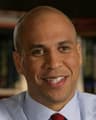
Cory Booker (D-NJ)
Eviction Right to Counsel Act of 2025
A Democratic bill with 3 Democratic cosponsors · See all 4 cosponsors
Last activity — Read twice and referred to the Committee on Banking, Housing, and Urban Affairs.
In committee
Introduced and handed to a committee in the chamber it started in.
The committee holds it, and most bills are never heard from again. A hearing or a committee vote would be news; silence is the usual outcome, and it kills the bill without anyone voting against it.
Its path through Congress
- Introduced
- In Committee
What this bill would do
The Eviction Right to Counsel Act of 2025 establishes the Eviction Right to Counsel Fund to provide grants to State, local, and Indian Tribal governments. These grants are intended for entities that enact or are fiscally responsible for implementing legislation that provides full legal representation at no cost to low-income tenants facing eviction or housing subsidy termination. The bill defines covered individuals as tenants with incomes at or below 200 percent of the Federal poverty line. The Secretary of Housing and Urban Development will oversee a program to distribute these funds. Annual appropriations of $100,000,000 are authorized from fiscal years 2026 through 2030.
Yes· 3 of 7
- Scored +7
Would households on low incomes be better off under this?
The bill specifically provides full legal representation at no cost to tenants earning at or below 200 percent of the federal poverty line.
- Scored +5
Does this make housing cost less?
The bill provides legal resources to prevent evictions and protect housing subsidies for low-income individuals.
- Scored +4
Would Native Americans be better off under this?
The bill explicitly includes Indian Tribal governments as eligible entities to receive these grants.
The opposite
- Scored -1
Does this reduce what the federal government spends?
The bill authorizes $100,000,000 in annual federal spending for the Eviction Right to Counsel Fund.
Who it would affect, and how
Potential Positive Impacts for People
-
Legal Representation for Low-Income Tenants: The bill provides for full legal representation at no cost to individuals with incomes equal to or less than 200 percent of the Federal poverty line during proceedings involving eviction or the termination of a housing subsidy (Section 2(a)(1), 2(a)(2), 2(a)(6)).
-
Support for Housing Stability: The Secretary is directed to prioritize funding for entities that have enacted laws to limit eviction causes for tenants not at fault, require 30-day written notice periods, establish diversion programs, or provide emergency rental assistance (Section 2(c)(3)(A)).
-
Attorney Training and Recruitment: Grant funds can be used to help recruit and train attorneys to represent covered individuals in legal proceedings (Section 2(c)(3)(B), 2(c)(4)).
Potential Negative Impacts for People
- No specific negative impacts or burdens are explicitly mentioned in the provided text.
Groups and Interests Ranking
Every group the model scored this bill for, from -10 to +10. Tap or hover a score for the reason it gave.
- Demographic And Interest Groups
- Would households on low incomes be better off under this? — The bill specifically provides full legal representation at no cost to tenants earning at or below 200 percent of the federal poverty line. Would Native Americans be better off under this? — The bill explicitly includes Indian Tribal governments as eligible entities to receive these grants. Would people in cities be better off under this? — Low-income tenants facing eviction are frequently located in urban municipal areas covered by this legislation.
- Social Issues And Justice
- Does this make housing cost less? — The bill provides legal resources to prevent evictions and protect housing subsidies for low-income individuals. Is this likely to lift people out of poverty? — By preventing evictions, the bill helps low-income individuals maintain housing stability. Does this narrow racial gaps in how people are treated? — The bill supports low-income tenants through legal representation, a group that disproportionately includes marginalized racial communities.
- Governance And Ideology
- Does this give the federal government more power? — The bill involves the Secretary of HUD overseeing a federal grant program distributed to state and local governments.
- Economy And Finance
- Does this reduce what the federal government spends? — The bill authorizes $100,000,000 in annual federal spending for the Eviction Right to Counsel Fund.
- 7/24/2025
- Read twice and referred to the Committee on Banking, Housing, and Urban Affairs.
- 4 Cosponsors added.
- Introduced in Senate
One bill Congress.gov lists as related to this one — companions in the other chamber, earlier versions, and bills this one absorbed or was folded into.
 Richard Blumenthal
Democrat · Connecticut
 Bernie Sanders
Independent · Vermont
 Chris Van Hollen
Democrat · Maryland
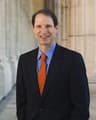 Ron Wyden
Democrat · Oregon