
A bill from an independent · See all 9 cosponsors
Last activity — Read twice and referred to the Committee on Agriculture, Nutrition, and Forestry.
In committee
Introduced and handed to a committee in the chamber it started in.
The committee holds it, and most bills are never heard from again. A hearing or a committee vote would be news; silence is the usual outcome, and it kills the bill without anyone voting against it.
Its path through Congress
- Introduced
- In Committee
What this bill would do
The PRIME Act amends the Federal Meat Inspection Act to exempt custom slaughter facilities from federal inspection requirements, provided they comply with state laws and only distribute meat within the state. This exemption applies to slaughtering and preparation of carcasses for household consumers, restaurants, hotels, boarding houses, grocery stores, or other establishments that sell directly to consumers within the state. The bill also states that it does not preempt state laws related to custom slaughter facilities or the sale of meat.
Yes· 3 of 8
- Scored +8
Would farmers be better off under this?
Farmers benefit from easier access to local, low-cost custom slaughter and processing services.
- Scored +8
Does this leave more decisions to the states?
The bill shifts authority to state laws and expressly avoids preempting state regulations.
- Scored +7
Would business owners be better off under this?
Small processing business owners benefit from reduced federal compliance costs.
The opposite
- Scored -5
Does this give the federal government more power?
The bill reduces federal oversight and authority over custom slaughter facilities.
- Scored -2
Does this give people more protection from unfair business practices?
Exempting facilities from federal inspection may reduce the level of oversight compared to federal standards.
Who it would affect, and how
Potential Positive Impacts for People
- Exemption for Custom Slaughter Facilities (Section 2): This could be a positive for small farmers and local businesses. By exempting custom slaughter facilities from federal inspection if they operate within state law and sell only within the state, it could reduce regulatory burdens and costs, potentially leading to more local meat processing options and support for local economies.
Potential Negative Impacts for People
- I cannot identify any potential negative impacts based solely on the information provided in the text.
Groups and Interests Ranking
Every group the model scored this bill for, from -10 to +10. Tap or hover a score for the reason it gave.
- Demographic And Interest Groups
- Would farmers be better off under this? — Farmers benefit from easier access to local, low-cost custom slaughter and processing services. Would business owners be better off under this? — Small processing business owners benefit from reduced federal compliance costs. Would people in rural areas be better off under this? — Rural communities are the primary beneficiaries of increased local meat processing availability.
- Economy And Finance
- Does this make it easier to run a small business? — The bill significantly reduces federal regulatory burdens for small custom slaughter facilities operating within a state. Is this likely to create jobs? — Reducing regulatory burdens on custom slaughter facilities may encourage the growth and creation of local processing jobs. Is this likely to grow the economy? — Support for local meat processing can stimulate small-scale agricultural economies. Does this give people more protection from unfair business practices? — Exempting facilities from federal inspection may reduce the level of oversight compared to federal standards.
- Environment Energy And Infrastructure
- Does this invest in rural communities? — Increasing local processing options supports rural agricultural infrastructure and local economies.
- Governance And Ideology
- Does this leave more decisions to the states? — The bill shifts authority to state laws and expressly avoids preempting state regulations. Does this give the federal government more power? — The bill reduces federal oversight and authority over custom slaughter facilities.
- 3/2/2026
- 1 Cosponsor added.
- 7/23/2025
- Read twice and referred to the Committee on Agriculture, Nutrition, and Forestry.
- 8 Cosponsors added.
- Introduced in Senate
 Marsha Blackburn
Republican · Tennessee
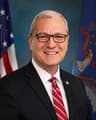 Kevin Cramer
Republican · North Dakota
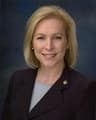 Kirsten Gillibrand
Democrat · New York
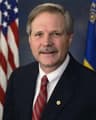 John Hoeven
Republican · North Dakota
 Cynthia Lummis
Republican · Wyoming
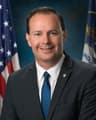 Mike Lee
Republican · Utah
 Jeff Merkley
Democrat · Oregon
 Rand Paul
Republican · Kentucky
 Dan Sullivan
Republican · Alaska