Bill · S. 2401· Senate(119-S-2401)
287(g) Program Protection Act
- Introduced
- 7/23/2025
- Last activity
- 7/23/2025 — Read twice and referred to the Committee on the Judiciary.
- Sponsored by
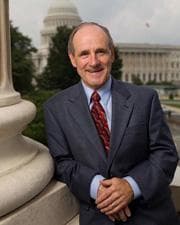
- James Risch
- Cosponsors
- - 6 - 0
- Introduced
- In Committee
What this bill would do
The bill, called the "287(g) Program Protection Act", wants to make changes to how agreements work between the Department of Homeland Security and state/local law enforcement for immigration enforcement. It aims to make it easier for states and local governments to enter into these agreements. The bill would require the Secretary of Homeland Security to approve requests from states/local governments unless there's a very good reason not to, and it limits the Secretary's power to end these agreements. It also calls for more openness through annual reports and recruitment plans, and it sets aside money for the 287(g) program. Finally, the bill emphasizes the importance of uniform training standards for law enforcement officers involved in these programs.
Yes· 3 of 4
Does this leave more decisions to the states?+5
The bill aims to make it easier for states and local governments to enter into agreements with the federal government for immigration enforcement, thus increasing states' rights in this area.
Does this make what the government does easier for the public to see?+3
The bill requires annual performance reports on the 287(g) program and annual recruitment plans, enhancing transparency.
Does this tighten control of the border?+3
The bill facilitates agreements that enhance immigration enforcement, which can be interpreted as improving border security.
The opposite· 3 of 5
Would immigrants be better off under this?-7
The bill's facilitation of 287(g) agreements is likely to negatively impact immigrants due to increased risk of apprehension and deportation.
Would Hispanic Americans be better off under this?-5
Hispanic Americans may experience increased scrutiny and potential discrimination due to increased immigration enforcement under the 287(g) program.
Does this make it easier for immigrants already here to become citizens?-3
The bill focuses on enforcement and could make it more difficult for undocumented immigrants to pursue a pathway to citizenship.
Who it would affect, and how
Potential Positive Impacts for People
-
States and local governments: The bill says the Secretary of Homeland Security shall approve requests from states/local governments to participate in 287(g) agreements, unless there's a "compelling reason" not to (Section 2(1)(B)). This makes it easier for interested states/localities to engage in immigration enforcement partnerships.
-
States and political subdivisions: The bill says agreements should accommodate the enforcement model (patrol, task force, jail, etc.) that the state or political subdivision believes is best (Section 2(2)). This allows flexibility in how immigration enforcement is carried out to best suit the needs of each jurisdiction.
-
Tax payers: Section 3 amends section 286(r) of the Immigration and Nationality Act, renaming the "Breached Bond/Detention Fund" to "Breached Bond/Detention/287(g) Fund". It makes clear that the fund can be used for expenses related to administering section 287(g).
-
Public: The bill requires the Secretary of Homeland Security to publish an annual performance report on the 287(g) program (Section 4(a)). This report includes data on aliens apprehended, aliens removed, methods used to conduct oversight, number of complaints filed against agencies, and reasons for agreement terminations. This could lead to more transparency and accountability.
-
Public: The bill requires the Secretary of Homeland Security to publish an annual recruitment plan for the 287(g) program (Section 4(b)). This will provide goals for recruiting new states and political subdivisions, the number of new participants, outreach efforts, and the number of agreement requests. This could lead to more transparency.
Potential Negative Impacts for People
- Aliens: By making it easier for states/localities to partner with federal immigration authorities, the bill could lead to increased scrutiny, apprehension, and removal of aliens (Section 2).
- Aliens: The bill does not define "compelling reason" in Section 2(1)(B), which could allow for subjective interpretations and potential discrimination in the approval or denial of agreements.
Groups and Interests Ranking
Every group the model scored this bill for, from -10 to +10. Hover a score for the reason it gave.
- Demographic And Interest Groups
- Good For White Americans+1Good For Immigrants-7Good For Hispanic Americans-5Good For African Americans-2Good For Asian Americans-1
- Governance And Ideology
- Increase States Rights+5Improves Government Transparency+3
- Social Issues And Justice
- Improves Border Security+3Improves Pathway To Citizenship-3
- 7/23/2025
- Read twice and referred to the Committee on the Judiciary.
- 6 Cosponsors added.
- Introduced in Senate
 Mike Crapo
Republican · Idaho
 Ron Johnson
Republican · Wisconsin
 James Justice
Republican · West Virginia
 Mike Lee
Republican · Utah
 Roger Marshall
Republican · Kansas
 Rick Scott
Republican · Florida