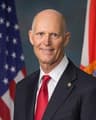
Rick Scott (R-FL)
Drones for America Act
A Republican bill with no cosponsors
Last activity — Read twice and referred to the Committee on Finance.
In committee
Introduced and handed to a committee in the chamber it started in.
The committee holds it, and most bills are never heard from again. A hearing or a committee vote would be news; silence is the usual outcome, and it kills the bill without anyone voting against it.
Its path through Congress
- Introduced
- In Committee
What this bill would do
The Drones for America Act aims to amend the Harmonized Tariff Schedule to increase duties on unmanned aircraft and parts imported from the People's Republic of China. The bill seeks to secure the national supply chain and safeguard the domestic unmanned aircraft industry through protective duties. It implements an escalating rate of duty on these imports over several years. Additionally, the bill establishes stricter rules of origin requiring documentation that specific components were not manufactured in China. Finally, it creates a Secure Unmanned Aircraft Systems Trust Fund to provide grants to specific groups for secure technology and domestic manufacturing.
Yes· 3 of 11
- Scored +5
Would business owners be better off under this?
Domestic manufacturers of drone components stand to benefit from increased demand and protective duties.
- Scored +5
Is this likely to create jobs?
The bill supports workforce development and increased manufacturing capacity for domestic drone components.
- Scored +5
Does this better protect the country from computer attacks?
The bill secures the supply chain for unmanned aircraft to reduce reliance on foreign adversaries.
The opposite
- Scored -4
Does this make trade with other countries easier?
The bill imposes significant new duties on imports from the People's Republic of China.
Who it would affect, and how
Potential Positive Impacts for People
-
Increased National Security and Supply Chain Resilience: The bill intends to secure the supply chain for unmanned aircraft and promote resilient supply chains through the use of tariffs (Section 2).
-
Support for Domestic Industry and Workforce: The bill establishes a grant program to support entities that manufacture components for unmanned aircraft systems in the United States for workforce development and to increase manufacturing capacity (Section 5(b)(1)(B)).
-
Grants for Specific User Groups: A grant program will be available to help first responders, farmers and ranchers, and critical infrastructure providers purchase or lease secure unmanned aircraft systems and support their operations (Section 5(b)(1)(A)).
-
Economic Incentives for Sourcing: Implementing tariffs on imports from the People's Republic of China is intended to incentivize sourcing from the United States and its allies (Section 2).
Potential Negative Impacts for People
-
Increased Costs for Importers: The bill imposes significant and escalating duties on unmanned aircraft and parts from the People's Republic of China, starting at 30% and rising up to $100 each plus 50% (Section 3(a)).
-
Strict Entry Requirements: Unmanned aircraft and parts may be prohibited from entering the United States unless they are accompanied by specific documentation proving certain components were not manufactured in the People's Republic of China (Section 4(a)).
Groups and Interests Ranking
Every group the model scored this bill for, from -10 to +10. Tap or hover a score for the reason it gave.
- Demographic And Interest Groups
- Would business owners be better off under this? — Domestic manufacturers of drone components stand to benefit from increased demand and protective duties. Would farmers be better off under this? — Farmers can access grants to purchase or lease secure unmanned aircraft systems. Would people in rural areas be better off under this? — The bill specifically includes support for farmers and ranchers through its grant program.
- Economy And Finance
- Is this likely to create jobs? — The bill supports workforce development and increased manufacturing capacity for domestic drone components. Does this make it easier to run a small business? — Grants are available to various sectors including farmers, ranchers, and critical infrastructure providers. Is this likely to grow the economy? — The bill promotes domestic industrial growth through protective tariffs and specialized grants.
- Environment Energy And Infrastructure
- Does this improve help for people hit by a disaster? — Grants for first responders can enhance their operational capabilities during disasters. Does this invest in rural communities? — Grants are provided to assist farmers and ranchers with secure drone technology.
- National Security And Foreign Policy
- Does this better protect the country from computer attacks? — The bill secures the supply chain for unmanned aircraft to reduce reliance on foreign adversaries. Does this strengthen ties with allied countries? — The bill incentivizes sourcing from the United States and its allies. Does this make trade with other countries easier? — The bill imposes significant new duties on imports from the People's Republic of China.
- Governance And Ideology
- Does this give the federal government more power? — The bill expands federal authority through new duties and import restrictions.
- 6/25/2025
- Read twice and referred to the Committee on Finance.
- Introduced in Senate