Bill · S. 2142· Senate(119-S-2142)
GOLDEN DOME Act of 2025
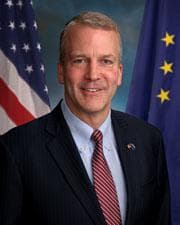
- Introduced
- 6/23/2025
- Last activity
- 6/23/2025 — Read twice and referred to the Committee on Armed Services.
- Sponsored by
- Dan Sullivan
- Cosponsors
- - 9 - 0
- Introduced
- In Committee
What this bill would do
The GOLDEN DOME Act of 2025 aims to improve United States missile defense capabilities through a holistic architecture. It establishes a Golden Dome Direct Report Program Manager to oversee the development of a next-generation missile defense shield. This strategy focuses on all-domain awareness, ranging from the seafloor to space and cyberspace. The bill emphasizes the integration of sensors, interceptors, and command and control systems to defend against ballistic, hypersonic, and unmanned threats. It also prioritizes the use of commercial solutions and rapid deployment of space-based sensors.
Yes· 3 of 7
Does this put more money into scientific research?+7
The bill funds extensive R&D for missile defense and sensor technologies.
Does this give the federal government more power?+6
The bill centralizes authority under a Program Manager with significant autonomy.
Does this better protect the country from computer attacks?+6
The bill emphasizes cyber domain awareness and defense within its missile architecture.
The opposite· 3 of 8
Does this reduce what is spent on the military?-10
The bill significantly increases military spending via billions in new authorizations.
Does this reduce what the federal government owes?-5
The bill authorizes significant new government spending of over $23 billion.
Does this reduce what the federal government spends?-5
The bill increases government spending through large-scale defense appropriations.
Who it would affect, and how
Potential Positive Impacts for People
-
National Security and Defense: The bill seeks to defend United States citizens and critical infrastructure against foreign attacks, including those involving ballistic, hypersonic, and cruise missiles (Section 2(a)(4)).
-
Deterrence of Adversaries: By creating a "Golden Dome" and a second-strike capability, the act aims to deter adversaries from conducting attacks on the homeland (Section 2(b)(5)).
-
Enhanced Awareness: The strategy includes plans for layered sensors from the seafloor to space to provide persistent all-domain awareness (Section 4(a)(2)).
-
Technological Innovation: The bill encourages the use of advanced technologies, such as artificial intelligence for information fusion and autonomous agents for defense (Section 4(b), 4(c), and 4(k)).
-
Economic/Industrial Competition: The act includes requirements to maximize competition within the space industrial base to ensure a robust and competitive environment (Section 5(b)).
Potential Negative Impacts for People
-
Large Scale Government Spending: The bill authorizes a significant amount of money, specifically $23,023,100,000 for fiscal year 2026 (Section 7).
-
Reduced Oversight/Intervention: The Program Manager is protected from intervention by any officer other than the Secretary of Defense, which could limit the ability of other officials to oversee the implementation (Section 4(a)(4)(F)).
-
Limited Legal Recourse: For certain military construction and operations, the Secretary of Defense can waive legal requirements, and any resulting legal claims are restricted to alleging violations of the Constitution (Section 4(a)(25)).
-
Exemption from Disclosure: Information regarding the technology, procedures, and protocols used for certain mitigation activities is exempt from disclosure under the Freedom of Information Act and various state or local laws (Section 6(5)).
Groups and Interests Ranking
Every group the model scored this bill for, from -10 to +10. Hover a score for the reason it gave.
- Economy And Finance
- Reduces Government Spending-5Reduces National Debt-5Improves Fiscal Responsibility-2
- Education And Technology
- Increases Scientific Research Funding+7Increases Space Exploration+5Improves Data Privacy-2
- Governance And Ideology
- Increases Federal Power+6Improves Government Transparency-5Improves Due Process-4Improves Privacy Rights-3
- Demographic And Interest Groups
- Good For Business Owners+5
- National Security And Foreign Policy
- Improves Cybersecurity Defense+6Improves International Alliances+5Increases Domestic Surveillance+4Reduces Military Spending-10
- 5/12/2026
- 1 Cosponsor added.
- 6/24/2025
- 7 Cosponsors added.
- 6/23/2025
- Read twice and referred to the Committee on Armed Services.
- 1 Cosponsor added.
- Introduced in Senate
One bill Congress.gov lists as related to this one — companions in the other chamber, earlier versions, and bills this one absorbed or was folded into.
 Marsha Blackburn
Republican · Tennessee
 Jim Banks
Republican · Indiana
 Katie Britt
Republican · Alabama
 Tom Cotton
Republican · Arkansas
 Kevin Cramer
Republican · North Dakota
 John Hoeven
Republican · North Dakota
 David McCormick
Republican · Pennsylvania
 Tim Scott
Republican · South Carolina
 Tim Sheehy
Republican · Montana