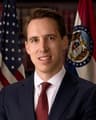
Josh Hawley (R-MO)
Higher Wages for American Workers Act of 2025
A Republican bill with 2 Democratic cosponsors · See all 2 cosponsors
Last activity — Read twice and referred to the Committee on Health, Education, Labor, and Pensions.
In committee
Introduced and handed to a committee in the chamber it started in.
The committee holds it, and most bills are never heard from again. A hearing or a committee vote would be news; silence is the usual outcome, and it kills the bill without anyone voting against it.
Its path through Congress
- Introduced
- In Committee
What this bill would do
The Higher Wages for American Workers Act of 2025 seeks to amend the Fair Labor Standards Act of 1938. This legislation aims to provide for increases in the minimum wage. It establishes an initial minimum wage of $15 starting on January 1 of the first year after enactment. Following that, the wage will be adjusted annually on January 1 based on determinations made by the Secretary. These adjustments are tied to the Consumer Price Index for Urban Wage Earners and Clerical Workers.
Yes· 3 of 5
- Scored +8
Would households on low incomes be better off under this?
The increase to a $15 minimum wage directly benefits low-income workers.
- Scored +7
Does this raise the lowest wage an employer may pay?
The bill establishes a $15 minimum wage and implements annual inflation-based adjustments to protect worker purchasing power.
- Scored +6
Is this likely to lift people out of poverty?
By increasing the minimum wage, the bill helps lift low-income workers out of poverty.
The opposite
- Scored -3
Would business owners be better off under this?
Mandating higher wages may increase labor costs for business owners.
Who it would affect, and how
Potential Positive Impacts for People
-
Initial Wage Increase: The bill sets a minimum wage of $15 starting January 1 of the first year after enactment, providing a specific starting point for higher wages (Section 2(a)(1)(A)).
-
Inflation-Based Adjustments: The Secretary will determine a new wage every year based on the percentage increase in the Consumer Price Index for Urban Wage Earners and Clerical Workers (Section 2(b)(1) and 2(b)(2)(A)). This ensures that wage increases can keep up with inflation as published by the Bureau of Labor Statistics.
Potential Negative Impacts for People
- No Negative Impacts Stated: The provided text does not contain any specific provisions that describe negative consequences or burdens for individuals or groups of people.
Groups and Interests Ranking
Every group the model scored this bill for, from -10 to +10. Tap or hover a score for the reason it gave.
- Demographic And Interest Groups
- Would households on low incomes be better off under this? — The increase to a $15 minimum wage directly benefits low-income workers. Would union members be better off under this? — Raising the wage floor aligns with goals often advocated by labor unions. Would middle-income households be better off under this? — The bill may provide modest indirect benefits to middle-class households through increased consumer spending. Would business owners be better off under this? — Mandating higher wages may increase labor costs for business owners.
- Economy And Finance
- Does this raise the lowest wage an employer may pay? — The bill establishes a $15 minimum wage and implements annual inflation-based adjustments to protect worker purchasing power.
- Social Issues And Justice
- Is this likely to lift people out of poverty? — By increasing the minimum wage, the bill helps lift low-income workers out of poverty.
- 6/12/2025
- 1 Cosponsor added.
- 6/10/2025
- Read twice and referred to the Committee on Health, Education, Labor, and Pensions.
- 1 Cosponsor added.
- Introduced in Senate
 Ruben Gallego
Democrat · Arizona
 Peter Welch
Democrat · Vermont