Bill · S. 1918· Senate(119-S-1918)
Access Technology Affordability Act of 2025
A bill to amend the Internal Revenue Code of 1986 to allow a refundable tax credit against income tax for the purchase of qualified access technology for the blind.
- Introduced
- 5/22/2025
- Last activity
- 5/22/2025 — Read twice and referred to the Committee on Finance.
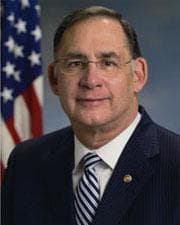
- Sponsored by
- John Boozman
- Cosponsors
- - 6 - 12
- Introduced
- In Committee
What this bill would do
This bill, known as the "Access Technology Affordability Act of 2025," aims to amend the Internal Revenue Code of 1986. It proposes a new refundable tax credit for the purchase of qualified access technology for blind individuals. This credit applies to the taxpayer, their spouse, or any qualifying dependent. The technology must be used to convert visually represented information into usable formats. The credit is subject to specific dollar limitations and will expire after the year 2030.
Yes· 3 of 4
Would people with disabilities be better off under this?+8
The bill directly benefits blind individuals by subsidizing essential access technology.
Does this expand the rights of people with disabilities?+7
The bill enhances disability rights by providing a refundable tax credit for essential assistive technology.
Would households on low incomes be better off under this?+5
The refundable credit provides significant financial relief for families needing assistive technology.
The opposite
No question was scored the opposite.
Who it would affect, and how
Potential Positive Impacts for People
-
Financial Assistance for Technology: The bill provides a refundable tax credit to help cover costs for hardware, software, or other information technology used to adapt visual information for blind individuals (Section 2(a)).
-
Support for Families: The credit is not just for the taxpayer, but can also be used for a spouse or any dependent (Section 2(a)).
-
Protection Against Inflation: Starting after 2026, the $2,000 credit limit is scheduled to increase based on cost-of-living adjustments (Section 2(a)).
Potential Negative Impacts for People
-
Spending Limits: The total credit amount for any qualified blind individual is capped at $2,000 within any three-consecutive-taxable-year period (Section 2(a)).
-
Exclusion of Covered Expenses: No credit is allowed for expenses that are already covered by a deduction or credit under any other provision of the Internal Revenue Code (Section 2(a)).
-
Time Constraints: The credit is not permanent, as the section will not apply to amounts paid or incurred in taxable years beginning after December 31, 2030 (Section 2(a)).
Groups and Interests Ranking
Every group the model scored this bill for, from -10 to +10. Hover a score for the reason it gave.
- Demographic And Interest Groups
- Good For People With Disabilities+8Good For Low Income Households+5
- Social Issues And Justice
- Improves Disability Rights+7
- Education And Technology
- Improves Internet Access+5
- 9/15/2026
- 1 Cosponsor added.
- 5/19/2026
- 1 Cosponsor added.
- 3/19/2026
- 1 Cosponsor added.
- 3/17/2026
- 1 Cosponsor added.
- 3/3/2026
- 2 Cosponsors added.
- 3/2/2026
- 1 Cosponsor added.
- 2/25/2026
- 3 Cosponsors added.
- 2/10/2026
- 1 Cosponsor added.
- 2/3/2026
- 1 Cosponsor added.
- 2/2/2026
- 1 Cosponsor added.
- 1/28/2026
- 1 Cosponsor added.
- 1/27/2026
- 1 Cosponsor added.
- 11/4/2025
- 1 Cosponsor added.
- 7/10/2025
- 2 Cosponsors added.
- 5/22/2025
- Read twice and referred to the Committee on Finance.
- 1 Cosponsor added.
- Introduced in Senate
One bill Congress.gov lists as related to this one — companions in the other chamber, earlier versions, and bills this one absorbed or was folded into.
 Richard Blumenthal
Democrat · Connecticut
 Susan Collins
Republican · Maine
 Kevin Cramer
Republican · North Dakota
 Tammy Duckworth
Democrat · Illinois
 Joni Ernst
Republican · Iowa
 Mazie Hirono
Democrat · Hawaii
 Cindy Hyde-Smith
Republican · Mississippi
 Amy Klobuchar
Democrat · Minnesota
 Mark Kelly
Democrat · Arizona
 Angus King
Independent · Maine
 Ben Luján
Democrat · New Mexico
 Lisa Murkowski
Republican · Alaska
 Jeff Merkley
Democrat · Oregon
 Jon Ossoff
Democrat · Georgia
 Gary Peters
Democrat · Michigan
 Jeanne Shaheen
Democrat · New Hampshire
 Dan Sullivan
Republican · Alaska
 Ron Wyden
Democrat · Oregon
 Mark Warner
Democrat · Virginia