 Bill · S. 1832· Senate(119-S-1832)
College for All Act of 2025
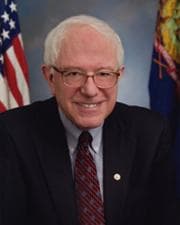
- Introduced
- 5/21/2025
- Last activity
- 5/21/2025 — Read twice and referred to the Committee on Finance.
- Sponsored by
- Bernie Sanders
- Cosponsors
- - 0 - 11
- Introduced
- In Committee
What this bill would do
The College for All Act of 2025 seeks to amend the Higher Education Act of 1965 to eliminate tuition and required fees for many students. It establishes a Federal-State partnership to provide grants to States and Tribal Colleges and Universities to cover these costs. The bill also includes a grant program specifically for private nonprofit historically Black colleges, minority-serving institutions, and outlying areas. Additionally, it implements improvements to Federal Pell Grants and creates inclusive student success grants. The legislation aims to increase support for low-income, first-generation, and Dreamer students.
Yes· 3 of 16
Would students be better off under this?+10
The bill aims to eliminate tuition and fees for a wide range of students.
Does this make college cost less?+10
The bill creates a Federal-State partnership to eliminate tuition and required fees for many students.
Would households on low incomes be better off under this?+9
The bill provides significant financial relief for low-income students and their families.
The opposite
Does this leave more decisions to the states?-2
The bill imposes several requirements and matching fund obligations on state governments.
Who it would affect, and how
Potential Positive Impacts for People
-
Elimination of Tuition and Fees: Eligible students at community colleges, public 4-year institutions, and Tribal Colleges can have their tuition and required fees fully eliminated through Federal-State partnerships (Sec. 785, Sec. 787).
-
Support for Minority-Serving Institutions: Private nonprofit historically Black colleges and minority-serving institutions can receive grants to eliminate tuition and fees for eligible students (Sec. 201, Sec. 796).
-
College Access for Outlying Areas: Students in the Northern Mariana Islands, American Samoa, U.S. Virgin Islands, Guam, and Freely Associated States can receive grants to cover the difference between in-State and out-of-State tuition rates (Sec. 202, Sec. 799).
-
Improved Pell Grant Benefits: The maximum Federal Pell Grant amount is increased, and funds may now be used for living and nontuition expenses (Sec. 301).
-
Expanded Eligibility for Dreamer Students: Dreamer students are explicitly included as eligible for Federal Pell Grants (Sec. 301).
-
Inclusive Student Success Grants: States and Tribal Colleges can receive funds to implement evidence-based reforms, such as providing academic support, mental health counseling, and improved transfer pathways (Sec. 401, Sec. 804).
-
Increased Federal Support for Programs: The bill increases authorization of appropriations for Federal TRIO and Gear Up programs (Sec. 501).
Potential Negative Impacts for People
-
State Financial Burdens: States are required to provide a "State share" of the grant, which increases over time from 0 percent in 2026-2027 to 20 percent in 2030-2031 (Sec. 786).
-
Maintenance of Effort Requirements: States must maintain specific levels of spending on instruction, operating expenses, and need-based financial aid, which could place strict budgetary constraints on state governments (Sec. 787).
-
Restrictions on Fund Usage: Grant funds cannot be used for certain purposes such as the construction of nonacademic facilities, paying administrator salaries, or capital outlays (Sec. 790, Sec. 797).
Groups and Interests Ranking
Every group the model scored this bill for, from -10 to +10. Hover a score for the reason it gave.
- Demographic And Interest Groups
- Good For Students+10Good For Low Income Households+9Good For African Americans+8Good For Native Americans+8Good For Immigrants+7Good For Young Adults+7Good For Asian Americans+5Good For Hispanic Americans+5Good For Middle Class Households+5Good For People With Disabilities+4
- Social Issues And Justice
- Improves Racial Equity+8Improves Poverty Reduction+5Improves Disability Rights+4
- Education And Technology
- Improves College Affordability+10
- Governance And Ideology
- Increases Federal Power+3Increase States Rights-2
- Healthcare
- Improves Mental Health Access+1
- 2/25/2026
- 1 Cosponsor added.
- 7/28/2025
- 1 Cosponsor added.
- 5/21/2025
- Read twice and referred to the Committee on Finance.
- 9 Cosponsors added.
- Introduced in Senate
One bill Congress.gov lists as related to this one — companions in the other chamber, earlier versions, and bills this one absorbed or was folded into.
 Richard Blumenthal
Democrat · Connecticut
 Cory Booker
Democrat · New Jersey
 Andy Kim
Democrat · New Jersey
 Edward Markey
Democrat · Massachusetts
 Christopher Murphy
Democrat · Connecticut
 Jeff Merkley
Democrat · Oregon
 Alex Padilla
Democrat · California
 Adam Schiff
Democrat · California
 Chris Van Hollen
Democrat · Maryland
 Peter Welch
Democrat · Vermont
 Elizabeth Warren
Democrat · Massachusetts