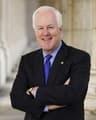
A Republican bill with 1 Republican cosponsor · See the cosponsor
Last activity — Read twice and referred to the Committee on Homeland Security and Governmental Affairs.
In committee
Introduced and handed to a committee in the chamber it started in.
The committee holds it, and most bills are never heard from again. A hearing or a committee vote would be news; silence is the usual outcome, and it kills the bill without anyone voting against it.
Its path through Congress
- Introduced
- In Committee
What this bill would do
The State Border Security Assistance Act establishes two separate funds within the federal government. The State Border Security Reinforcement Fund is housed in the Department of Homeland Security to provide grants for border barriers, surveillance, and the relocation of aliens from small population centers. The State Criminal Alien Prosecution and Detention Fund is housed in the Department of Justice to fund activities related to apprehending, investigating, and prosecuting aliens, as well as detention and court operations. The bill appropriates $11,000,000,000 for the first fund and $3,500,000,000 for the second fund in fiscal year 2025. Both funds are subject to a sunset provision on January 20, 2029.
Yes· 3 of 4
- Scored +7
Does this tighten control of the border?
The bill significantly increases funding for physical barriers, surveillance, and enforcement of border security.
- Scored +5
Does this give the federal government more power?
The bill utilizes massive federal appropriations to fund state and local law enforcement activities.
- Scored +4
Does this give the government more power to monitor people inside the country?
The bill funds increased surveillance technologies and intelligence gathering at the border.
The opposite· 3 of 7
- Scored -8
Would immigrants be better off under this?
The bill increases enforcement, detention, and relocation of undocumented immigrants.
- Scored -6
Would Hispanic Americans be better off under this?
The bill's focus on apprehension and relocation of undocumented persons may disproportionately impact Hispanic communities.
- Scored -5
Does this make it easier for immigrants already here to become citizens?
The bill prioritizes detention and apprehension over legal paths to citizenship.
Who it would affect, and how
Potential Positive Impacts for People
-
Increased Border Security Infrastructure: The bill allows for the construction and installation of border walls, fencing, barriers, or buoys, which includes ground preparation and personnel costs (Section 2(a)(1)-(2)).
-
Enhanced Surveillance and Detection: Funds can be used for information-gathering and surveillance to detect and stop the unlawful entry of persons or contraband (Section 2(a)(3)).
-
Support for Law Enforcement Operations: The Department of Justice fund provides resources for locating and apprehending aliens, as well as investigating crimes involving drug and human trafficking (Section 3(a)(1)-(3)).
-
Improved Judicial and Detention Capabilities: Grants can support court operations related to specific crimes and the temporary detention of aliens, including health and safety services (Section 3(a)(4)-(5)).
-
Logistical Support for State Agencies: The bill provides for vehicle maintenance, logistics, and transportation to help state agencies enhance their ability to locate and apprehend individuals (Section 3(a)(7)).
Potential Negative Impacts for People
-
Relocation of Populations: The bill authorizes the use of funds for the relocation of aliens who are unlawfully present in the United States from small population centers (Section 2(a)(4)).
-
Costs of Detention: The bill includes provisions for the temporary detention of aliens, which covers facility operations, personnel, and health and safety related services (Section 3(a)(5)).
Groups and Interests Ranking
Every group the model scored this bill for, from -10 to +10. Tap or hover a score for the reason it gave.
- Demographic And Interest Groups
- Would immigrants be better off under this? — The bill increases enforcement, detention, and relocation of undocumented immigrants. Would Hispanic Americans be better off under this? — The bill's focus on apprehension and relocation of undocumented persons may disproportionately impact Hispanic communities.
- National Security And Foreign Policy
- Does this give the government more power to monitor people inside the country? — The bill funds increased surveillance technologies and intelligence gathering at the border.
- Environment Energy And Infrastructure
- Does this better protect air, water and wildlife? — Increased construction of border walls may impact local environmental landscapes.
- Governance And Ideology
- Does this give the federal government more power? — The bill utilizes massive federal appropriations to fund state and local law enforcement activities. Does this leave more decisions to the states? — The bill provides grants directly to state agencies to execute border security tasks. Does this protect the right to fair treatment by the courts? — The focus on rapid apprehension and temporary detention may impact due process rights. Does this protect people from being watched or searched? — Increased surveillance capabilities may impact individual privacy rights.
- Social Issues And Justice
- Does this tighten control of the border? — The bill significantly increases funding for physical barriers, surveillance, and enforcement of border security. Does this make it easier for immigrants already here to become citizens? — The bill prioritizes detention and apprehension over legal paths to citizenship. Does this change how police departments operate? — The bill focuses on increased apprehension and detention rather than reformative policing measures.
- 5/15/2025
- Read twice and referred to the Committee on Homeland Security and Governmental Affairs.
- 1 Cosponsor added.
- Introduced in Senate
One bill Congress.gov lists as related to this one — companions in the other chamber, earlier versions, and bills this one absorbed or was folded into.
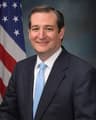 Ted Cruz
Republican · Texas