
Joni Ernst (R-IA)
Ending Unemployment Payments to Jobless Millionaires Act of 2025
A Republican bill with 1 Democratic cosponsor · See all 2 cosponsors
Last activity — Read twice and referred to the Committee on Finance.
In committee
Introduced and handed to a committee in the chamber it started in.
The committee holds it, and most bills are never heard from again. A hearing or a committee vote would be news; silence is the usual outcome, and it kills the bill without anyone voting against it.
Its path through Congress
- Introduced
- In Committee
What this bill would do
This bill, titled the "Ending Unemployment Payments to Jobless Millionaires Act of 2025," aims to stop the use of federal funds for unemployment benefits for high earners. It prohibits payments to individuals whose wages during their base period were $1,000,000 or more. The Act requires applicants to self-certify their wage status and mandates that State agencies verify this income through available systems. It also allows the Department of Labor or the Government Accountability Office to audit these certifications. Additionally, the bill requires the repayment of any overpayments received by ineligible individuals.
Yes· 3 of 4
- Scored +5
Does this reduce what the federal government spends?
The act limits federal spending on unemployment benefits for those earning over $1,000,000.
- Scored +4
Does this make the government pay for what it commits to?
The bill targets the redirection of federal funds away from high earners toward more fiscally targeted uses.
- Scored +3
Does this reduce what the federal government owes?
By prohibiting federal funds from going to high-income earners, it reduces federal expenditures on unemployment.
The opposite· 3 of 6
- Scored -8
Would high-income households be better off under this?
The bill specifically targets high earners by cutting off their access to unemployment benefits.
- Scored -8
Would people with substantial wealth be better off under this?
High earners are explicitly excluded from receiving federal unemployment funds.
- Scored -8
Would the very wealthiest people be better off under this?
Individuals earning over $1 million are ineligible for unemployment benefits under this act.
Who it would affect, and how
Potential Positive Impacts for People
-
Prohibition on Use of Federal Funds (Section 2(a)(1)(A)): This prevents federal money from being used to pay unemployment benefits to individuals who earned $1,000,000 or more during their base period.
-
Recovery of overpayments (Section 2(a)(4)): This ensures that individuals who received unemployment compensation they were not entitled to must repay those amounts.
Potential Negative Impacts for People
-
Prohibition on Use of Federal Funds (Section 2(a)(1)(A)): This would result in no federal funds being used to pay unemployment compensation or associated administrative costs for individuals earning $1,000,000 or more in their base period.
-
Recovery of overpayments (Section 2(a)(4)): This requires individuals who received unemployment compensation they were not entitled to under these new rules to repay the amounts to the State agency.
Groups and Interests Ranking
Every group the model scored this bill for, from -10 to +10. Tap or hover a score for the reason it gave.
- Demographic And Interest Groups
- Would billionaires be better off under this? — This bill impacts the highest earners by restricting their unemployment compensation access. Would high-income households be better off under this? — The bill specifically targets high earners by cutting off their access to unemployment benefits. Would people with substantial wealth be better off under this? — High earners are explicitly excluded from receiving federal unemployment funds. Would the very wealthiest people be better off under this? — Individuals earning over $1 million are ineligible for unemployment benefits under this act.
- Economy And Finance
- Does this reduce what the federal government spends? — The act limits federal spending on unemployment benefits for those earning over $1,000,000. Does this make the government pay for what it commits to? — The bill targets the redirection of federal funds away from high earners toward more fiscally targeted uses. Does this reduce what the federal government owes? — By prohibiting federal funds from going to high-income earners, it reduces federal expenditures on unemployment. Does this increase support for people who lose their jobs? — The bill restricts federal funding for unemployment benefits for high earners.
- Governance And Ideology
- Does this give the federal government more power? — The bill increases federal oversight by mandating audits of unemployment self-certifications. Does this protect people from being watched or searched? — The bill requires verification of income which may involve increased data scrutiny of applicants.
- 6/17/2025
- 1 Cosponsor added.
- 5/14/2025
- Read twice and referred to the Committee on Finance.
- 1 Cosponsor added.
- Introduced in Senate
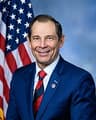 John Curtis
Republican · Utah
 John Fetterman
Democrat · Pennsylvania