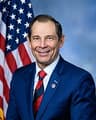
John Curtis (R-UT)
Restoring WIFIA Eligibility Act of 2025
A Republican bill with 1 Democratic cosponsor · See the cosponsor
Last activity — Read twice and referred to the Committee on the Budget.
In committee
Introduced and handed to a committee in the chamber it started in.
The committee holds it, and most bills are never heard from again. A hearing or a committee vote would be news; silence is the usual outcome, and it kills the bill without anyone voting against it.
Its path through Congress
- Introduced
- In Committee
What this bill would do
This bill, known as the "Restoring WIFIA Eligibility Act of 2025," proposes amendments to the Water Infrastructure Finance and Innovation Act of 2014. It specifically targets the budgetary treatment of certain financial assistance. The bill aims to change how financial assistance is categorized under the Federal Credit Reform Act of 1990. This change applies when the recipient is an eligible entity that is not a Federal entity, agency, or instrumentality. It also applies when the repayment sources are non-Federal revenues. Under this proposal, such assistance would be deemed non-Federal and treated as a direct loan or loan guarantee.
Yes· 3 of 7
- Scored +2
Is this likely to grow the economy?
By changing the budgetary treatment of water infrastructure loans, it may facilitate easier access to financing for non-federal entities.
- Scored +1
Would business owners be better off under this?
The bill may benefit entities that rely on infrastructure financing for their operations.
- Scored +1
Would farmers be better off under this?
Farmers often rely on water infrastructure which this bill helps facilitate through easier financing treatment.
The opposite
No question was scored the opposite.
Who it would affect, and how
Potential Positive Impacts for People
- Changes to Budgetary Treatment: The bill proposes that for certain entities, financial assistance would be deemed non-Federal and treated as a direct loan or loan guarantee under the Federal Credit Reform Act of 1990 (Section 2). This change applies when the recipient is an eligible entity other than a Federal entity, agency, or instrumentality, and the repayment comes from non-Federal revenue sources.
Potential Negative Impacts for People
- No negative impacts are explicitly stated in the provided text.
Groups and Interests Ranking
Every group the model scored this bill for, from -10 to +10. Tap or hover a score for the reason it gave.
- Demographic And Interest Groups
- Would business owners be better off under this? — The bill may benefit entities that rely on infrastructure financing for their operations. Would farmers be better off under this? — Farmers often rely on water infrastructure which this bill helps facilitate through easier financing treatment. Would people in rural areas be better off under this? — Improved water infrastructure financing can specifically benefit rural water management projects.
- Economy And Finance
- Is this likely to grow the economy? — By changing the budgetary treatment of water infrastructure loans, it may facilitate easier access to financing for non-federal entities. Does this make the government pay for what it commits to? — The bill clarifies the budgetary treatment of financial assistance as direct loans or loan guarantees.
- Environment Energy And Infrastructure
- Does this better protect air, water and wildlife? — By potentially easing financial assistance for water projects, it supports long-term environmental infrastructure. Does this invest in rural communities? — Improving water infrastructure financing can aid rural development through better resource management.
- 5/14/2025
- Read twice and referred to the Committee on the Budget.
- 1 Cosponsor added.
- Introduced in Senate
 Mark Kelly
Democrat · Arizona