
Tom Cotton (R-AR)
Dismantling Ideological Policies for Semiconductors and Science Act
A Republican bill with 5 Republican cosponsors · See all 5 cosponsors
Last activity — Read twice and referred to the Committee on Health, Education, Labor, and Pensions.
In committee
Introduced and handed to a committee in the chamber it started in.
The committee holds it, and most bills are never heard from again. A hearing or a committee vote would be news; silence is the usual outcome, and it kills the bill without anyone voting against it.
Its path through Congress
- Introduced
- In Committee
What this bill would do
The "Dismantling Ideological Policies for Semiconductors and Science Act" aims to repeal various provisions from the CHIPS Act of 2022 and the Research and Development, Competition, and Innovation Act. The bill focuses on removing diversity, equity, and inclusion (DEI) requirements and programs from federal STEM and scientific initiatives. It also seeks to modify outreach requirements and reduce certain federal mandates. Additionally, the legislation aims to limit the power of federal agencies to impose nonstatutory requirements on entities seeking federal funds.
Yes
- Scored +3
Does this leave more decisions to the states?
The bill limits the ability of federal agencies to impose nonstatutory mandates on entities.
- Scored +2
Does this make it easier to run a small business?
The bill reduces nonstatutory mandates and bureaucracy that entities seeking federal funds must follow.
The opposite· 3 of 14
- Scored -7
Does this narrow racial gaps in how people are treated?
The bill repeals several diversity, equity, and inclusion programs and removes support for Minority Serving Institutions.
- Scored -6
Would Black Americans be better off under this?
The bill reduces support for Minority Serving Institutions and repeals several DEI research programs.
- Scored -5
Would Hispanic Americans be better off under this?
The bill repeals programs and requirements specifically aimed at supporting underrepresented communities in STEM.
Who it would affect, and how
Potential Positive Impacts for People
-
Prioritization of Speed and Talent: According to the Sense of Congress, the bill aims to prioritize speed and leverage all relevant STEM talent without regard to race, color, ethnicity, sex, or sexual orientation (Section 2).
-
Removal of Bureaucracy: The bill asserts that removing DEI-related activities will prevent the addition of more bureaucracy and help focus on main objectives and priorities (Section 2).
-
Focus on Domestic Workforce: The modification of NSF scholarships and fellowships includes a mandate for the Director to prioritize awards to citizens or lawful permanent residents to grow the domestic workforce (Section 112).
-
Limiting Agency Mandates: The bill limits the ability of federal agencies to impose nonstatutory mandates on entities seeking funding, such as requirements for childcare, housing assistance, or community investment plans (Section 201).
Potential Negative Impacts for People
-
Removal of Educational Support: The bill repeals requirements relating to educational outreach and support for underrepresented communities (Section 103).
-
Elimination of Diversity Programs: Several provisions regarding diversity are repealed, including the NSF Chief Diversity Officer position (Section 108), the program to award funds for research to support DEI in STEM (Section 109), and DEI activities in higher education (Section 110).
-
Changes to Institution Support: The bill modifies the support for "MSIs" (Minority Serving Institutions) by removing the term and replacing it with specific references to HBCUs and TCUs (Section 117).
-
Removal of Environmental and Social Mandates: Under Title II, the bill restricts agency mandates regarding the provision of childcare, wraparound services like housing and transportation, and policies designed to mitigate climate change or environmental justice concerns (Section 201).
Groups and Interests Ranking
Every group the model scored this bill for, from -10 to +10. Tap or hover a score for the reason it gave.
- Demographic And Interest Groups
- Would Black Americans be better off under this? — The bill reduces support for Minority Serving Institutions and repeals several DEI research programs. Would Hispanic Americans be better off under this? — The bill repeals programs and requirements specifically aimed at supporting underrepresented communities in STEM. Would households on low incomes be better off under this? — The bill removes mandates related to workforce support such as housing assistance and childcare. Would union members be better off under this? — The bill limits mandates regarding project labor agreements and consultation with labor organizations.
- Social Issues And Justice
- Does this narrow racial gaps in how people are treated? — The bill repeals several diversity, equity, and inclusion programs and removes support for Minority Serving Institutions. Does this make housing cost less? — The bill prevents agencies from imposing mandates related to community investment plans including affordable housing. Does this make child care cost less? — The bill restricts the ability of agencies to mandate the provision of childcare for employees. Does this narrow the gap between how men and women are treated? — The bill repeals requirements related to diversity, equity, and inclusion in federal STEM initiatives.
- Environment Energy And Infrastructure
- Does this better protect air, water and wildlife? — The bill restricts mandates designed to minimize adverse impacts on the environment and mitigate climate change. Does this reduce how much oil, gas and coal is produced? — The bill repeals several clean energy technology competition and research programs.
- Education And Technology
- Does this put more money into scientific research? — The bill repeals several specific research and competition programs in the fields of science and energy. Does this reduce what student borrowers owe or repay? — The bill focuses on removing social mandates rather than increasing student support.
- Economy And Finance
- Does this make it easier to run a small business? — The bill reduces nonstatutory mandates and bureaucracy that entities seeking federal funds must follow. Does this strengthen the rights of workers to organise? — The bill restricts mandates related to project labor agreements and consultation with local labor organizations.
- Governance And Ideology
- Does this leave more decisions to the states? — The bill limits the ability of federal agencies to impose nonstatutory mandates on entities. Does this make what the government does easier for the public to see? — The bill repeals requirements for certain reports to Congress and data collection on faculty demographics.
- 6/23/2025
- 1 Cosponsor added.
- 5/15/2025
- 2 Cosponsors added.
- 5/13/2025
- Read twice and referred to the Committee on Health, Education, Labor, and Pensions.
- 2 Cosponsors added.
- Introduced in Senate
 Marsha Blackburn
Republican · Tennessee
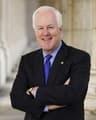 John Cornyn
Republican · Texas
 Pete Ricketts
Republican · Nebraska
 Eric Schmitt
Republican · Missouri
 Todd Young
Republican · Indiana