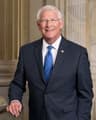
Roger Wicker (R-MS)
Vieques Recovery and Redevelopment Act
A Republican bill with 1 Democratic cosponsor · See the cosponsor
Last activity — Read twice and referred to the Committee on the Judiciary.
In committee
Introduced and handed to a committee in the chamber it started in.
The committee holds it, and most bills are never heard from again. A hearing or a committee vote would be news; silence is the usual outcome, and it kills the bill without anyone voting against it.
Its path through Congress
- Introduced
- In Committee
What this bill would do
The Vieques Recovery and Redevelopment Act provides monetary compensation to certain residents of Vieques, Puerto Rico, who suffered health issues due to U.S. military readiness activities. It establishes a Special Master to process these claims and award payments based on the number and type of diseases contracted. The bill also provides the Municipality of Vieques with resources to build and operate a level three trauma center, including a cancer center and renal dialysis unit. Additionally, it funds an academic partner to research environmental toxins and aims to establish a hurricane-resilient power source for the island. Total awards under the Act are limited to $1 billion.
Yes· 3 of 26
- Scored +9
Does this make health care easier to get in general?
Establishes a level three trauma center, cancer center, and renal dialysis unit on the island.
- Scored +8
Would households on low incomes be better off under this?
Direct payments and free medical screenings provide critical support to low-income residents.
- Scored +8
Would Hispanic Americans be better off under this?
Directly benefits the residents of Vieques, Puerto Rico, who are predominantly Hispanic.
The opposite
- Scored -5
Does this reduce what the federal government spends?
The bill increases federal spending to provide compensation and infrastructure.
- Scored -2
Does this reduce what the federal government owes?
The bill authorizes up to $1 billion in payments from the Judgment Fund.
- Scored -2
Does this make the government pay for what it commits to?
The bill creates a significant new financial obligation for the federal government.
Who it would affect, and how
Potential Positive Impacts for People
-
Monetary Compensation for Illness: Individuals who resided on Vieques for at least 5 years and contracted specific diseases (cancer, hypertension, cirrhosis, kidney disease, diabetes, or heavy metal poisoning) can receive awards ranging from $50,000 to $110,000 (Section 3(a) and (b)(1)).
-
Support for Heirs: Immediate heirs of deceased claimants can receive compensation based on the age of the deceased, with awards up to $110,000 (Section 3(b)(3)).
-
Improved Healthcare Infrastructure: The bill provides for the construction and operation of a level three trauma center with a cancer center and renal dialysis unit to treat life-threatening and chronic diseases on the island (Section 3(d)(1)(A)).
-
Direct Medical Assistance: The Special Master will fund operations for pediatric and adult care, including transportation and medical costs for those needing off-island care (Section 3(d)(1)(B)).
-
Immediate Health Services: Until the new facility is ready, the bill provides urgent health care air transport, telemedicine, and case managers to claimants (Section 3(d)(1)(C)).
-
Free Health Screenings: Medical screening for cancer, cirrhosis, diabetes, and heavy metal contamination will be available at no cost to the patient (Section 3(d)(1)(D)).
-
Environmental Cleanup: An academic partner will be appointed to study and implement ways to reduce environmental toxins in the soil, seas, and food sources (Section 3(d)(1)(E)).
-
Infrastructure Reliability: The bill authorizes the construction of an independent, hurricane-resilient power source for the island (Section 3(d)(1)(H)).
Potential Negative Impacts for People
-
Strict Eligibility Requirements: To receive compensation, individuals must have lived on the island for at least 5 years and provide medical documentation proving it is "more likely than not" that the military activity caused their specific illness (Section 3(a)).
-
Limited Disease List: Compensation is only available for a specific list of illnesses (cancer, hypertension, cirrhosis, kidney disease, diabetes, or heavy metal poisoning), excluding other unnamed or uncategorized illnesses mentioned in the findings (Section 3(a)(3)).
-
Loss of Future Legal Rights: Accepting a payment is considered a "complete release" of all claims against the United States and its employees, meaning individuals cannot sue for further damages later (Section 3(f)).
-
Capped Funding: All awards and projects under the Act are limited to a total of $1,000,000,000, which may limit the amount available if there are many claimants (Section 3(d)(2)(B)).
-
Attorney Fee Caps: Representatives of individuals are limited to receiving no more than 20 percent of a payment for their services (Section 3(i)).
Groups and Interests Ranking
Every group the model scored this bill for, from -10 to +10. Tap or hover a score for the reason it gave.
- Demographic And Interest Groups
- Would Hispanic Americans be better off under this? — Directly benefits the residents of Vieques, Puerto Rico, who are predominantly Hispanic. Would households on low incomes be better off under this? — Direct payments and free medical screenings provide critical support to low-income residents. Would people in rural areas be better off under this? — Brings essential high-level medical and power infrastructure to a remote island. Would middle-income households be better off under this? — Provides monetary awards and improved local healthcare infrastructure. Would people with disabilities be better off under this? — Provides specialized medical facilities for chronic and life-threatening diseases. Would retired people be better off under this? — Provides critical healthcare services and potential compensation for long-term illness. Would people over 65 be better off under this? — Provides specialized care for chronic diseases like diabetes and cancer prevalent in seniors. Would children be better off under this? — Provides pediatric care and compensation for heirs of deceased claimants. Would people in middle age be better off under this? — Provides medical care and potential monetary compensation for health issues. Would people in their twenties and thirties be better off under this? — Provides medical care and potential monetary compensation for health issues. Would farmers be better off under this? — Environmental cleanup of soils and food sources benefits local agriculture. Would business owners be better off under this? — Local infrastructure projects and increased resident spending may benefit local businesses.
- Healthcare
- Does this make health care easier to get in general? — Establishes a level three trauma center, cancer center, and renal dialysis unit on the island. Does this lower what a hospital stay costs? — Provides free screenings and funds medical transportation and care for eligible residents. Does this put more money into medical research? — Funds an academic partner to research and reduce environmental toxins in soil, seas, and food. Does this make mental health care easier to get? — The new medical facility is mandated to treat mental diseases.
- Environment Energy And Infrastructure
- Does this better protect air, water and wildlife? — Mandates research and implementation of ways to reduce environmental toxins on the island. Does this invest in rural communities? — Provides critical healthcare and power infrastructure to a rural island municipality. Does this improve help for people hit by a disaster? — Addresses medical facility gaps left by Hurricane Maria that FEMA was unable to fill. Does this put more money into wind, solar and other renewable power? — Authorizes a hurricane-resilient power source, though specific energy type isn't mandated.
- Education And Technology
- Does this put more money into scientific research? — Funds an academic partner to conduct scientific testing of soil, seas, and food sources. Does this get reliable internet to more people? — Provides telemedicine communication abilities to claimants.
- Social Issues And Justice
- Is this likely to lift people out of poverty? — Provides significant one-time monetary payments up to $110,000 to eligible residents.
- Economy And Finance
- Is this likely to grow the economy? — Direct payments to residents and investment in local infrastructure provide an economic boost to Vieques. Is this likely to create jobs? — The construction and operation of a new trauma center and power source will create local jobs. Does this reduce what the federal government spends? — The bill increases federal spending to provide compensation and infrastructure. Does this make the government pay for what it commits to? — The bill creates a significant new financial obligation for the federal government. Does this reduce what the federal government owes? — The bill authorizes up to $1 billion in payments from the Judgment Fund.
- Governance And Ideology
- Does this protect the right to fair treatment by the courts? — Creates an administrative remedy for those previously denied court access due to sovereign immunity.
- 5/7/2025
- Read twice and referred to the Committee on the Judiciary.
- 1 Cosponsor added.
- Introduced in Senate
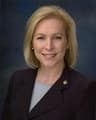 Kirsten Gillibrand
Democrat · New York