Bill · S. 1628· Senate(119-S-1628)
Improving Access to Nutrition Act of 2025
- Introduced
- 5/6/2025
- Last activity
- 5/6/2025 — Read twice and referred to the Committee on Agriculture, Nutrition, and Forestry.
- Sponsored by
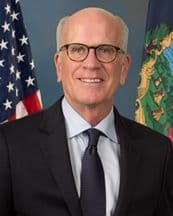
- Peter Welch
- Cosponsors
- - 7 - 0
- Introduced
- In Committee
What this bill would do
The "Improving Access to Nutrition Act of 2025" aims to change the Food and Nutrition Act of 2008. Its primary purpose is to remove the work requirement that prevents able-bodied adults from getting supplemental nutrition assistance program (SNAP) benefits. The bill cites high rates of food insecurity and racial disparities as reasons for this change. It also removes related references to these work requirements in the Internal Revenue Code and the Workforce Innovation and Opportunity Act.
Yes· 3 of 23
Would households on low incomes be better off under this?+10
Directly increases food security for low-income adults by removing eligibility barriers.
Would Black Americans be better off under this?+9
Explicitly addresses racial disparities and vulnerability to work requirements for Black people.
Would Hispanic Americans be better off under this?+9
Addresses high rates of food insecurity among Latinx households.
The opposite
Does this reduce what the federal government owes?-2
Expanding SNAP eligibility by removing work requirements may increase federal spending.
Does this reduce what the federal government spends?-2
Removing work requirements likely increases the number of eligible recipients, increasing spending.
Does this make the government pay for what it commits to?-2
Increased spending on social programs without an identified funding source may be seen as less fiscally responsible.
Who it would affect, and how
Potential Positive Impacts for People
-
Increased Food Access for Able-Bodied Adults: By repealing the work requirement in Section 6 of the Food and Nutrition Act of 2008 (Section 3(a)(1)), adults who cannot meet work requirements will not be disqualified from receiving food assistance.
-
Support for Vulnerable Groups: The bill notes in Section 2 (findings 20 and 21) that Black people and families experiencing homelessness are particularly vulnerable to barriers and burdens caused by work requirements.
-
Benefits for Children: Section 2 (findings 11 and 16) suggests that the program can lead to educational advancement for children in poverty and that removing work requirements prevents the jeopardy of health and development for children in households where adults might otherwise lose benefits.
-
Economic Stimulus: Section 2 (finding 13) states that every dollar of benefits during a downturn generates between $1.50 and $1.80 in economic activity.
Potential Negative Impacts for People
- The provided text does not list any negative consequences or burdens for individuals or groups of people.
Groups and Interests Ranking
Every group the model scored this bill for, from -10 to +10. Hover a score for the reason it gave.
- Demographic And Interest Groups
- Good For Low Income Households+10Good For African Americans+9Good For Hispanic Americans+9Good For Native Americans+9Good For Children+8Good For Middle Aged+6Good For People With Disabilities+6Good For Young Adults+6Good For Asian Americans+5Good For Men+5Good For Rural Residents+5Good For Students+5Good For Urban Residents+5Good For Women+5Good For White Americans+4Good For Retirees+2Good For Seniors+2
- Social Issues And Justice
- Improves Poverty Reduction+8Improves Racial Equity+8Reduces Homelessness+5Improves Disability Rights+4
- Healthcare
- Improves Healthcare Access+3
- Economy And Finance
- Improves Economic Growth+4Improves Fiscal Responsibility-2Reduces Government Spending-2Reduces National Debt-2
- 5/6/2025
- Read twice and referred to the Committee on Agriculture, Nutrition, and Forestry.
- 8 Cosponsors added.
- Introduced in Senate
 Richard Blumenthal
Democrat · Connecticut
 John Fetterman
Democrat · Pennsylvania
 Kirsten Gillibrand
Democrat · New York
 Jeff Merkley
Democrat · Oregon
 Alex Padilla
Democrat · California
 Bernie Sanders
Independent · Vermont
 Ron Wyden
Democrat · Oregon
 Elizabeth Warren
Democrat · Massachusetts