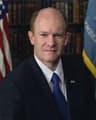
Christopher Coons (D-DE)
Safe SHORES Act of 2025
A Democratic bill with 1 Republican cosponsor · See the cosponsor
Last activity — Read twice and referred to the Committee on Banking, Housing, and Urban Affairs.
In committee
Introduced and handed to a committee in the chamber it started in.
The committee holds it, and most bills are never heard from again. A hearing or a committee vote would be news; silence is the usual outcome, and it kills the bill without anyone voting against it.
Its path through Congress
- Introduced
- In Committee
What this bill would do
This bill, known as the "Safe SHORES Act of 2025," seeks to reauthorize the recovery housing pilot program. It amends existing law to ensure at least $50,000,000 is available for the program. The reauthorization extends the program timeframe from 2026 through 2030. It also changes the timeline for using funds, allowing them to be distributed over 5 years rather than requiring 30 percent within one year. Additionally, the act allows states to use up to 1 percent of awarded funds for furniture for temporary housing.
Yes· 3 of 7
- Scored +7
Does this do more about addiction and overdose deaths?
The act reauthorizes and funds recovery housing specifically to support those recovering from substance abuse disorders.
- Scored +6
Does this make housing cost less?
The bill funds recovery housing to provide stable housing for individuals in recovery.
- Scored +5
Is this likely to reduce homelessness?
The program aims to provide stable housing for people in recovery, which helps prevent homelessness.
The opposite
No question was scored the opposite.
Who it would affect, and how
Potential Positive Impacts for People
-
Increased Funding for Recovery Housing: The bill sets a minimum of $50,000,000 for the program (Section 2, subsection (a)), which provides resources to help individuals in recovery from substance abuse disorders become stably housed.
-
Furniture for Temporary Housing: States receiving funds are permitted to use up to 1 percent of their award to purchase furniture (Section 2, subsection (c)), which could assist in setting up temporary housing environments.
-
Focus on Resident Success: The bill encourages states to prioritize funds for facilities that offer workforce development, financial literacy training, and follow-up services to ensure residents are on the proper path to recovery (Section 2, subsection (i)).
-
Enhanced Accountability and Information: The Secretary is required to monitor grants through a specific database and must submit annual reports to Congress regarding the use of funds and resident statistics (Section 2, subsections (h) and (j)). This includes tracking resident demographics, substance abuse conditions, and graduation rates into permanent housing.
Potential Negative Impacts for People
- No specific negative impacts are explicitly detailed within the provided text.
Groups and Interests Ranking
Every group the model scored this bill for, from -10 to +10. Tap or hover a score for the reason it gave.
- Social Issues And Justice
- Does this make housing cost less? — The bill funds recovery housing to provide stable housing for individuals in recovery. Is this likely to reduce homelessness? — The program aims to provide stable housing for people in recovery, which helps prevent homelessness. Is this likely to lift people out of poverty? — Providing stable housing and workforce development can assist in reducing poverty for residents.
- Healthcare
- Does this do more about addiction and overdose deaths? — The act reauthorizes and funds recovery housing specifically to support those recovering from substance abuse disorders. Does this make health care easier to get in general? — The bill provides funding for recovery housing to assist those with substance abuse disorders.
- Demographic And Interest Groups
- Would households on low incomes be better off under this? — Recovery housing can provide essential stability for low-income individuals in recovery.
- Governance And Ideology
- Does this make what the government does easier for the public to see? — The bill requires annual reports to Congress and public disclosure of statistics.
- 4/10/2025
- Read twice and referred to the Committee on Banking, Housing, and Urban Affairs.
- 1 Cosponsor added.
- Introduced in Senate
 Shelley Capito
Republican · West Virginia