Bill · S. 1363· Senate(119-S-1363)
New Mexico Land Grant-Mercedes Historical or Traditional Use Cooperation and Coordination Act
- Introduced
- 4/9/2025
- Last activity
- 9/24/2026 — Held at the desk.
- Sponsored by
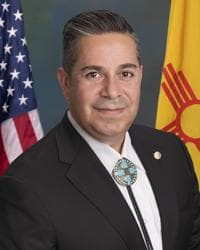
- Ben Luján
- Cosponsors
- None
- Introduced
- Passed Senate
- Awaiting House
What this bill would do
This bill is about improving how the Federal Government works together with the governing bodies and community users of land grant-mercedes in New Mexico. It requires federal officials to create a memorandum of understanding with the New Mexico Land Grant Council within two years to address traditional land uses. These traditional uses include gathering small quantities of herbs, wood, and soil, as well as grazing, subsistence hunting, and maintaining shrines or cemeteries. The agreements will also cover rules for permits, vehicle use, and routine maintenance or major infrastructure improvements on federal land. Additionally, federal officials must look at how land use plans impact these traditional uses and consider community socioeconomic conditions when deciding on fee reductions or waivers. Finally, the bill explicitly states that it does not affect any tribal treaty rights, state water and wildlife authority, or valid existing property rights.
Yes· 3 of 10
Would people in rural areas be better off under this?+6
The bill directly benefits rural communities in New Mexico by protecting traditional land uses and infrastructure.
Does this better protect public land such as parks and forests?+6
The bill improves federal land management by incorporating coordination with New Mexico land grant-mercedes.
Would Hispanic Americans be better off under this?+5
The bill protects the historical and traditional land use practices of New Mexico land grant-mercedes, which are culturally significant to many Hispanic residents.
The opposite
Does this give the federal government more power?-2
The bill involves federal agencies taking on more specific procedural roles regarding local land use.
Who it would affect, and how
Potential Positive Impacts for People
-
Fee Reductions and Waivers: Under Section 3(b), the Secretary concerned must consider the socioeconomic conditions of community users and the annual operating budget of the governing body when deciding whether to reduce or waive land use fees. This is a positive step because it helps lower financial burdens for communities with limited financial resources.
-
Clearer Permitting and Maintenance Processes: Under Section 3(a)(2)(B) and Section 3(a)(2)(C), the memorandum of understanding must describe the types of historical or traditional uses that require permits, administrative procedures to obtain them, and rules for authorizing routine maintenance like cleaning, repair, or replacement of infrastructure. This provides community users and governing bodies with clear, predictable guidelines for maintaining essential community assets like trails, fences, water tanks, and cemeteries.
-
Notice and Comment Participation: Under Section 3(a)(2)(E), the memorandum of understanding must outline policies and procedures for notice and comment on land management planning decisions and major Federal actions. This gives community groups, the New Mexico Land Grant Council, and Indian Tribes a better opportunity to stay informed and provide input through online, print, mail, or email channels.
Potential Negative Impacts for People
-
Permit Requirements for Traditional Uses: Under Section 3(a)(2)(B)(i), the memorandum of understanding will describe the types of historical or traditional uses conducted by community users or governing bodies that require a permit or other land use authorization from the Secretary concerned. This could introduce bureaucratic hurdles or restrictions for long-established practices that previously did not require formal permits.
-
Limitations on Direct Authorization: Under Section 3(a)(4), the memorandum of understanding itself shall not directly approve or authorize a historical or traditional use, but rather must describe the process to obtain authorizations through existing authorities. This means the agreement alone does not automatically grant access or rights, requiring users to still go through individual administrative approval processes.
Groups and Interests Ranking
Every group the model scored this bill for, from -10 to +10. Hover a score for the reason it gave.
- Demographic And Interest Groups
- Good For Rural Residents+6Good For Hispanic Americans+5Good For Farmers+4Good For Low Income Households+3Good For Native Americans+2
- Environment Energy And Infrastructure
- Improves Public Land Management+6Improves Roads And Bridges+5Improves Rural Development+4
- Governance And Ideology
- Improves Government Transparency+3Improves Due Process+2Increases Federal Power-2
- 9/24/2026
- Message on Senate action sent to the House.
- Held at the desk.
- Received in the House.
- 9/23/2026
- Passed/agreed to in Senate: Passed Senate with an amendment by Unanimous Consent. (consideration: CR S4898-4901; text: CR S4898-4901)
- Passed Senate with an amendment by Unanimous Consent. (consideration: CR S4898-4901; text: CR S4898-4901)
- 7/23/2026
- Committee on Energy and Natural Resources. Reported by Senator Lee with an amendment. Without written report.
- Placed on Senate Legislative Calendar under General Orders. Calendar No. 476.
- 12/17/2025
- Committee on Energy and Natural Resources. Ordered to be reported with an amendment favorably.
- 12/2/2025
- Committee on Energy and Natural Resources Subcommittee on Public Lands, Forests, and Mining. Hearings held. With printed Hearing: S.Hrg. 119-237.
- 4/9/2025
- Read twice and referred to the Committee on Energy and Natural Resources.
- Introduced in Senate
3 bills Congress.gov lists as related to this one — companions in the other chamber, earlier versions, and bills this one absorbed or was folded into.